
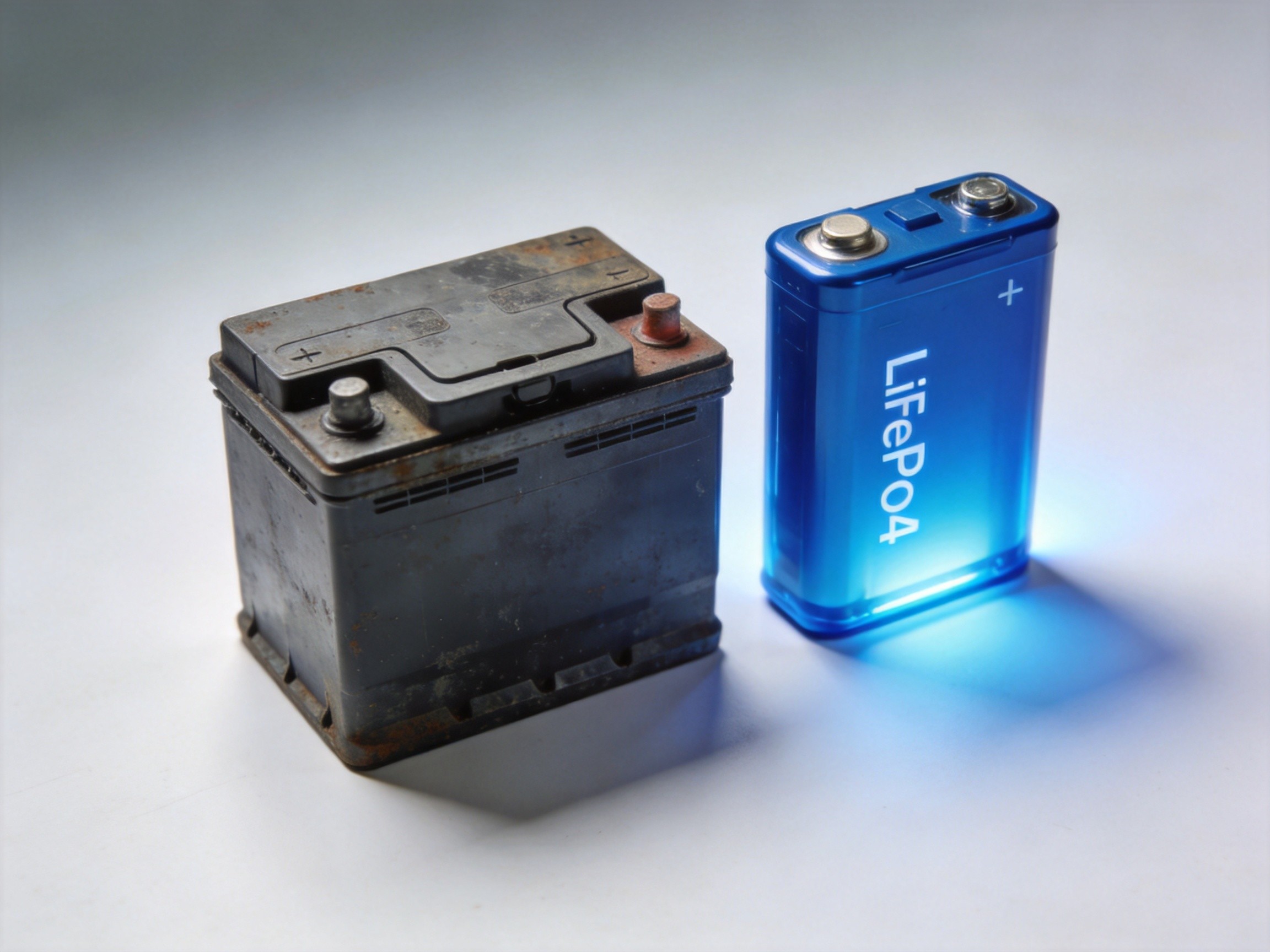
LiFePO4 stands for lithium iron phosphate, a specific chemical compound used as the cathode material in lithium-ion batteries. This chemistry replaces the cobalt found in traditional lithium-ion cells with iron and phosphate, resulting in a highly stable, non-toxic, and thermally resilient energy storage solution. For commercial and industrial applications, this means you get a battery chemistry that prioritizes long-term safety and deep-cycle reliability over the sheer energy density of consumer electronics.
What Does LiFePO4 Mean at the Chemical Level?
To understand what LiFePO4 means for your projects, we must look at the atomic structure of the cathode. The chemical formula represents a compound where lithium ions are intercalated within an iron phosphate framework. This specific arrangement creates a strong covalent bond between the phosphorus and oxygen atoms, which is why the material remains highly stable even under extreme stress. How does this benefit the end user? Because the oxygen atoms are tightly bound to the phosphorus, they do not easily release oxygen during overcharging or high-temperature conditions, which is the primary cause of thermal runaway in other lithium chemistries. Who benefits most from this structural advantage? Commercial fleet operators, telecommunications towers, and off-grid solar installers who require absolute reliability in harsh environments. When compared to other chemistries in our detailed guide on LiFePO4 vs Lead-Acid: Which Battery Is Better?, the chemical stability of iron phosphate clearly stands out as the superior choice for deep-cycle applications. The robust molecular structure ensures that the battery can handle continuous charge and discharge without degrading the cathode material, making it the foundational chemistry for modern energy storage systems. For a detailed look at thermal runaway behaviour and how this chemistry performs under extreme conditions, see our guide on whether LiFePO4 batteries are safe.
How Does the LiFePO4 Cell Structure Ensure Operational Safety?
The physical cell structure of a lithium iron phosphate battery is designed around an olivine crystal lattice. This lattice structure is what dictates the safe movement of lithium ions during both charging and discharging phases. Why is this olivine structure so critical for safety? The rigid framework prevents the crystal from collapsing, even when the battery is fully depleted or pushed beyond its standard voltage limits. How does this translate to real-world safety? It means the battery can withstand physical damage, short circuits, and extreme temperature fluctuations without catching fire or exploding. Who relies on this structural integrity? Facility managers and engineers designing backup power for critical infrastructure. At CMJ Solar, our Jiangmen factory leverages this inherent chemical safety by pairing premium LiFePO4 cells with advanced Battery Management Systems to ensure every unit operates within safe parameters. This dual-layer protection is why our systems are trusted globally. The combination of a physically stable crystal lattice and intelligent electronic monitoring creates a fail-safe environment, ensuring that the energy stored remains secure regardless of external conditions or grid instability.
What Are the Cycle Life and Warranty Expectations?
When evaluating battery chemistry, cycle life is the most critical metric for calculating total cost of ownership. CMJ Solar LiFePO4 cells are rigorously tested and rated for 2000 to 4000 cycles at 80% depth of discharge. Why is this cycle range so important for commercial projects? It ensures that the battery will maintain its capacity over a decade of daily use, significantly outperforming traditional alternatives. How does this cycle life translate into warranty coverage? Because of the proven longevity of the lithium iron phosphate chemistry, CMJ Solar provides an official 5-year warranty for our energy storage and standalone battery system products. Who benefits from this warranty structure? Distributors and EPC contractors who need guaranteed performance metrics to secure their own project contracts. It is crucial to note that while the cell chemistry itself is incredibly durable, the product-level warranty is strictly aligned with the energy storage category standards, ensuring realistic and reliable support. This commitment to quality is evident across our manufacturing lines, where every batch undergoes strict capacity and internal resistance testing before assembly. By maintaining these rigorous standards, we ensure that the 2000 to 4000 cycle life rating is a guaranteed baseline, not just a theoretical maximum.
How Does LiFePO4 Chemistry Apply to Real-World Energy Storage?
The theoretical benefits of lithium iron phosphate chemistry are best understood through practical applications in our product lineup. For example, the Lead-to-Lithium Battery 12.8V 100Ah SCLFP-12.8V-100 utilizes this exact chemistry to deliver 1280Wh of usable capacity with a 100A discharge current. Why is this specific model so popular for retrofits? The 12.8V nominal voltage and standard dimensions of 33*17.2*21.5CM allow it to seamlessly replace legacy lead-acid banks without modifying the existing racking or inverter settings. How does the chemistry enhance this drop-in replacement? The flat voltage discharge curve of LiFePO4 means the battery delivers consistent power until it is nearly empty, unlike lead-acid which suffers from voltage sag. For higher voltage requirements, the Lead-to-Lithium Battery 25.6V 200Ah SCLFP-25.6V-200 offers 5120Wh of capacity with a robust 100A/150A discharge current, housed in dimensions of 52.2*26.8*22CM. Who utilizes these larger configurations? Microgrid developers and industrial facilities requiring massive, scalable energy reserves. For comprehensive residential or commercial setups, the Apollo All-in-One ESS — available in configurations such as the SCAP-A-51.2-300 — integrates high-capacity lithium iron phosphate modules directly with hybrid inverters. The chemistry allows the Apollo series to achieve high round-trip efficiency while maintaining a compact footprint, proving that this chemistry adapts perfectly to diverse market needs.
Why is LiFePO4 Chemistry Preferred for OEM/ODM Manufacturing?
For B2B partners, the consistency of the raw materials is just as important as the final product performance. CMJ Solar operates as a dedicated OEM/ODM manufacturer, meaning we control the entire production process from cell selection to final assembly. Why does this matter for lithium iron phosphate batteries? The performance of a LiFePO4 pack is heavily dependent on cell matching and the quality of the cathode coating. How do we ensure this consistency? When evaluating our manufacturing process, consider these key steps. First, our Jiangmen factory utilizes automated grading equipment to match cells by capacity, internal resistance, and voltage. Second, we assemble these matched cells into modules using laser welding for optimal conductivity. Third, we integrate custom Battery Management Systems to ensure precise monitoring and protection. Who benefits from this strict manufacturing protocol? Brand owners and distributors who need to maintain their own reputation for quality in competitive markets. When you source from us, you are not just buying a battery; you are acquiring a meticulously engineered system where the LiFePO4 chemistry is fully optimized. This level of control allows us to customize battery management system parameters, communication protocols, and physical enclosures to meet specific regional standards. For more insights on specifying the right models for your distribution network, you can read our Wall-Mounted LiFePO4 Batteries: A Distributor's Guide to Specifying the Right Model.
What Role Does the Battery Management System Play in LiFePO4 Performance?
While the chemistry provides the foundation, the Battery Management System acts as the brain of the operation. Why is a sophisticated BMS absolutely necessary for lithium iron phosphate cells? Because LiFePO4 cells have a very narrow safe operating voltage window, and overcharging or deep discharging can damage the cells over time. How does the BMS protect the chemistry? It continuously monitors the voltage, current, and temperature of every individual cell, balancing them to ensure uniform wear and preventing any single cell from exceeding its limits. Who designs these systems? Our engineering team at CMJ Solar develops custom BMS firmware tailored to the specific discharge and charge profiles of our LiFePO4 cells. This synergy between the chemical structure and the electronic management ensures that the battery achieves its rated 2000 to 4000 cycles. Furthermore, the BMS provides critical communication with the inverter, allowing for precise state-of-charge reporting and seamless integration into larger microgrids. By combining robust iron phosphate chemistry with intelligent electronic management, we deliver a product that is not only safe but also highly efficient and easy to integrate into complex energy architectures. For a full breakdown of BMS architecture and protection thresholds, see our BMS explained guide; and for the charging limits specifically, see whether you can overcharge a LiFePO4 battery.
Frequently Asked Questions
What is the main advantage of LiFePO4 over other lithium chemistries? The primary advantage is the exceptional thermal and chemical stability provided by the strong phosphorus-oxygen bonds in the cathode, which prevents thermal runaway and ensures a much longer cycle life of 2000 to 4000 cycles compared to cobalt-based alternatives.
Can I use a LiFePO4 battery in extreme temperatures? Yes, the chemical structure of lithium iron phosphate allows it to operate safely in a wider temperature range than other lithium-ion types, though charging below freezing requires a BMS with low-temperature charge protection to prevent cell damage.
How long does a LiFePO4 battery last in years? Based on the 2000 to 4000 cycle rating at 80% depth of discharge, a high-quality LiFePO4 battery will typically last for many years of daily use, which is why CMJ Solar backs our energy storage products with a comprehensive 5-year warranty.
Ready to integrate premium lithium iron phosphate technology into your next project? Whether you need standard drop-in replacements or custom OEM/ODM solutions, our engineering team is here to help you select the perfect system. Please contact our team today to request a quote and discuss your specific energy storage requirements.
Part of the guide
LiFePO4 Battery Technology: Chemistry, BMS, Charging and Cold Weather
Need Product Recommendations?
Our team can help you select the right energy storage or solar lighting products for your project.