
Why Home Energy Storage Matters
Rising electricity costs and increasing grid instability have made home energy storage systems a practical investment rather than a luxury. A well-designed battery storage system allows homeowners to store solar energy generated during the day for use at night, reduce dependence on the grid, and maintain power during outages. For B2B buyers — including solar installers, distributors, and EPC contractors — understanding how to select the right system is critical for delivering value to end customers and ensuring long-term satisfaction.
This guide walks through the four key decision factors: capacity sizing, battery chemistry, inverter specifications, and total cost of ownership. We will reference CMJ Solar product lines throughout to provide concrete examples of what to look for.
Step 1: Calculate Your Energy Storage Capacity Needs
The first and most important step is determining how much energy storage capacity your application requires. Start by calculating the daily energy consumption of the household or facility. A typical European household consumes between 10 and 30 kWh per day. To size the battery, decide how many hours or days of backup power are needed.
For example, if a home uses 15 kWh per day and the goal is one full day of backup, a 15 kWh battery system is the minimum requirement. However, it is recommended to add a 20% buffer for inefficiencies and depth-of-discharge limitations. LiFePO4 batteries typically support 80-90% depth of discharge, meaning a 15 kWh rated battery delivers approximately 12-13.5 kWh of usable energy.
CMJ Solar addresses various capacity needs through its product lines. The Apollo A series offers modular configurations from 5 kWh (100Ah at 51.2V) up to 30 kWh (600Ah at 51.2V), allowing buyers to scale capacity by adding battery modules. The Ares series provides all-in-one solutions with integrated inverters, available in 5 kWh, 7.5 kWh, 8.5 kWh, 10 kWh, and 15 kWh configurations. For wall-mounted applications, the Athena series covers 2.5 kWh to 34 kWh.
Step 2: Choose the Right Battery Chemistry
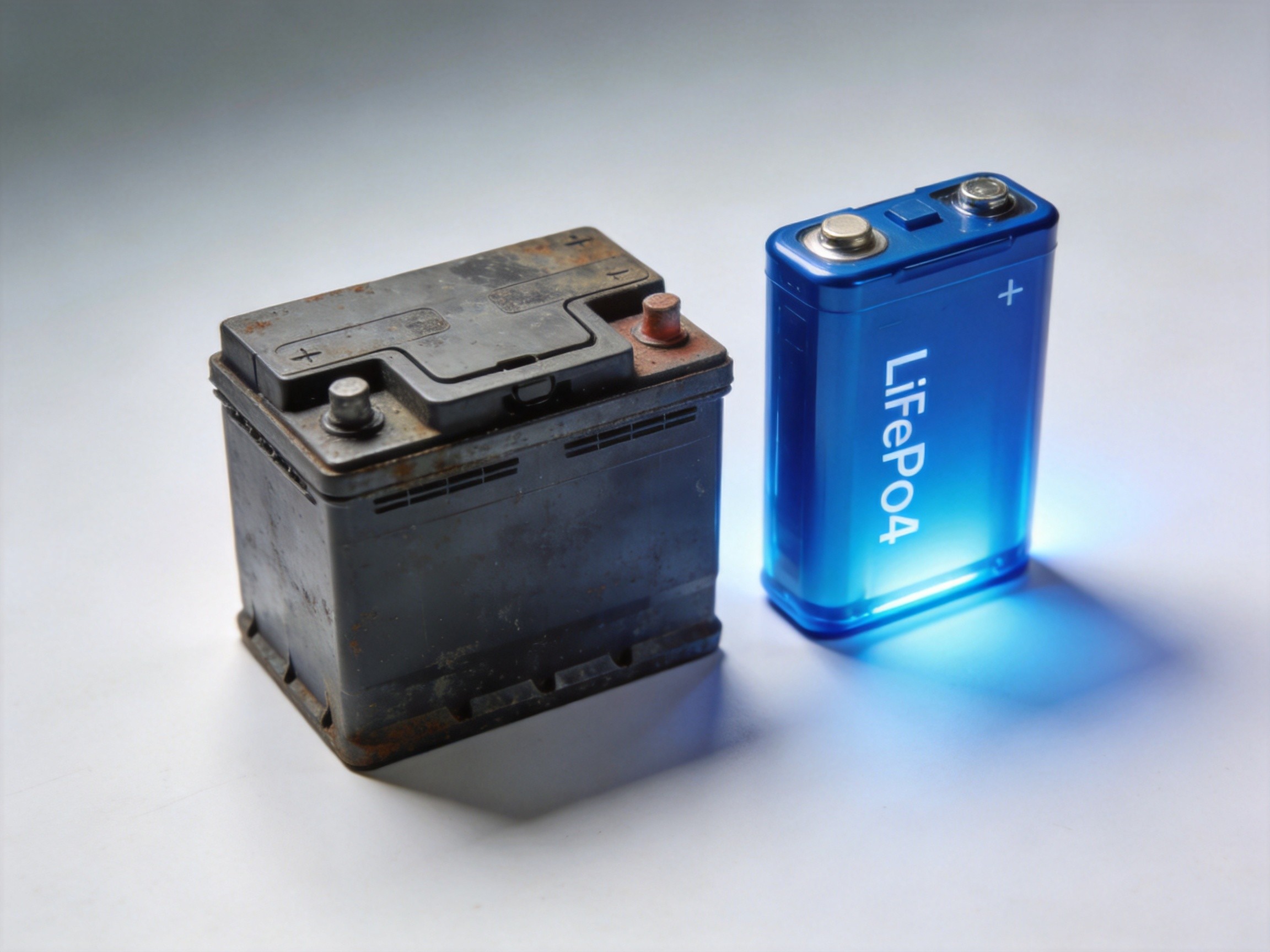
Battery chemistry directly impacts safety, lifespan, and performance. Lithium iron phosphate (LiFePO4) has become the dominant choice for home energy storage due to its superior safety profile and long cycle life. LiFePO4 cells are thermally stable, resistant to thermal runaway, and do not use cobalt or nickel, making them more environmentally responsible.
CMJ Solar uses LiFePO4 cells across all energy storage products. These cells deliver 2,000 to 4,000 charge-discharge cycles depending on the product configuration, translating to 5-10 years of daily use. All CMJ Solar battery systems come with a 5-year warranty, providing buyers and end-users with long-term confidence.
When comparing chemistries, avoid lead-acid for new installations. While lead-acid batteries have a lower upfront cost, their 300-500 cycle life, heavy weight, and maintenance requirements make them significantly more expensive per cycle over their useful life.
Step 3: Evaluate Inverter Specifications
The inverter is the heart of any energy storage system, converting DC battery power to AC power for household use. Key specifications to evaluate include output power (rated in kW), output voltage, waveform type, and MPPT charging capability.
For European markets, the inverter must deliver 230V AC output to match standard household voltage. All CMJ Solar energy storage systems with integrated inverters — including the Apollo and Ares series — feature 230V AC output, ensuring compatibility with European electrical standards. The Apollo A series offers 6 kW and 12 kW inverter options, while the Ares series covers 5 kW to 12 kW depending on the model.
MPPT (Maximum Power Point Tracking) charging is essential if the system will be paired with solar panels. CMJ Solar systems feature MPPT charge controllers with input voltage ranges of 80V-500V (Apollo series) or 120V-500V (Ares series), supporting a wide variety of solar panel configurations.
Step 4: Consider Total Cost of Ownership
When evaluating energy storage systems, the purchase price is only one component of total cost of ownership. Buyers should factor in installation costs, expected battery replacement cycles, maintenance requirements, and warranty coverage.
LiFePO4 systems like those from CMJ Solar offer a compelling value proposition. With 2,000-4,000 cycles and a 5-year warranty, the cost per kWh per cycle is significantly lower than lead-acid alternatives. The modular design of the Apollo series also means capacity can be expanded over time without replacing the entire system, protecting the initial investment.
For B2B buyers, OEM/ODM customization is another cost consideration. CMJ Solar offers full OEM/ODM services, allowing distributors to brand systems under their own name, customize specifications for local market requirements, and optimize configurations for specific use cases.
Conclusion
Choosing the right home energy storage system requires careful analysis of capacity needs, battery chemistry, inverter compatibility, and long-term costs. LiFePO4 technology, with its 2,000-4,000 cycle life and inherent safety advantages, is the clear choice for modern installations. CMJ Solar offers a comprehensive range of energy storage solutions — from the modular Apollo series to the all-in-one Ares series and the versatile Athena wall-mounted batteries — all backed by a 5-year warranty and global export service.
Explore our energy storage product lines to find the right system for your project, or contact our team for personalized recommendations and OEM/ODM customization options.
Need Product Recommendations?
Our team can help you select the right energy storage or solar lighting products for your project.