
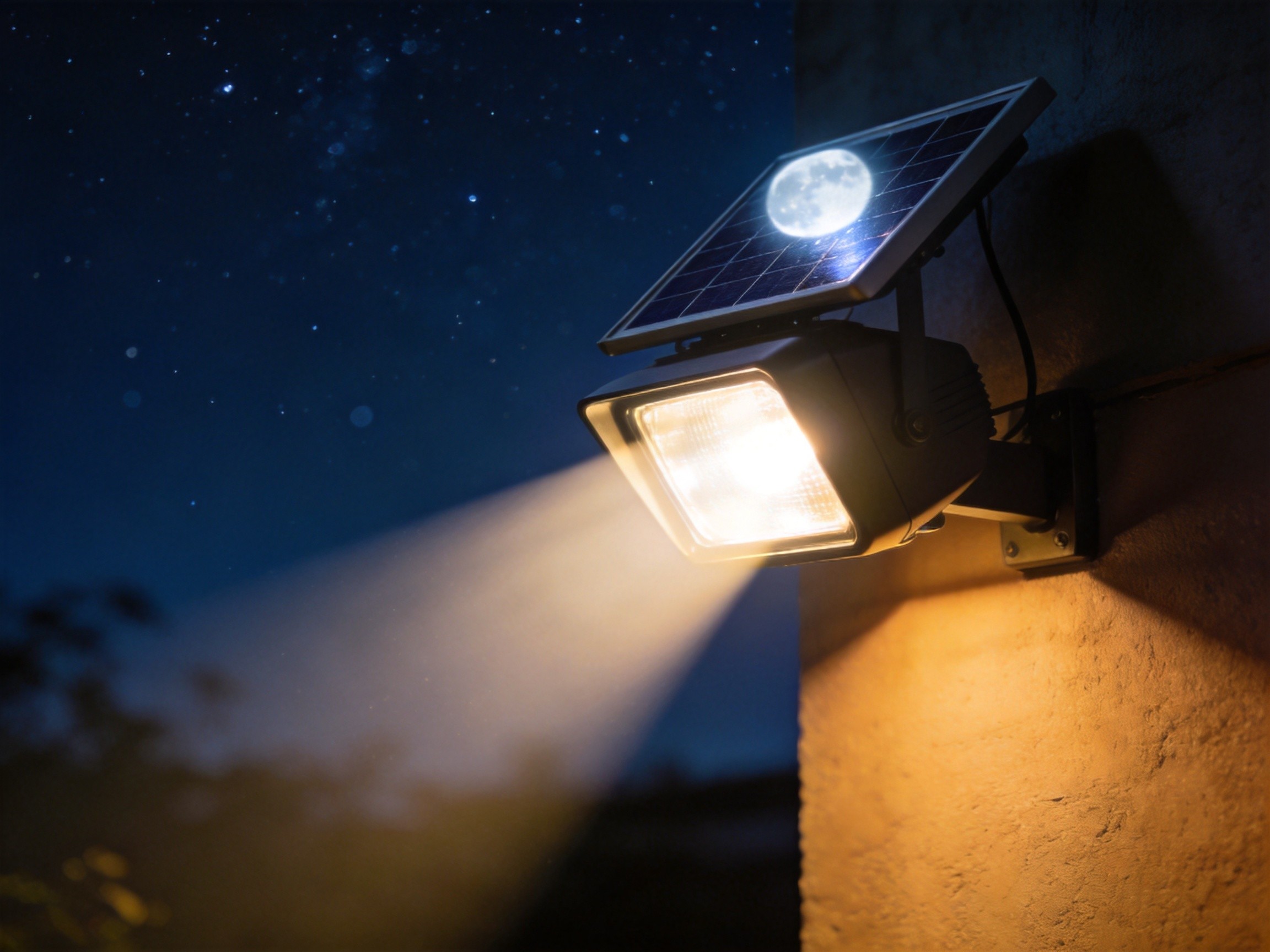
Understanding Solar Flood Light Basics
Solar flood lights have become the go-to solution for outdoor area lighting across commercial, industrial, and residential applications. They eliminate trenching and wiring costs, reduce electricity bills to zero, and can be installed in remote locations without grid access. For B2B buyers — including contractors, distributors, and project developers — selecting the right solar flood light requires understanding the relationship between wattage, lumens, battery capacity, and environmental protection ratings.
This guide breaks down each specification with real data from CMJ Solar product lines to help you make informed procurement decisions for your projects.
Wattage vs Lumens: What Actually Matters
A common misconception in solar lighting is that higher wattage equals brighter light. In reality, brightness is measured in lumens, and wattage only indicates the power consumption of the LED chip. Two lights with the same wattage rating can produce vastly different lumen outputs depending on LED efficiency, optical design, and driver quality.
When selecting solar flood lights, always prioritize lumen output over wattage. For reference, CMJ Solar flood lights range from 620 lumens (60W Breaker model) to 3,263 lumens (800W Breaker model). The Transformer series offers 530 to 2,550 lumens across 100W to 600W models. A general guideline: 600-1,000 lumens suits small area lighting (patios, pathways), 1,000-2,000 lumens covers medium areas (driveways, yards), and 2,000+ lumens is needed for large areas (parking lots, building facades).
Wattage does matter for one critical reason: it determines how quickly the battery is drained. Higher wattage lights consume more power per hour, requiring larger battery capacity and solar panel wattage to maintain overnight operation. This is why optimizing lumens-per-watt efficiency is essential for system performance.
Battery Capacity and Chemistry
The battery is the most critical component of a solar flood light, determining how long the light operates and how many cloudy days it can sustain. Two factors matter: battery capacity (measured in Ah or Wh) and battery chemistry.
CMJ Solar flood lights exclusively use LiFePO4 (lithium iron phosphate) battery cells, which offer 2,000 cycle life — far exceeding the 300-500 cycles of lead-acid alternatives. Battery capacities range from 6Ah (60W models) to 54Ah (800W models with camera). The larger the battery, the more runtime the light provides during periods without sunlight.
Most CMJ Solar flood lights are designed to operate for 2-3 consecutive rainy days on a single charge. The Transformer series extends this to 18 hours of continuous operation. When evaluating products, calculate the required runtime: if the light needs to run 10 hours per night with 2 days of backup, the battery must store at least 30 hours of operating energy.
IP Rating: Weather Protection
The IP (Ingress Protection) rating indicates how well the light is sealed against dust and water. For outdoor solar lighting, IP65 is the minimum acceptable rating. IP65 means the fixture is completely dust-tight and protected against water jets from any direction.
All CMJ Solar flood lights carry an IP65 rating, ensuring reliable operation in rain, snow, and dusty environments. This is particularly important for flood lights, which are typically mounted in exposed locations such as building exteriors, parking areas, and construction sites. Products with lower IP ratings (IP44, IP54) may fail prematurely in harsh weather conditions, leading to costly replacements and warranty claims.
Solar Panel Quality
The solar panel determines how quickly the battery recharges during daylight hours. CMJ Solar uses A-grade monocrystalline silicon panels across all flood light models, ranging from 12W (for 60W lights) to 50W (for 800W lights). Monocrystalline panels offer higher efficiency (18-22%) than polycrystalline alternatives, meaning more energy is harvested from the same panel area.
Charging time is another consideration. CMJ Solar flood lights typically require 4-8 hours of sunlight for a full charge. In regions with shorter daylight hours or frequent overcast conditions, choosing a model with a larger panel-to-battery ratio ensures reliable charging even under suboptimal conditions.
Smart Features and Installation
Modern solar flood lights offer intelligent features that enhance energy efficiency and security. CMJ Solar products include light-sensing control (automatic on/off at dusk and dawn), remote control operation, and radar motion sensing. Some models in the Breaker Camera series integrate 4MP (1440P) cameras with 4G connectivity and two-way audio, combining lighting with security surveillance.
For installation, consider the mounting height and angle. CMJ Solar flood lights include U-shaped mounting brackets and waterproof cables (3-5 meters) for flexible installation. The recommended mounting height varies by model: 3 meters for smaller units (60-200W) and 4-5 meters for larger units (400-800W).
Conclusion
Selecting the right solar flood light requires looking beyond wattage to understand lumens, battery capacity, IP rating, and panel quality. CMJ Solar offers a comprehensive range of solar flood lights — from the economical Aurora series to the high-performance Breaker and Transformer series — all featuring LiFePO4 batteries, A-grade monocrystalline panels, and IP65 weather protection.
Explore our complete solar flood light collection to compare specifications, or contact our team for project-specific recommendations and bulk pricing.
Need Product Recommendations?
Our team can help you select the right energy storage or solar lighting products for your project.