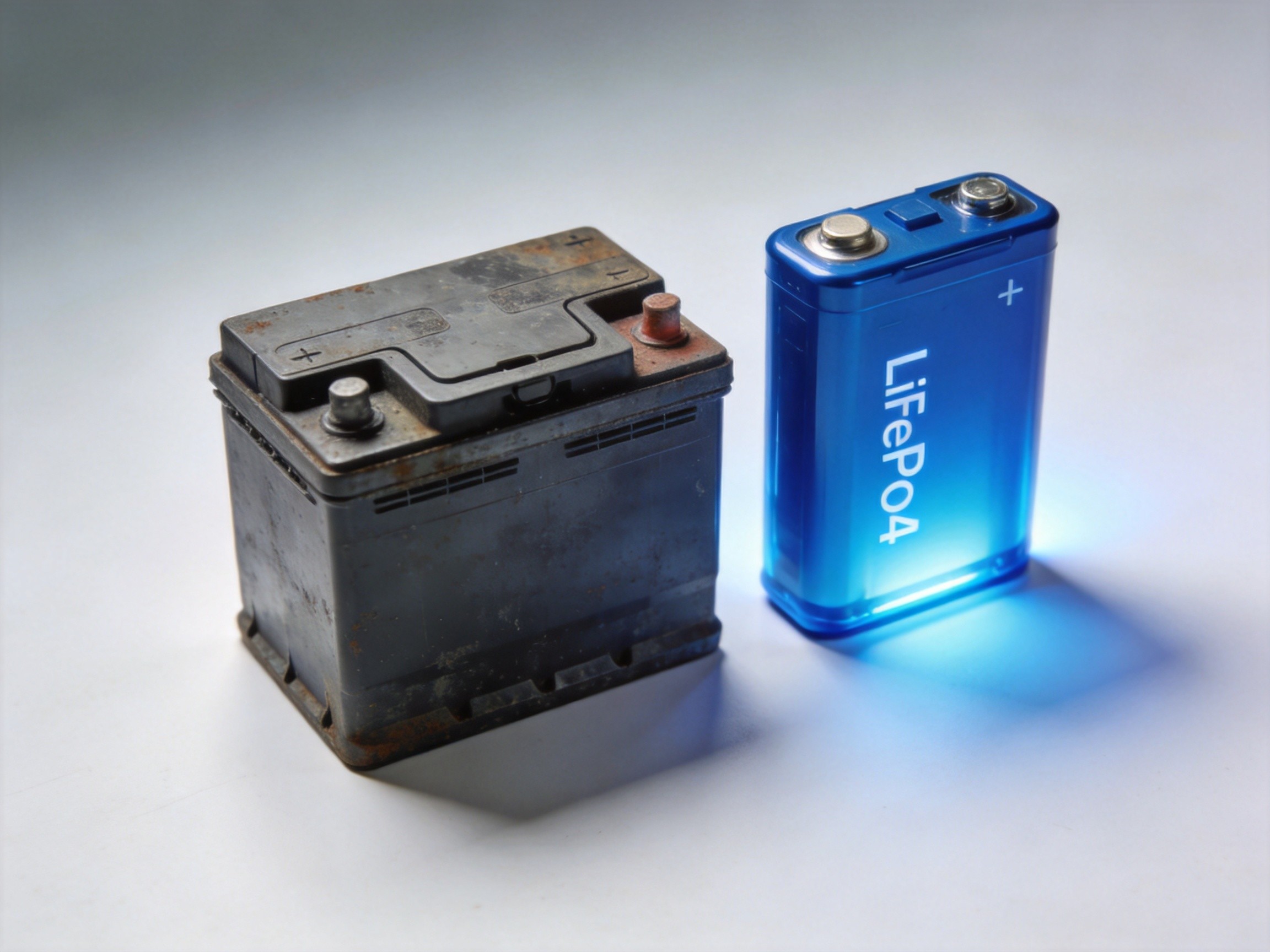
Are LiFePO4 batteries safe for home and commercial use? Yes, Lithium Iron Phosphate (LiFePO4) batteries are exceptionally safe for residential and commercial energy storage due to their highly stable chemical structure, integrated Battery Management Systems (BMS), and significantly lower thermal runaway risks compared to other lithium-ion chemistries. This inherent stability makes them the preferred choice for indoor home backup power and critical infrastructure.
What Makes LiFePO4 Chemistry Inherently Safe Against Thermal Runaway?
When evaluating home energy storage battery safety, the primary concern for buyers is the risk of thermal runaway. Thermal runaway is a dangerous chain reaction where an increase in temperature causes further temperature increases, potentially leading to fires or explosions. LiFePO4 chemistry mitigates this risk fundamentally at the molecular level. This is because the iron-phosphate chemical bond is significantly stronger and more thermally stable than the cobalt-oxygen bonds found in other lithium-ion variants like NMC or NCA. When exposed to high temperatures or physical damage, the phosphate cathode does not readily release oxygen, which is the primary fuel for lithium fires. Consequently, the CMJ Solar LiFePO4 battery relies on this intrinsic chemical stability to prevent catastrophic failures. Additionally, the physical structure of the LiFePO4 cell allows for better heat dissipation. At the CMJ Solar Jiangmen factory, every batch of cells undergoes rigorous thermal cycling and short-circuit testing during the OEM/ODM manufacturing process to verify these safety claims before they ever reach the market. For buyers comparing technologies, understanding this chemical advantage is crucial, which is why we often discuss these differences in our guide on LiFePO4 vs Lead-Acid: Which Battery Is Better?. While lead-acid batteries have their own safety profiles regarding acid spills and off-gassing, LiFePO4 offers a sealed, maintenance-free alternative that eliminates those specific chemical hazards while providing superior thermal stability. Who benefits most from this chemistry? Residential homeowners and commercial facility managers who require zero-emission, fire-resistant power storage installed in confined or occupied indoor spaces.
How Does the Battery Management System Prevent Electrical Hazards?
Beyond the inherent chemical stability, how does the battery management system safety protocols protect the user during daily operation? The BMS acts as the central nervous system of the battery pack, continuously monitoring individual cell voltages, overall pack temperature, and current flow to prevent electrical hazards. If the system detects an anomaly, it immediately disconnects the circuit to protect both the battery and the connected loads. First, the BMS prevents overcharging by balancing the cells and cutting off the charge current when the maximum voltage threshold is reached, which prevents cell swelling and degradation. Second, it prevents over-discharging by halting the power output when the voltage drops to a critical minimum, thereby preserving the long-term health of the cells. Third, it provides short-circuit and over-current protection, instantly reacting to sudden spikes in power draw. To illustrate this in a practical application, consider the Lead-to-Lithium Battery 12.8V 100Ah SCLFP-12.8V-100. This specific model operates at 12.8V with a capacity of 100Ah (1280Wh) and supports a continuous discharge current of 100A. Managing a 100A discharge safely requires a highly responsive BMS to prevent internal wiring from overheating. The physical dimensions of 33*17.2*21.5CM allow for versatile installation in tight spaces, but the safety protocols remain uncompromised regardless of the mounting orientation. The BMS also features cell balancing capabilities, which ensures that no single cell in the 12.8V series configuration is subjected to undue stress, thereby extending the overall pack life and maintaining safe operating temperatures. For a deeper look at BMS architecture — passive versus active balancing, SOC/SOH reporting and CAN/RS485 coordination with the inverter — see our BMS explained guide. Why is this important for installers? It means they can confidently specify this battery for high-draw applications without needing to engineer complex external thermal management systems, knowing the internal BMS will handle the electrical safety parameters automatically.
Is Home Energy Storage Battery Safety Guaranteed During Extreme Conditions?
Is home energy storage battery safety guaranteed when the system is subjected to extreme environmental conditions or grid instability? Safety in residential settings is not just about preventing fires; it is also about maintaining operational integrity during severe weather events, extreme ambient temperatures, or prolonged power outages. LiFePO4 batteries are engineered to withstand a much wider range of operating temperatures compared to traditional alternatives. When a grid failure occurs during a severe winter storm or a summer heatwave, the battery must safely accept a charge from solar panels and discharge to critical home loads without triggering a thermal shutdown. The CMJ Solar engineering team designs these systems with wide operating temperature tolerances, ensuring that the BMS will only disconnect the system if the internal cell temperature genuinely threatens the hardware, rather than tripping prematurely. For larger residential or light commercial setups, the Lead-to-Lithium Battery 12.8V 200Ah SCLFP-12.8V-200 provides a massive 2560Wh of energy storage with a flexible 100A or 150A discharge current. Measuring 52.2*24*21.8CM, this high-capacity unit is built with heavy-duty internal connections and advanced thermal monitoring to handle the stress of extended backup scenarios. This 5-year warranty covers defects in materials and workmanship, giving buyers long-term manufacturer support for the BMS, internal fusing and other safety components. For regions experiencing frequent grid fluctuations, this reliability is not just a convenience, but a critical safety requirement to prevent electrical faults in the home. Who relies on this level of resilience? Homeowners in regions prone to natural disasters or unstable grids, who need absolute certainty that their backup power will not fail or become a hazard when they need it most.
What Are the Key Safety Features in All-in-One ESS Systems?
What are the key safety features in all-in-one energy storage systems that differentiate them from split-component setups? All-in-one Energy Storage Systems (ESS) integrate the battery modules, inverter, and charge controller into a single, unified enclosure. This integration drastically improves home energy storage battery safety by minimizing the number of external high-voltage wiring connections. Fewer external connections mean a significantly reduced risk of installation errors, loose terminals, and subsequent short circuits or arc flashes. When installers deploy an all-in-one system, the internal communication between the BMS and the inverter is handled via secure, pre-configured internal buses rather than relying on external communication cables that can be pinched, corroded, or disconnected. The enclosure itself is designed with integrated ventilation and thermal management pathways, ensuring that the heat generated by the inverter and the battery modules is efficiently dissipated. For projects requiring scalable, high-capacity solutions, CMJ Solar offers the Apollo All-in-One ESS and the Ares All-in-One ESS, both of which feature advanced internal safety architectures. You can explore the specific differences between these platforms in our detailed comparison at CMJ Solar Apollo vs Ares: Which All-in-One ESS Series Is Right for Your Market?. Separately, for 24V-class builds, the Lead-to-Lithium Battery 25.6V 100Ah SCLFP-25.6V-100 delivers 25.6V, 100Ah (2560Wh) capacity and a 100A discharge current within a compact 52.2*24*21.8CM footprint. Why does this matter for system safety? Because the 25.6V architecture reduces the current required for the same power output compared to 12V systems, which in turn reduces resistive heat generation inside the enclosure. Distributors and EPC contractors looking to source reliable, integrated energy storage solutions benefit from these engineered safety margins, ensuring faster deployments and lower long-term maintenance liabilities.
Frequently Asked Questions
Can LiFePO4 batteries catch fire in residential settings? The risk of a LiFePO4 battery catching fire in a residential setting is exceptionally low, approaching zero under normal operating conditions. This is primarily due to the strong iron-phosphate chemical bonds that do not release oxygen when heated, combined with a multi-layered Battery Management System that actively prevents overcharging, overheating, and short circuits. As long as the battery is installed according to the manufacturer's guidelines and used within its specified voltage and current parameters, it remains one of the safest energy storage technologies available for indoor home use.
How long do LiFePO4 batteries last before safety degrades? CMJ Solar LiFePO4 cells are rated for 2000 to 4000 cycles, depending on the specific depth of discharge and operating conditions. Unlike some chemistries that experience sudden capacity drops or increased internal resistance that can lead to thermal issues, LiFePO4 degrades very gradually. This means the battery remains safe and operational throughout its entire lifespan. Furthermore, our energy storage category products are protected by a 5-year warranty, ensuring that the safety and performance characteristics are maintained and supported by the manufacturer for the long term.
Ready to specify safe, high-performance LiFePO4 energy storage for your next residential or commercial project? Our engineering and sales teams are available to help you select the right battery models and all-in-one systems for your specific safety and capacity requirements. Please contact our team today to request a quote and discuss your project details.
Part of the guide
LiFePO4 Battery Technology: Chemistry, BMS, Charging and Cold Weather
Need Product Recommendations?
Our team can help you select the right energy storage or solar lighting products for your project.