
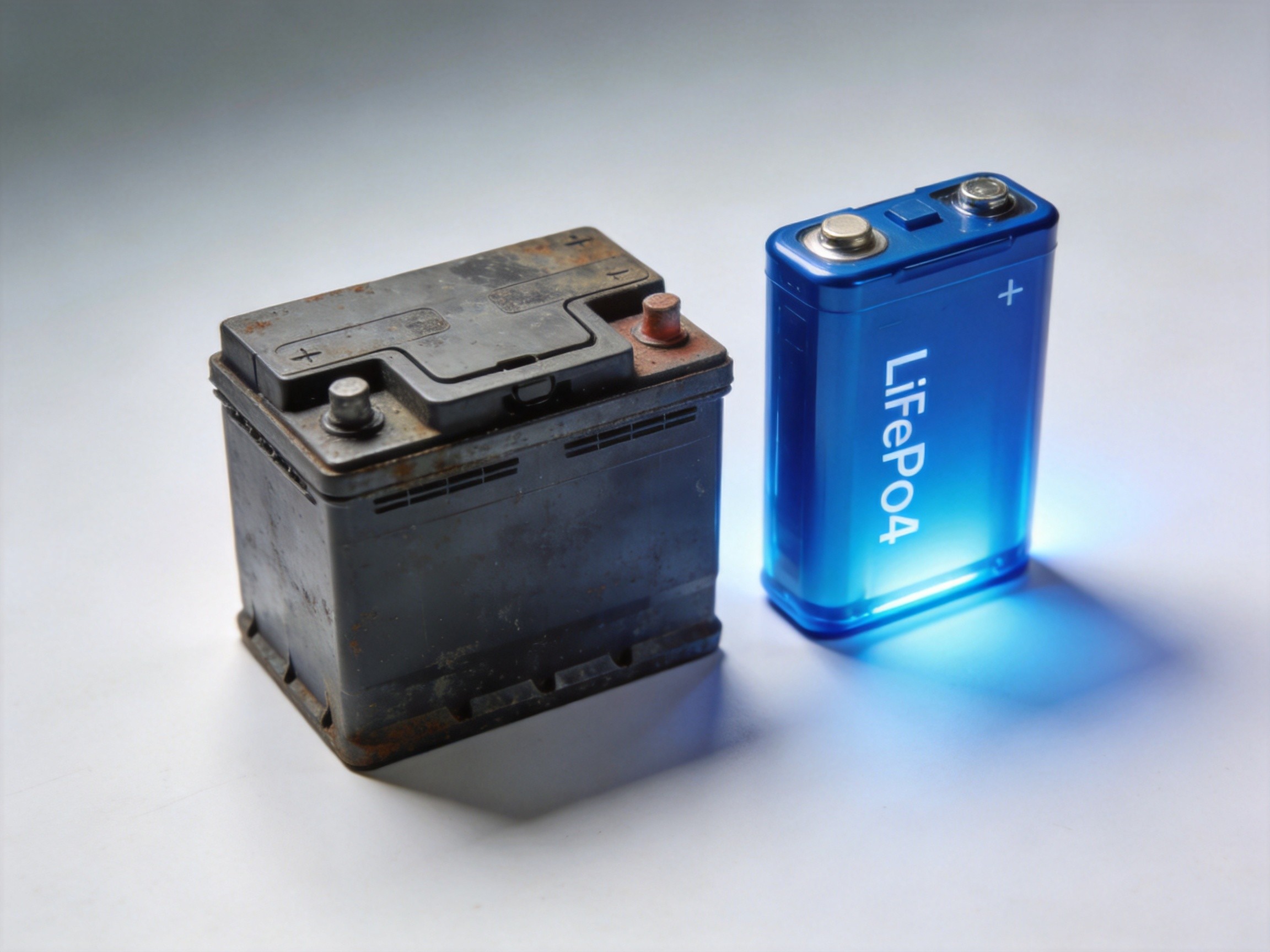
Wall-mounted LiFePO4 batteries are the fastest-growing form factor in residential energy storage because they reclaim floor space, simplify cable routing, and reduce installation time. But the wall-mount category is broader than many distributors realize: capacities range from 2.5kWh to 30kWh, voltages span 25.6V and 51.2V, and BMS capabilities vary between premium and value tiers. Specifying the wrong unit leads to wall reinforcement costs, inverter incompatibility callbacks, or an underpowered backup system.
When Wall-Mount Beats Floor-Stack
Wall-mount batteries make sense when floor space is at a premium—apartments, townhouses, utility closets, and garages where a floor-standing tower would block storage or a vehicle bay. They also simplify installations in regions with flood risk, since elevating the battery above potential water ingress protects the BMS and terminals. The trade-off is weight: a 10kWh LiFePO4 battery can weigh 80–120kg, requiring solid masonry or reinforced drywall and appropriate mounting hardware. Floor-stack units avoid wall load concerns but consume footprint.
For installers working in urban European markets where homes are compact, or in Southeast Asian and African markets where flood risk is a design consideration, wall-mount is often the default. For warehouses, outbuildings, or ground-floor utility rooms with ample floor space and concrete floors, a floor-standing all-in-one ESS may be more economical. The decision should also account for service access: wall-mounted units place terminals and communication ports at a comfortable working height, reducing technician fatigue during commissioning and maintenance, while floor-stack units may require kneeling or bending in tight spaces.
25.6V vs 51.2V: Making the Voltage Call
Voltage selection is driven by the inverter the battery will pair with, not by the battery itself. Most modern residential hybrid inverters operate at 48V nominal (51.2V LiFePO4), but a significant installed base—particularly in off-grid, telecom, and smaller backup systems—uses 24V nominal (25.6V LiFePO4). Matching voltage is non-negotiable: a 25.6V battery connected to a 48V inverter will not charge properly and may trigger BMS protection or damage the charger.
Choose 25.6V for small off-grid cabins, 24V telecom backup, RV and marine systems, and budget installations using 24V inverters. Choose 51.2V for grid-tied residential hybrid systems, whole-home backup, and any installation using a 48V inverter. The 51.2V platform also supports higher power delivery at lower current, reducing cable gauge requirements for systems above 3kW. At 5kW continuous output, a 51.2V battery supplies roughly 98A, while a 25.6V battery would need to supply 195A for the same power—requiring significantly thicker DC cables and heavier busbars.
Athena A, B, and C: Tier Positioning
CMJ Solar's wall-mounted line, the Athena series, is organized into three tiers that allow distributors to address premium, mid-range, and high-capacity value segments without leaving the wall-mount form factor.
Athena A: Premium Compact
The Athena A line is the premium tier, featuring BAK prismatic cells and a compact, slim enclosure designed for residential interiors where aesthetics matter. The range includes the Athena A 2.5kWh (25.6V/100Ah), which measures just 36×19.5×42cm and uses BAK 100Ah cells with a 100A discharge current—ideal for small 24V off-grid or telecom-adjacent installations. At 51.2V, the Athena A 5kWh (51.2V/100Ah) delivers 5120Wh in a 40.5×18.5×58cm slim-profile enclosure, and the Athena A 10kWh (51.2V/200Ah) provides 10240Wh with a 100A/200A discharge current in a 43.5×28×63cm unit.
The Athena A's slim depth (under 20cm for the 5kWh model) makes it the best choice for hallway installations, garage sidewalls, and any location where a deeper cabinet would protrude into walkway space. The BAK cell sourcing provides consistent quality and traceability for markets that demand Tier-1 cell supply. The clean, low-profile enclosure also appeals to homeowners who do not want their battery to look like industrial equipment—an important factor in residential retrofits where the unit may be visible from living areas.
Athena B and C: Value High-Capacity
The Athena B and C tiers target customers who need substantial capacity at a competitive price point. The Athena B 15kWh (51.2V/300Ah) delivers 15360Wh with a 200A discharge current in a 48.5×26×77cm enclosure. It is the workhorse for mid-size homes that want wall-mount convenience with enough capacity for overnight backup and partial daytime solar shifting.
At the top of the wall-mount range, the Athena C 30kWh (51.2V/600Ah) provides 30720Wh with a 200A BMS in an 81×40×76cm cabinet. This is one of the highest-capacity wall-mounted LiFePO4 batteries available from CMJ Solar and is designed for large homes, small commercial installations, or properties that require multi-day autonomy. At this capacity, wall structural assessment is essential—the unit is significantly heavier than the 5kWh and 10kWh models and requires a load-bearing wall with appropriate anchor hardware.
Weight, Clearance, and Installation Requirements
Installers should verify wall construction before quoting any wall-mounted battery. The Athena A 5kWh at 40.5×18.5×58cm is manageable for two-person installation on solid masonry or properly studded drywall. The 10kWh model is heavier and wider, requiring confirmation that the wall can support the static load plus vibration and seismic considerations in relevant regions. The 15kWh Athena B and 30kWh Athena C demand a structural wall—concrete block, poured concrete, or reinforced masonry. Drywall alone is not sufficient for the 30kWh unit.
Leave a minimum clearance of 20cm above and below the unit for ventilation and BMS heat dissipation, and 30cm in front for service access to the wiring compartment and any communication ports. Avoid installing wall-mount batteries in direct sunlight or near heat sources such as furnaces or water heaters, as elevated ambient temperatures accelerate cell degradation. In coastal or high-humidity environments, verify that the wall surface and mounting hardware are corrosion-resistant, and consider a sealed conduit for cable entries to prevent moisture ingress into the wiring compartment.
Pairing with Third-Party Hybrid Inverters
Unlike all-in-one ESS units that ship with a built-in inverter, wall-mounted batteries are standalone energy storage that must be paired with a separate hybrid or off-grid inverter. This gives installers flexibility but requires careful compatibility checking. Verify three parameters before commissioning: battery voltage must match the inverter's nominal battery voltage (51.2V for 48V inverters, 25.6V for 24V inverters); the BMS communication protocol must be supported by the inverter (common protocols include CAN, RS485, and Pylontech-compatible CAN); and the inverter's charge and discharge current settings must be configured within the battery BMS limits.
The Athena A 10kWh supports a 100A/200A discharge current, making it compatible with hybrid inverters up to roughly 10KW continuous. The Athena B 15kWh and Athena C 30kWh both feature 200A BMS discharge ratings, suitable for inverters up to approximately 10KW at 51.2V. For higher-power installations, consider paralleling multiple battery units or stepping up to an all-in-one ESS with a built-in 12KW inverter.
BMS and Communication Protocols
The battery management system is the component that determines whether a third-party inverter can read state of charge, control charge/discharge rates, and trigger fault protection. Premium Athena A units with BAK cells typically support standard communication protocols used by major inverter brands. Distributors should request the protocol compatibility list from CMJ Solar for each Athena model before specifying it for a project, as protocol support can vary by production batch and firmware version. For installations where the inverter requires a specific communication profile, confirm compatibility in writing before ordering.
The BMS also handles cell balancing, overcharge/over-discharge protection, short-circuit protection, and thermal monitoring. LiFePO4 BMS cut-off voltages are typically 2.5V per cell low and 3.65V per cell high, translating to a 40V–58.4V operating range for a 51.2V (16S) pack. Inverter charge voltage should be set to 56.0V–57.6V for 51.2V LiFePO4 packs, and 28.0V–28.8V for 25.6V (8S) packs. Using the default lead-acid or gel charge profile on a hybrid inverter will undercharge or overcharge the LiFePO4 battery and reduce cycle life. Distributors should also note that BMS firmware may need updating when pairing with newly released inverter models. CMJ Solar provides firmware update files and protocol documentation to authorized distributors, reducing the risk of field incompatibility. Always request the latest protocol compatibility sheet before commissioning a battery with a new inverter brand or model.
Common Specification Errors
The most common error is specifying a 25.6V battery for a 48V inverter or vice versa—always confirm the inverter's battery voltage before ordering. The second is underestimating wall load for the 15kWh and 30kWh units, leading to costly remediation or unsafe installations. The third is failing to update the inverter charge profile from the default lead-acid setting to LiFePO4, which voids warranty claims and reduces battery life. The fourth is paralleling batteries from different manufacturers or different capacity tiers, which can cause current imbalance between packs. If expansion is planned, use identical models from the same production series. The fifth is ignoring discharge current limits: pairing a 100A BMS battery with an inverter that can pull 150A will trip the BMS under heavy load.
Final Recommendations
For most residential 48V hybrid inverter installations, the Athena A 5kWh is the entry point and the Athena A 10kWh is the volume model. For 24V systems, the Athena A 2.5kWh at 25.6V covers small off-grid and telecom needs. When customers need more capacity at a value price, the Athena B 15kWh and Athena C 30kWh deliver. Explore the full Athena wall-mounted battery lineup and contact CMJ Solar for inverter compatibility matrices, mounting hardware specs, and distributor pricing.
Need Product Recommendations?
Our team can help you select the right energy storage or solar lighting products for your project.