
Planning solar for cabin off grid requires calculating your daily energy consumption in watt-hours, selecting a LiFePO4 battery bank sized for at least two days of autonomy, and choosing an all-in-one energy storage system like the CMJ Solar Apollo ESS that integrates the inverter and charge controller. Proper off grid solar kit sizing ensures your cabin maintains reliable power for lighting, appliances, and security systems without relying on grid extensions or noisy generators. This comprehensive approach guarantees that your remote property remains comfortable and functional regardless of external weather conditions or utility availability.
How Do You Calculate the Right Off Grid Solar Kit Sizing for a Cabin?
To determine the correct capacity for your cabin, you must evaluate every electrical device you plan to run, from small LED bulbs to large refrigeration units. First, list all appliances and their wattage, then multiply by the hours of daily use to find your total daily watt-hour consumption. Second, factor in system inefficiencies and days with low sunlight by multiplying your daily usage by a safety factor of 1.2 to 1.5, which is crucial for maintaining power during extended cloudy periods. Third, select a battery bank that can store enough energy to cover your calculated needs plus the required days of autonomy, which is why a robust LiFePO4 battery for cabin applications is highly recommended by system designers. This methodical approach prevents under-sizing, which leads to frustrating power outages, and over-sizing, which wastes valuable capital. By accurately mapping your energy profile, you ensure the system meets your specific lifestyle needs, whether you are running a small weekend retreat or a full-time remote residence. For a deeper dive into the components and calculation methods, you can read our detailed guide on Off Grid Solar System Kit: What's Included & How to Size.
Accounting for Seasonal Weather Variations
When calculating your energy needs, it is vital to account for seasonal weather variations that can drastically reduce solar harvest. Winter months typically bring shorter days and lower sun angles, meaning your solar panels will produce significantly less energy than in the summer. To compensate for this, you must increase your battery bank capacity and potentially add more solar panels to ensure you can still meet your daily load requirements during the worst weather weeks of the year. This proactive planning is how you avoid relying on a backup generator, keeping your cabin truly off-grid and silent.
Why Choose a LiFePO4 Battery for Cabin Applications Over Lead-Acid?
Selecting the right chemistry is critical for long-term reliability in remote locations where maintenance visits are difficult and costly. A LiFePO4 battery for cabin use offers superior cycle life, rated between 2000 to 4000 cycles, because the lithium iron phosphate chemistry remains structurally stable during repeated charging and discharging. This stability means the battery degrades much slower than traditional alternatives, providing consistent performance over its lifespan. Furthermore, these batteries support a much deeper depth of discharge, allowing you to utilize a higher percentage of the rated capacity without damaging the cells. This is how off-grid users maximize their usable energy storage without needing to physically double the battery bank size or increase the structural footprint. CMJ Solar manufactures these advanced LiFePO4 cells at our Jiangmen factory, ensuring strict quality control for OEM/ODM partners who demand uncompromising reliability. The integrated battery management system also protects against overcharging and deep discharging, which is why these units are the preferred choice for modern off-grid installations. If you are transitioning from an older setup, our detailed article on How to Replace a Lead-Acid Battery with Lithium provides a step-by-step process for upgrading your system safely and efficiently.
Which CMJ Solar Apollo ESS Model Fits Your Cabin's Power Needs?
When integrating your battery with an inverter and charge controller, an all-in-one unit simplifies installation and reduces wiring complexity, making it ideal for cabin environments. The Apollo A Series 5kWh All-in-One ESS (model SCAP-A-51.2-100) is an excellent starting point for smaller cabins, offering 5120Wh capacity at 51.2V and a continuous power output of 6KW, all housed in compact dimensions of 60*40.5*19.5CM. For cabins with higher energy demands, such as those running heating appliances or multiple refrigerators, the Apollo A Series 10kWh All-in-One ESS (model SCAP-A-51.2-200) doubles the capacity to 10240Wh while maintaining the 6KW power output and supporting a max MPPT charge current of 120A. If your cabin requires even more robust solar harvesting, the Apollo A Series 12KW 10kWh All-in-One ESS (model SCAP-A-51.2-200P) upgrades the inverter power to 12KW and increases the max MPPT charge current to 160A, allowing for faster charging from larger solar arrays. All these models feature a PV input voltage range of 80V-500V and an inverter output voltage of 230V, making them highly versatile for various off-grid configurations. You can explore the full range of these systems in our energy storage category to find the perfect match for your specific load profile.
Installation and Space Considerations for All-in-One Units
One of the primary advantages of choosing an all-in-one system is the simplified installation process, which is particularly beneficial for cabin builds where space and labor are at a premium. These units consolidate the inverter, charge controller, and battery management system into a single chassis, drastically reducing the amount of internal wiring required. When planning your utility closet or equipment room, ensure you allocate enough clearance around the unit for proper ventilation, as thermal management is critical for maintaining the longevity of the internal LiFePO4 cells. Proper airflow prevents overheating during heavy discharge cycles, which is why following the manufacturer's spacing guidelines is essential for optimal performance.
How Should You Design a Cabin Solar Lighting Setup for Security and Ambiance?
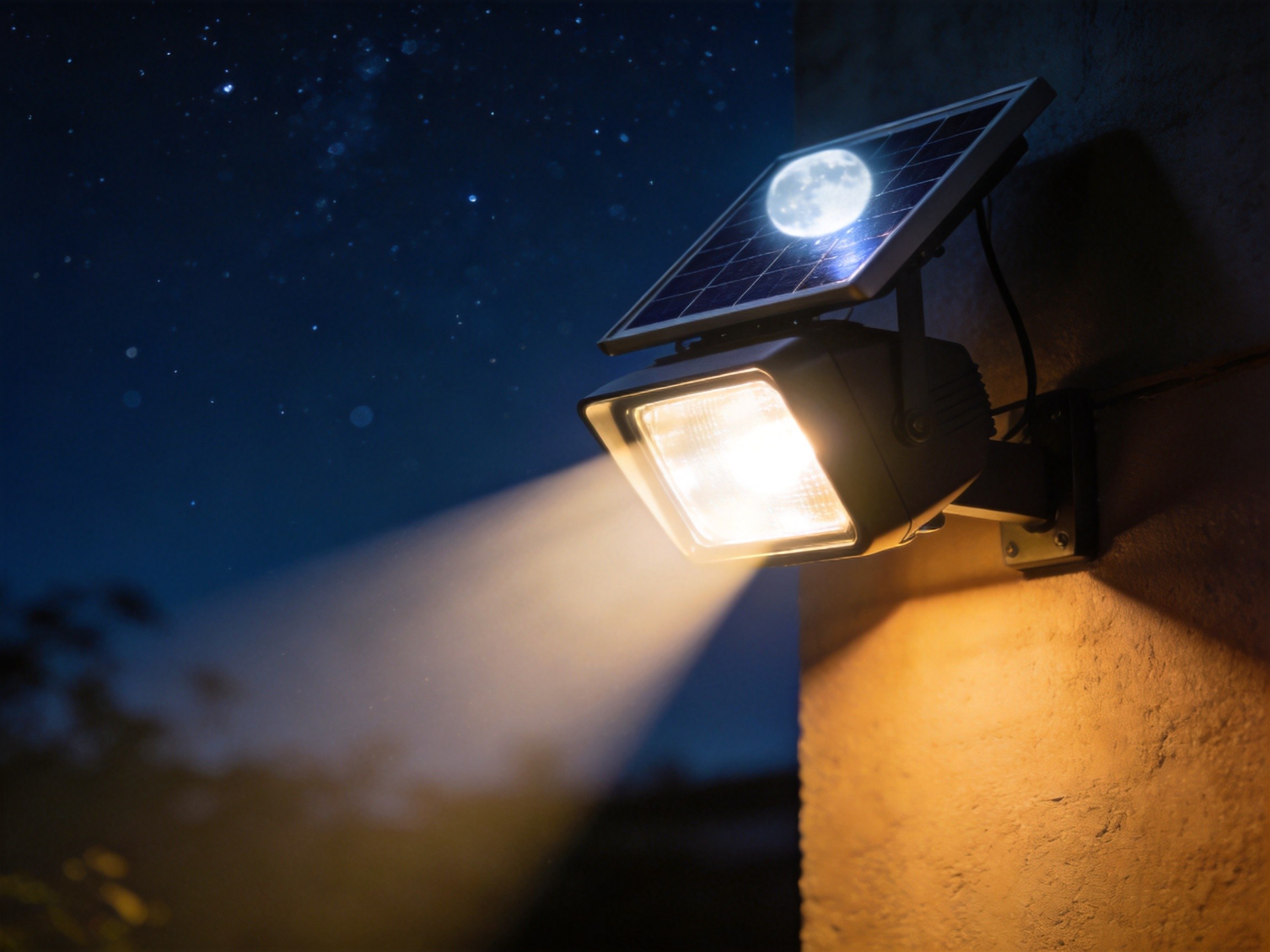
Illuminating the perimeter and interior of your cabin is essential for both security and practical nighttime use, especially in areas with no ambient light pollution. A well-designed cabin solar lighting setup relies on dedicated solar flood lights that operate independently of your main ESS, ensuring that lighting needs do not drain your primary battery bank during the night. When selecting fixtures, you must consider the lumen output, beam angle, and the integrated battery capacity to ensure they survive consecutive cloudy days without failing. CMJ Solar offers comprehensive solutions for these needs, and you can determine the exact specifications by reading our Solar Flood Light Buying Guide: Wattage, Lumens, Battery. Proper placement is also critical for optimal performance; first, mount perimeter lights at elevated angles to maximize solar panel exposure and minimize shadow casting from surrounding trees. Second, use motion-sensor capabilities on security lights to conserve battery power while effectively deterring intruders. Third, install lower-lumen pathway lights to provide safe navigation without causing unnecessary light pollution. By separating your lighting loads from your main inverter system, you create a more resilient overall design. For broader outdoor illumination projects, you can also browse our solar lighting category to see the full spectrum of available commercial and residential fixtures.
What Are the Key Maintenance Practices to Extend Your System's Lifespan?
Even the most robust off-grid systems require periodic attention to maintain peak efficiency and avoid unexpected downtime in remote locations. First, inspect all physical connections and wiring for signs of corrosion or looseness, as poor connections can lead to voltage drops, energy waste, and potential fire hazards. Second, monitor your battery management system regularly to ensure that cell balancing is functioning correctly and that the state of charge remains within the manufacturer's recommended parameters, which is how you prevent long-term cell degradation. Third, keep your solar panels clean and free of debris, because even a thin layer of dust, pollen, or snow can significantly reduce energy harvest and leave your batteries undercharged. CMJ Solar designs its systems with user-friendly monitoring interfaces, allowing owners to track performance metrics and identify issues before they cause system failures. For more detailed advice on keeping your batteries in top condition and maximizing your return on investment, we highly recommend reviewing our resource on LiFePO4 Battery Maintenance: 8 Tips to Extend Lifespan. Consistent maintenance not only protects your financial investment but also ensures that your cabin remains a comfortable, safe, and fully powered retreat year after year, regardless of the season.
Frequently Asked Questions
How many solar panels do I need for an off-grid cabin? The number of panels depends on your daily watt-hour consumption and the peak sun hours in your specific geographic location, but you can calculate this by dividing your total daily energy need by the daily output of a single panel. You must also factor in system losses and seasonal variations to ensure adequate winter production. For a precise walkthrough tailored to different cabin sizes and environmental conditions, refer to our guide on How Many Solar Panels to Go Off Grid? Sizing Walkthrough.
Can I expand my battery bank later if my energy needs increase? Yes, many modern all-in-one systems are designed with scalability in mind, allowing you to add parallel battery modules as your load grows over time. However, you must ensure that your inverter's charge current limits, communication protocols, and physical space can accommodate the additional capacity safely. It is always best to consult with the manufacturer to verify compatibility before purchasing additional modules.
What is the warranty coverage for off-grid solar equipment? CMJ Solar's LiFePO4 energy storage products carry a 5-year warranty, while solar lighting fixtures are covered under separate terms. Contact our team for the specific terms that apply to your project.
Ready to design a reliable and efficient power system for your remote property? Our engineering team can help you select the ideal components and configure a system tailored to your exact energy profile. Please contact our team or request a quote today to start your off-grid journey with confidence.
Part of the guide
Off-Grid Solar and Microgrid Systems: Design, Reliability and Real Projects
Need Product Recommendations?
Our team can help you select the right energy storage or solar lighting products for your project.