
An off grid solar system kit typically includes solar panels, a hybrid inverter with an integrated MPPT charge controller, and a deep-cycle lithium battery bank to store harvested energy for continuous use. To properly size a complete off grid solar power system, you must first calculate your total daily watt-hour consumption, then determine the required battery capacity based on your desired autonomy days, and finally match the solar array wattage to recharge that battery within your local peak sun hours. At CMJ Solar, our Jiangmen factory engineers design these comprehensive kits to ensure seamless integration, allowing property owners to achieve total energy independence without relying on unreliable utility grids. Understanding these core components and sizing principles is the first step toward building a resilient, long-lasting power infrastructure for your residential or commercial project.
What is Included in a Complete Off Grid Solar Power System?
A comprehensive off grid solar system kit contains several critical components that work together to generate, convert, and store electricity independently from the main utility grid. First, the solar photovoltaic panels capture sunlight and convert it into direct current electricity, serving as the primary energy generation source. Second, the hybrid inverter converts that direct current into alternating current for your standard appliances while also managing the bi-directional power flow. Third, the deep-cycle battery bank stores the excess energy generated during the day for use at night or during extended periods of cloudy weather. Fourth, the maximum power point tracking charge controller regulates the voltage and current coming from the solar panels to protect the battery from overcharging and optimize harvest. When you source these components from a unified manufacturer like CMJ Solar, you benefit from optimized compatibility and streamlined support. This is why we engineer our systems at our Jiangmen factory to meet rigorous international standards, ensuring that every integrated battery management system communicates flawlessly with the inverter logic.
How to Size an Off Grid Solar System Kit for Your Needs?
Sizing an off grid solar system requires a systematic approach to ensure you have enough power for your daily needs without overspending on unnecessary capacity. First, you must audit your energy consumption by listing every appliance, such as refrigerators, water pumps, and lighting, and calculating their daily watt-hour usage. Second, you need to determine your peak sun hours based on your geographic location to understand how much solar energy you can realistically harvest during the shortest days of the year. Third, you must calculate the required battery capacity by dividing your daily consumption by the battery's depth of discharge limit. Understanding how to size off grid solar battery banks correctly prevents system failures during extended periods of low sunlight. This is why we always recommend adding a twenty percent safety margin to your final calculations, ensuring that your system can handle unexpected load spikes or prolonged inclement weather without dropping critical circuits.
How Many Batteries Do You Need for Off Grid Living?
The number of batteries required depends entirely on your daily energy load and the specific capacity of the battery modules you choose for your installation. For a standard medium-sized home consuming around ten kilowatt-hours per day, a single high-capacity unit like the Apollo A Series 10kWh All-in-One ESS (model SCAP-A-51.2-200) provides exactly the right amount of storage. This specific model features a 51.2V voltage, 200Ah capacity, and a 6KW power output, making it highly efficient for daily cycling. The reason this all-in-one design is so effective is that it integrates the inverter, charge controller, and battery into a single footprint with dimensions of 60*40.5*19.5CM per module. This modular approach reduces installation time and minimizes wiring losses, which is how professional installers achieve higher overall system efficiency while maintaining a clean, organized aesthetic in the utility room.
Why Choose LiFePO4 for the Best Lithium Off Grid Solar Setup?
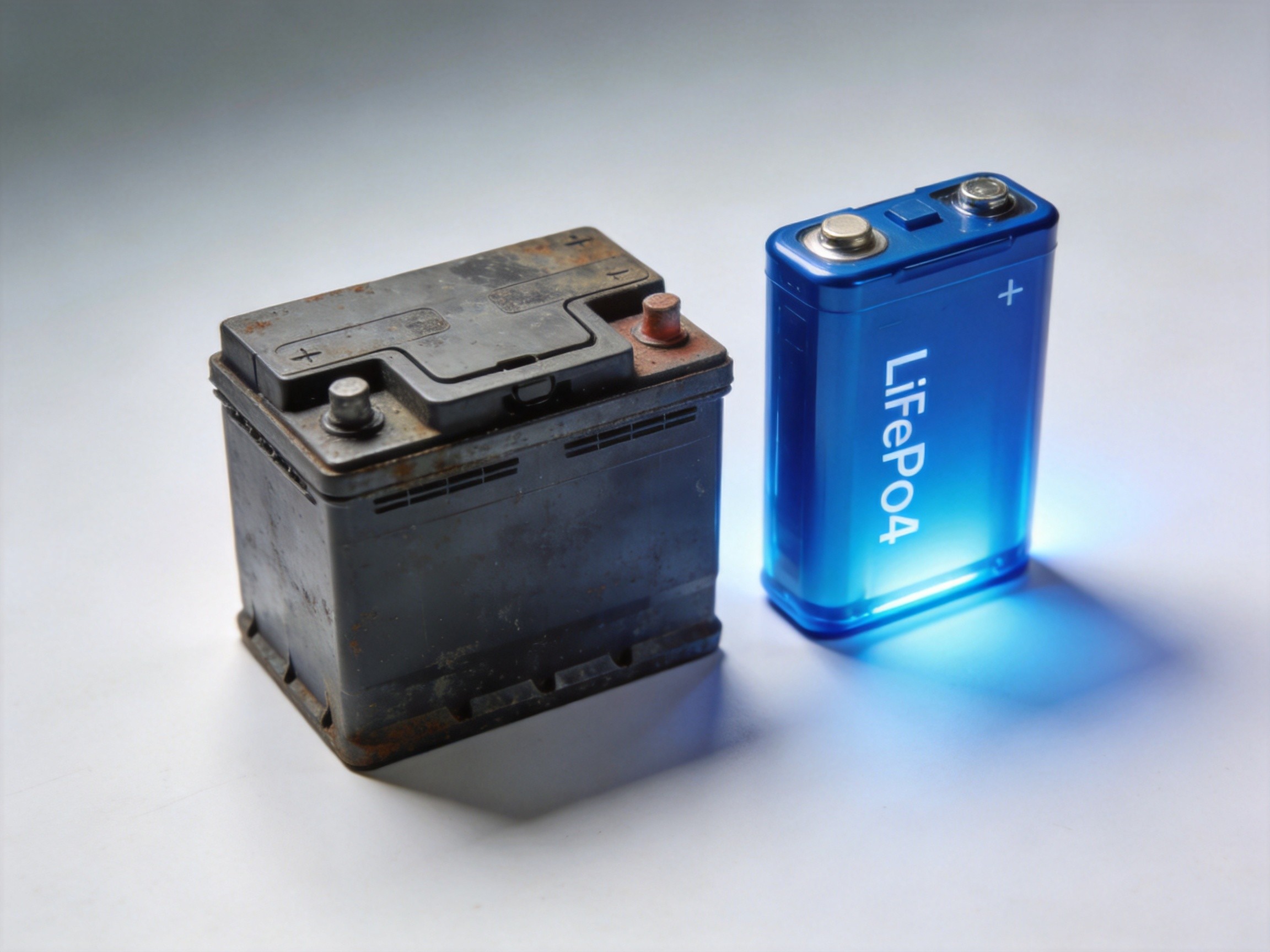
Selecting the right battery chemistry is crucial for long-term reliability, and lithium iron phosphate is universally recognized as the superior choice for off-grid applications. Compared to traditional alternatives, LiFePO4 cells offer a significantly longer cycle life, often exceeding six thousand cycles at eighty percent depth of discharge, which means the system will last for decades without needing replacement. Furthermore, they are inherently stable and do not suffer from thermal runaway, providing peace of mind for residential installations where safety is paramount. If you want to understand the technical differences in depth, our detailed guide on LiFePO4 vs Lead-Acid: Which Battery Is Better? breaks down the chemistry and performance metrics. We stand behind our LiFePO4 technology with a comprehensive 5-year warranty, ensuring that your investment in the best lithium off grid solar setup is fully protected against manufacturing defects and performance degradation over time.
What Are the Key Specifications of a High-Capacity ESS?
When evaluating equipment for larger homes or light commercial off-grid projects, you must look at continuous power output, maximum photovoltaic input, and charge current limits. For instance, the Apollo A Series 12KW 20kWh All-in-One ESS (model SCAP-A-51.2-400P) delivers a robust 12KW continuous power output and supports a massive 20480Wh capacity. It also features a maximum photovoltaic input power of 15000W across two independent trackers with a PV input voltage range of 80V-500V and a maximum MPPT charge current of 160A. These high specifications are necessary because larger homes have higher simultaneous load demands and require rapid battery recharging during short winter days. For smaller cabins or backup applications, the Apollo B Series 5kWh All-in-One ESS (model SCAP-B-51.2-100) offers a more compact 6KW power output and 5120Wh capacity, proving that scalable options exist for every project size and budget constraint.
How to Integrate Solar Lighting with Your Energy Storage?
A truly independent property also requires efficient exterior illumination, which can be seamlessly powered by your main energy storage system or via standalone commercial fixtures. When integrating lighting, you should evaluate the total lumen output and wattage of your fixtures to ensure they do not drain your primary battery bank unnecessarily during the long nighttime hours. For large perimeters, parking lots, or security zones, standalone commercial fixtures are often the most practical solution because they operate independently of the main inverter. You can explore our full range of commercial fixtures in the solar lighting category to find the right fit for your property. To understand the specific metrics you need to evaluate for outdoor security and area illumination, we highly recommend reading our Solar Flood Light Buying Guide: Wattage, Lumens, Battery, which details how to match fixture output with environmental conditions and IP rating requirements.
Maximizing System Longevity Through Proper Maintenance
Even the most advanced lithium iron phosphate systems require basic monitoring to ensure they operate at peak efficiency for their entire lifespan. First, you should regularly check the physical connections for any signs of corrosion or loosening, as vibrations and temperature fluctuations can degrade terminal contacts over time. Second, monitoring the state of charge and ensuring the battery management system is actively balancing the cells will prevent individual cell degradation. Third, keeping the inverter cooling fans free of dust and debris is critical, because overheating is the primary cause of electronic component failure in harsh environments. By following these simple maintenance protocols, you protect your investment and ensure that your CMJ Solar equipment continues to deliver reliable power year after year, which is how we guarantee long-term customer satisfaction across all our global deployments.
Frequently Asked Questions
What is the best off grid solar system kit for a large home? For large homes with heavy daily loads, the Apollo A Series 12KW 30kWh All-in-One ESS (model SCAP-A-51.2-600P) is the ideal choice, offering a 12KW power output, 30720Wh capacity, and a 160A maximum MPPT charge current to handle extensive appliance usage and rapid recharging.
How do I calculate the exact battery capacity required? To calculate the exact capacity, multiply your total daily watt-hour consumption by the number of autonomy days you desire, then divide that number by the maximum depth of discharge of your battery chemistry, a formula we detail further in our article on How to Choose a 51.2V All-in-One ESS for Home Backup Power.
Ready to Power Your Off Grid Project?
Designing a reliable and efficient energy system requires precise calculations and high-quality components that can withstand the rigors of daily cycling. Whether you are planning a remote residential build, an agricultural facility, or a commercial microgrid, our engineering team can help you select the perfect configuration based on your specific load profiles. For project quotes and custom system design, contact our team today to discuss your specific requirements with our technical experts and take the first step toward total energy independence.
Part of the guide
Off-Grid Solar and Microgrid Systems: Design, Reliability and Real Projects
Need Product Recommendations?
Our team can help you select the right energy storage or solar lighting products for your project.