
To determine how many solar panels to go off grid, divide your total daily energy consumption in watt-hours by the average peak sun hours in your location, and then divide by the panel wattage, adding a 20 percent buffer for system losses. For a typical household using 10,000 watt-hours daily in an area with 5 peak sun hours, utilizing 400-watt panels requires approximately 6 panels to meet basic needs, though expanding the array to 8 or 10 panels ensures reliable power during cloudy days and pairs effectively with high-capacity battery storage. This foundational calculation forms the backbone of any successful off grid power system design, ensuring you never run out of energy when the sun goes down. As a premier manufacturer, CMJ Solar provides the essential hardware to turn these calculations into reality.
What Is the Off Grid Solar Panel Sizing Formula?
Understanding the core mathematics behind your solar array is the critical first step in off grid solar panel sizing. The fundamental formula requires you to take your total daily energy consumption in watt-hours and divide it by the average daily peak sun hours for your specific geographic location. Why is this division necessary? Because solar panels only produce their rated power during peak sunlight conditions, and you must account for the actual energy generated throughout the entire day. Once you have this baseline wattage requirement, you divide it by the wattage of your chosen solar panel to find the total number of panels needed. However, raw calculation is never enough for a real-world application. First, you must calculate your raw daily load. Second, you must identify your local peak sun hours using historical meteorological data. Third, you divide the load by the sun hours to get the required array wattage. Fourth, you add a 20 to 25 percent buffer to account for inverter inefficiency, wiring losses, and temperature derating. Who benefits most from this buffer? System designers and property owners who need guaranteed uptime during suboptimal weather conditions, ensuring the off grid power system design remains robust year-round. Furthermore, you must account for temperature derating, as solar panels lose efficiency in extreme heat, and voltage drop across long wire runs. By incorporating these real-world physics into your initial math, you prevent chronic undercharging and extend the operational life of your entire system.
How Do You Calculate Daily Energy Consumption Accurately?
Before you can apply the sizing formula, you must know exactly how much energy your property consumes every single day. How do you calculate daily energy consumption accurately? You need to perform a comprehensive energy audit of every single electrical device you intend to run. First, list all appliances, lighting fixtures, and electronics. Second, note the continuous wattage draw for each device, which is usually found on the manufacturer rating plate. Third, estimate the total number of hours each device will run per day. Fourth, multiply the wattage by the hours to get the daily watt-hours for that specific device, and then sum them all together. For example, a full-size refrigerator draws roughly 150 watts while its compressor is running and averages about 1,200 watt-hours per day once duty cycle is accounted for; planning for 3,600 watt-hours leaves headroom for hot climates and frequent door openings. When you add LED lighting, water pumps, and communication equipment, a modest off-grid cabin can easily require 8,000 to 12,000 watt-hours daily. This is why understanding your baseline load is so critical; if you underestimate your consumption, your solar array will never fully recharge the batteries. For a broader understanding of the components required to handle these loads, you can explore our guide on the Off Grid Solar System Kit: What's Included & How to Size, which breaks down the exact hardware needed to support your calculated daily wattage. Additionally, you must differentiate between continuous running wattage and starting surge wattage. Motors in water pumps and refrigerators require a massive spike in power for a few seconds to start, which your inverter must be able to handle. Ignoring surge requirements is a common mistake that leads to system shutdowns, so always size your inverter and battery discharge current to accommodate the largest motor starting surge in your property.
How to Match Your Solar Array with Battery Storage?
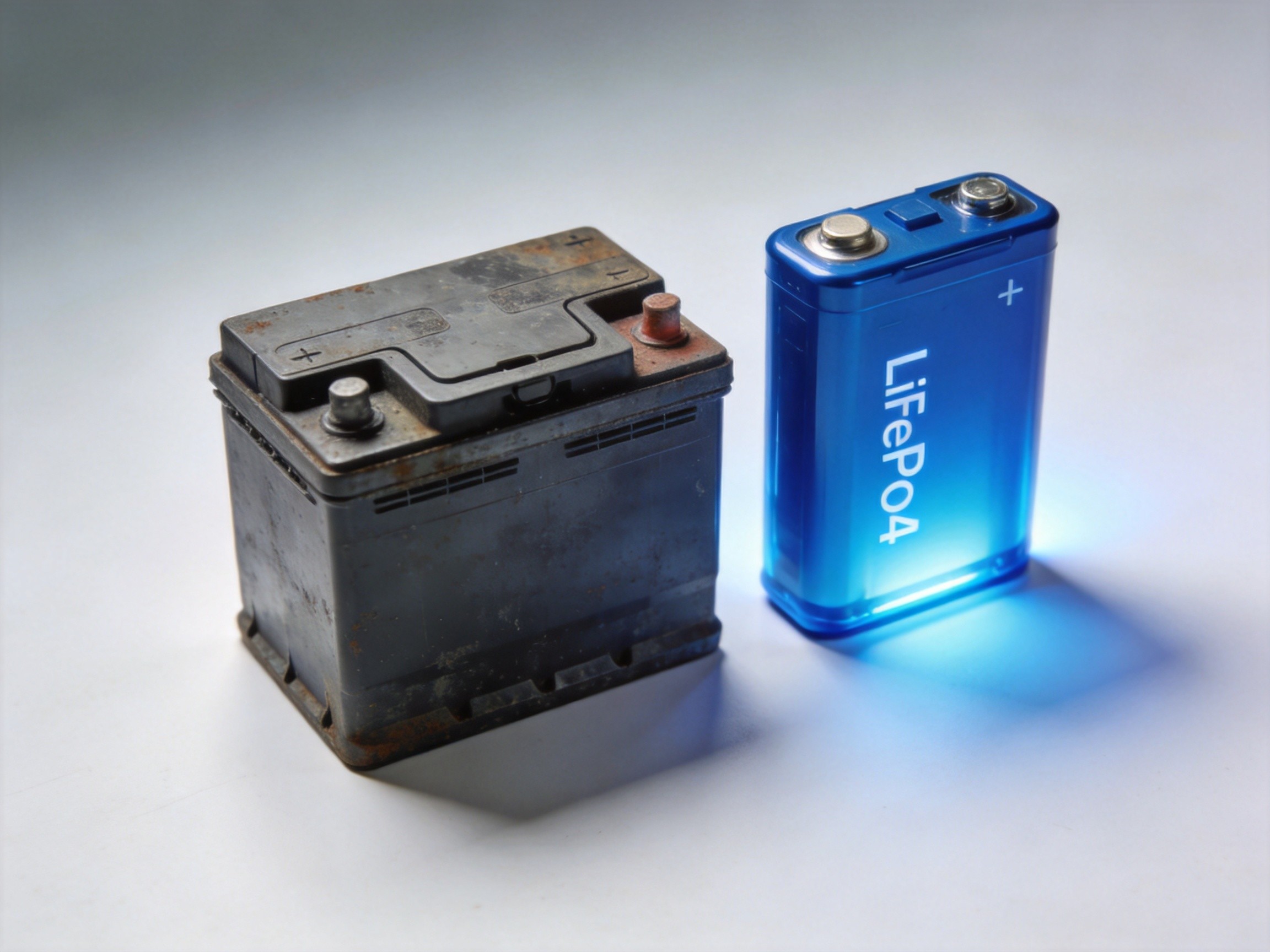
Generating power is only half the equation; storing it efficiently is what makes an off-grid system truly functional. Why is matching your solar array with battery storage so important? Because solar generation peaks at midday, but human energy consumption typically peaks in the evening. Your battery bank must store all the excess energy generated during the day to power your property through the night and during cloudy periods. When designing this balance, you must ensure your solar array can both power your immediate daytime loads and fully recharge the battery bank before sunset. CMJ Solar specializes in this exact integration, manufacturing high-performance LiFePO4 battery systems at our Jiangmen factory with full OEM/ODM capabilities to match diverse project requirements. Our energy storage solutions are rated for 2000 to 4000 cycles and carry a 5-year warranty for energy storage products, ensuring long-term reliability. If your solar array produces 10,000 watts but your battery charger is limited to 5,000 watts, you are wasting valuable generation capacity. Therefore, the maximum PV input power of your inverter-charger must align with your array size. To see how this applies to challenging environments, review our insights on Specifying Off-Grid Solar Battery Systems for African Markets: Reliability Over Hype, which emphasizes the need for robust storage matching in high-demand scenarios. Furthermore, LiFePO4 chemistry allows for a much deeper depth of discharge compared to traditional alternatives, meaning you can safely use a larger percentage of the rated capacity without damaging the cells. This high usable capacity, combined with the 2000 to 4000 cycle life, ensures that your stored energy is both abundant and long-lasting, making it the superior choice for remote off-grid installations where maintenance visits are costly and infrequent.
Which CMJ Solar Apollo Model Fits Your Calculated Array?
Once your array size is calculated, selecting the right all-in-one energy storage unit is the next critical phase. CMJ Solar offers the Apollo A Series 12KW 10kWh All-in-One ESS (model SCAP-A-51.2-200P), which features a 12KW inverter output and a massive maximum PV input power of 2*7500W, allowing it to handle a 15,000-watt solar array. This model includes dual MPPT charge controllers with a max charge current of 160A, making it ideal for properties with multiple roof orientations. For larger estates requiring more overnight autonomy, the Apollo A Series 12KW 20kWh All-in-One ESS (model SCAP-A-51.2-400P) doubles the LiFePO4 capacity to 20480Wh while maintaining the same 15,000W maximum PV input capability. Who should choose the B series instead? If your calculated array is smaller, the Apollo B Series 10kWh All-in-One ESS (model SCAP-B-51.2-200) offers a 6KW power output and a maximum PV input power of 9000W with a 100A MPPT charge current, perfectly matching a 9kW solar array. All these models operate on a standardized 51.2V battery input voltage and provide a clean 230V inverter output, ensuring compatibility with standard household appliances. The physical footprint is also highly optimized, with the A Series modules measuring 60*40.5*19.5CM each, allowing for flexible stacking configurations to match your exact space constraints. You can explore our full energy storage category to compare these specifications and find the exact model that aligns with your off grid solar panel sizing calculations.
Frequently Asked Questions
Can I add more solar panels later if my energy needs increase? Yes, but you must ensure your inverter-charger has sufficient maximum PV input power capacity to handle the additional wattage. If your current unit is already operating near its maximum MPPT charge current limit, adding more panels will result in clipped energy production, meaning you would need to upgrade to a higher-capacity model like the Apollo A Series 12KW 20kWh All-in-One ESS to utilize the extra generation. Always verify the max PV input power specifications before expanding your array to avoid wasted investment in unused solar capacity.
How do weather conditions affect the off grid solar panel sizing calculation? Weather conditions directly impact the peak sun hours variable in your formula. If you live in a region with frequent cloud cover, your effective peak sun hours will be lower, requiring you to install a larger solar array to generate the same daily watt-hours. This is why adding a 20 to 25 percent buffer to your final panel count is a mandatory step for ensuring continuous power during extended periods of poor weather. In regions with heavy seasonal variations, you must size your array based on the worst-case month, typically winter, to guarantee year-round energy security.
What is the difference between the Apollo A and B series for off grid power system design? The primary difference lies in the inverter power output and the maximum PV input capacity. The Apollo A Series P models feature a 12KW inverter and dual MPPT inputs allowing up to 15,000W of solar panels, whereas the Apollo B Series features a 6KW inverter and a single MPPT input limited to 9,000W of solar panels. Choosing between them depends entirely on your calculated daily load and your available roof space for solar panels. If you have a large, unshaded roof area and want to maximize daytime battery charging, the dual MPPT capability of the A Series P models will significantly improve your overall system efficiency.
Designing a reliable off-grid power system requires precise calculations, high-quality components, and a deep understanding of how solar generation interacts with battery storage. By following the off grid solar panel sizing formula and matching your array with a robust LiFePO4 system, you ensure uninterrupted power for years to come. If you need assistance calculating your specific load requirements or selecting the perfect Apollo All-in-One ESS for your project, please contact our team to request a quote and get expert engineering support.
Part of the guide
Off-Grid Solar and Microgrid Systems: Design, Reliability and Real Projects
Need Product Recommendations?
Our team can help you select the right energy storage or solar lighting products for your project.