
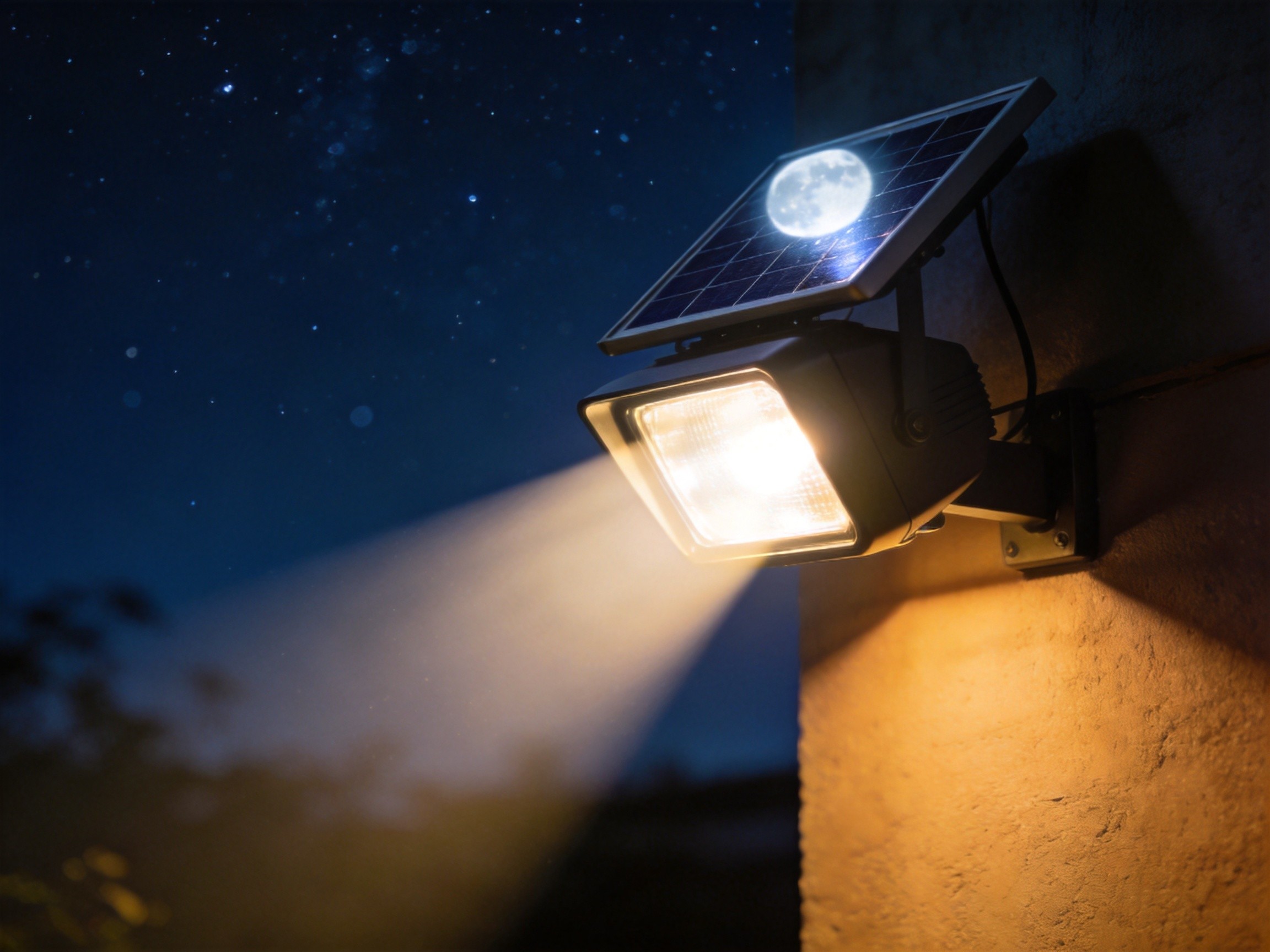
For most standard solar street lighting applications, you need between 1,000 and 12,000 lumens depending on the road width and mounting height. Narrow pathways and residential streets typically require 1,000 to 3,000 lumens for adequate visibility, while major arterial roads and wide commercial avenues demand 6,000 to 12,000 lumens to ensure safety and compliance. This variance exists because higher mounting heights and wider road widths dilute light intensity, requiring greater initial lumen output to maintain proper lux levels on the ground.
Understanding Solar Street Light Brightness Levels
When evaluating solar street light brightness levels, it is crucial to understand the fundamental difference between lumens and lux. Lumens measure the total amount of visible light emitted by the source in all directions, whereas lux measures the light intensity that actually reaches the ground surface. Why does this distinction matter so much for your specific project? Because a high-lumen fixture mounted too high will result in poor ground illumination, while a lower-lumen fixture at the correct height can provide optimal visibility. To achieve the ideal lumens per watt solar street light efficiency, you must carefully balance the LED chip output with the optical lens design and beam angle. A narrow beam angle concentrates light on the road, increasing lux, while a wide beam angle spreads light for broader coverage. At CMJ Solar, our Jiangmen factory engineers design every fixture with high-efficiency optics to maximize ground lux without wasting valuable battery energy.
How Do You Calculate the Right Lumens per Watt Solar Street Light Needs?
Calculating the exact requirements begins with assessing your specific road dimensions, traffic volume, and environmental factors. The basic solar street light lumen calculation involves determining the required lux level for your specific road class and multiplying it by the total illumination area, then dividing by the utilization factor and maintenance factor. First, narrow residential streets and pedestrian pathways ranging from 3 to 5 meters wide typically require fixtures producing 1,000 to 2,500 lumens. For these areas, the Navigator II 300W (MJ-NAVIGATOR-2-300W) is an excellent choice, delivering 994LM to cover an 80 sqm area efficiently with its 300 pcs 2835 SMD LEDs. Second, medium-sized commercial roads and parking lots spanning 6 to 10 meters need 3,000 to 6,000 lumens to ensure drivers can spot hazards in time. Third, wide arterial roads and major highways exceeding 10 meters in width demand 8,000 to 12,000 lumens for maximum safety. Who benefits most from these high-output calculations? Municipal planners and large-scale contractors who need to meet strict urban lighting codes without incurring massive grid-tied electricity costs.
What is the Ideal Solar Street Light Lumen Calculation for Different Road Widths?
Selecting the right equipment is critical for long-term project success and requires matching the lumen output to the physical space and expected traffic patterns. For medium to large roads requiring around 6,000 lumens, the MJ-SSO200 provides exactly 6500lm and is designed for an installation height of 6-8m, making it perfect for standard commercial avenues. How does it maintain this brightness night after night? It utilizes 90 pcs 5050 LED chips paired with a massive Grade A LiFePO4 85Ah battery, ensuring 4-5 rainy days of backup power and boasting an impressive 4000 cycle life. For major highways needing maximum output, the MJ-SSO400 delivers an impressive 12000lm. Why is this model so effective for wide roads? It features 180 pcs 5050 LED chips and a 170Ah LiFePO4 battery, supporting an installation height of 10-12m to cast light across expansive areas. If you are comparing different system configurations for your project, our comprehensive guide on All-in-One vs Split Solar Street Light: Which Is Better provides deeper insights into system architecture and maintenance.
Maximizing Efficiency and Battery Performance in Solar Lighting
High lumens mean absolutely nothing if the battery cannot sustain the required output throughout the entire night. This is exactly why CMJ Solar exclusively uses Grade A LiFePO4 batteries across our entire solar lighting catalog. Why choose LiFePO4 over traditional alternatives for outdoor infrastructure? Because LiFePO4 cells offer up to 4000 cycles in our premium models, significantly outlasting lead-acid options and drastically reducing the total cost of ownership over a ten-year period. Furthermore, our smart light control and radar sensor functions allow the fixtures to dim when no motion is detected, conserving battery life for when it is needed most. The Navigator II series, for instance, features optional radar sensors with a detection distance of 6-8m and three lighting modes, including steady-on, timed steady, and full radar mode, ensuring maximum energy savings. To ensure your battery performs optimally for years, we highly recommend reviewing our detailed LiFePO4 Battery Maintenance: 8 Tips to Extend Lifespan.
How Do Environmental Factors Affect Solar Street Light Brightness?
Beyond raw lumen output, environmental conditions play a massive role in how bright your street lights actually appear on the ground. Weather resistance is paramount, which is why our commercial models like the MJ-SSO series feature an IP65 rating, protecting the internal components from heavy rain and dust ingress. How does temperature affect the LiFePO4 battery performance? While LiFePO4 is highly resilient, extreme cold can temporarily reduce capacity, which is why our oversized battery banks are designed to provide 4-5 rainy days of discharge time, ensuring consistent illumination even during prolonged winter storms. Additionally, the housing material matters; our MJ-SSO series uses AL6063 aluminum alloy combined with Teijin PC, providing superior heat dissipation for the LED chips and maintaining high lumens per watt solar street light efficiency over time. The solar panels also play a vital role, with our larger models featuring Grade A Monocrystalline panels up to 110W to ensure a full 6-8 hour charge time. For more technical details on weatherproofing, check out our IP Ratings Explained: Choosing Weatherproof Solar Lights guide.
Comparing All-in-One and Split Configurations for Lumen Output
When planning a high-lumen installation, you must also decide between all-in-one and split solar street light configurations. All-in-one units integrate the solar panel, battery, and LED fixture into a single compact housing, making them ideal for areas with space constraints. However, split systems separate the solar panel from the light fixture, allowing for larger panels and batteries that can support higher lumen outputs over longer periods. Why would a contractor choose a split system for a highway project? Because split configurations allow the solar panel to be mounted at the optimal angle for maximum sun exposure, independent of the light fixture's orientation. CMJ Solar offers both configurations to ensure you get the exact lumens per watt solar street light performance your project demands. For a deeper dive into the pros and cons of each design, our article on How to Choose Solar Street Light for Projects covers all the essential selection criteria.
Frequently Asked Questions
How many lumens do I need for a residential street? For standard residential streets and neighborhood pathways, you typically need between 1,000 and 3,000 lumens. This range provides sufficient visibility for pedestrians and drivers without causing light pollution or glare. Models like the Navigator II 300W, which outputs 994LM and covers an 80 sqm area, are often perfectly suited for these narrower, lower-speed environments where energy conservation is just as important as illumination.
What affects the actual ground brightness of a solar street light? The actual ground brightness, measured in lux, is affected by the total lumen output of the LEDs, the mounting height of the pole, the optical lens design, and the surrounding environmental conditions. A higher mounting height spreads the light over a larger area, which decreases the lux level on the ground, meaning you need a higher lumen output for taller poles to maintain the same level of visibility.
Can I adjust the brightness of CMJ Solar street lights? Yes, most CMJ Solar street lights are equipped with smart control systems that allow for brightness adjustment. Many of our models feature remote control capabilities and built-in radar sensors that automatically adjust the brightness based on motion detection. This allows the fixture to switch between steady-on, timed steady, and full radar modes, optimizing energy usage while ensuring maximum brightness when vehicles or pedestrians are actually present.
Ready to Upgrade Your Solar Lighting Project?
Selecting the correct lumen output is the most critical step in designing a reliable and efficient solar street lighting system. Whether you are illuminating a narrow residential pathway or a wide municipal highway, matching the lumens to your specific road width and mounting height ensures safety and maximizes your return on investment. CMJ Solar provides the reliable LiFePO4 technology and OEM/ODM customization needed to bring your vision to life. To get precise specifications, custom configurations, or bulk pricing for your next project, contact our team today and let our engineering experts help you design the perfect solar lighting solution.
Part of the guide
Solar Street Lights: Selection, Installation, Municipal Specs and Tenders
Need Product Recommendations?
Our team can help you select the right energy storage or solar lighting products for your project.