
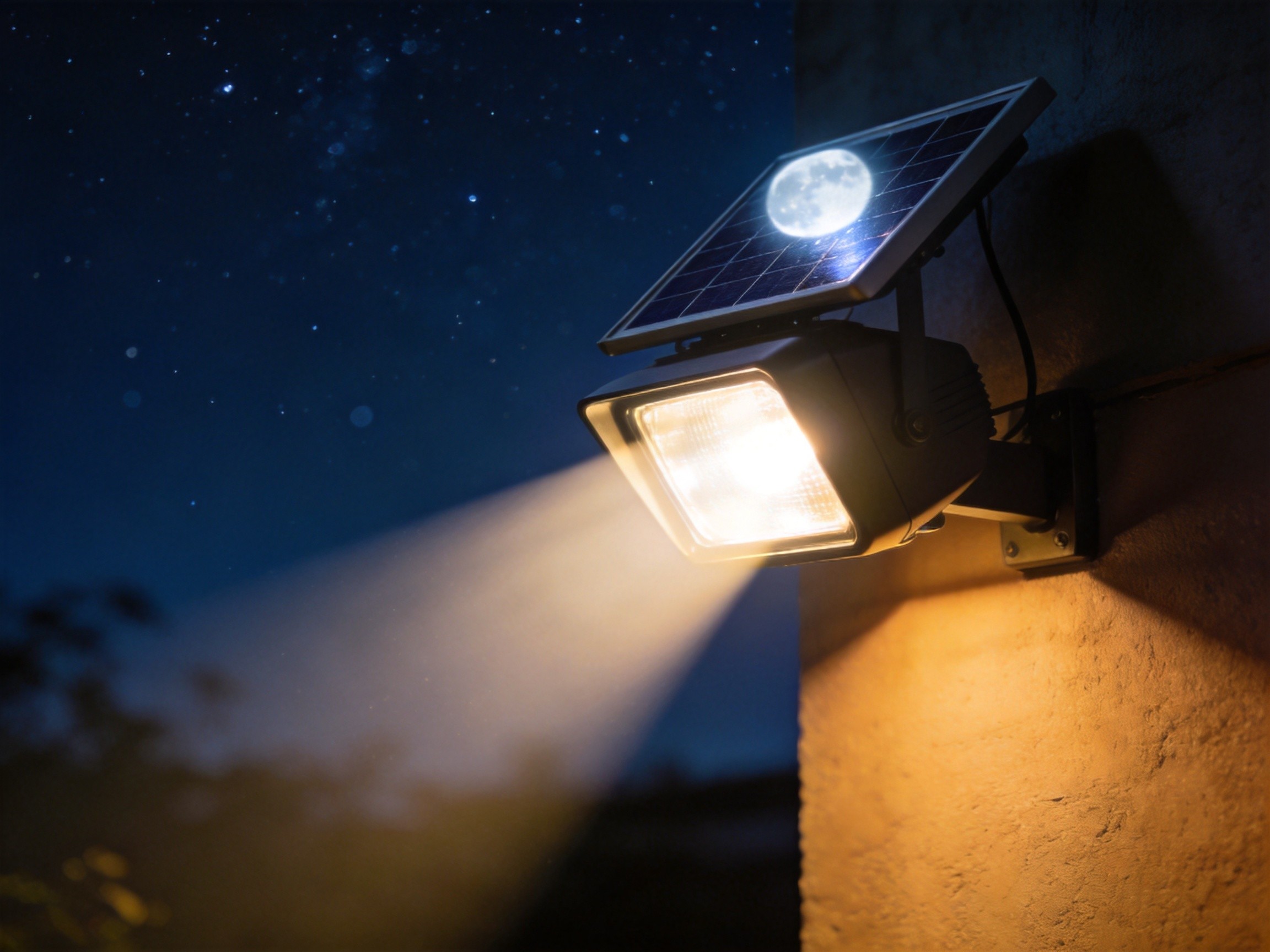
Planning Solar Street Light Projects
Solar street lighting projects require systematic planning to ensure adequate illumination, reliable performance, and long-term durability. Unlike grid-connected street lights, solar systems must be self-sufficient — generating, storing, and delivering energy without external power. For project managers, contractors, and government procurement officers, the selection process involves site assessment, lighting requirement analysis, and product specification matching.
This guide provides a structured approach to solar street light selection, with specific references to CMJ Solar all-in-one solar street light products.
Step 1: Conduct a Site Assessment
Before selecting any product, evaluate the installation site. Key factors include solar irradiance levels, ambient temperature ranges, road width and length, pole height availability, and potential shading from buildings or trees. Solar irradiance determines how much energy the panel can harvest — sites near the equator naturally receive more sunlight, but even at higher latitudes, properly sized systems can perform reliably.
Shading is a critical factor that is often overlooked. Even partial shading on a solar panel can reduce charging efficiency by 50% or more. Conduct a shade analysis at different times of day and across seasons, particularly for urban installations surrounded by tall buildings. If shading is unavoidable, consider increasing panel size or battery capacity to compensate.
Road width determines the required light distribution pattern and mounting height. For roads under 6 meters wide, a single-sided installation at 6 meters height is typically sufficient. Wider roads (8-12 meters) may require higher mounting (8-10 meters) or dual-sided installations. CMJ Solar all-in-one street lights support mounting heights from 6 meters (Navigator II and SSO100 models) up to 10-12 meters (SSO400C model).
Step 2: Determine Lighting Requirements
Lighting requirements are defined by illuminance level (lux), uniformity ratio, and operating hours. The appropriate illuminance depends on the application: pedestrian pathways typically need 5-10 lux, residential streets require 10-20 lux, and main roads may need 20-30 lux or higher.
Lumen output is the specification that directly relates to illuminance. CMJ Solar all-in-one street lights offer lumen outputs ranging from 994 lumens (Navigator II 300W) to 12,000 lumens (SSO400C). To calculate the number of fixtures needed, divide the total required lumens by the lumen output per fixture, then account for spacing and overlap.
Operating hours and backup requirements are equally important. Solar street lights must operate through the night and sustain several cloudy days. CMJ Solar Navigator II models are designed for 3 consecutive rainy days of operation, while the SSO series supports 4-5 rainy days. The standard charging time is 6-8 hours of sunlight for a full charge.
Step 3: Evaluate Product Specifications
Once site conditions and lighting requirements are defined, evaluate product specifications against those needs. The three most critical components are the LED light source, battery system, and solar panel.
LED Light Source
CMJ Solar all-in-one street lights use SMD 2835 or 5050 LED chips, known for high efficiency and long lifespan. The Navigator II series uses 2835 chips (ranging from 300 to 600 chips per fixture), while the SSO series uses 5050 chips (45 to 180 chips per fixture). Color temperature is 6000-6500K for the SSO series and 6500-7500K for Navigator II, providing crisp white light suitable for road and area illumination.
Battery System
All CMJ Solar street lights use LiFePO4 battery cells with 2,000-4,000 cycle life. Battery capacities range from 10Ah (Navigator II 300W) to 170Ah (SSO400C). The LiFePO4 chemistry ensures stable performance across a wide temperature range and eliminates the maintenance requirements of lead-acid batteries.
Solar Panel
CMJ Solar uses A-grade monocrystalline silicon panels, ranging from 12W to 110W across the street light product lines. Monocrystalline panels provide the highest efficiency per square meter, which is essential for all-in-one designs where panel area is constrained by the fixture size.
Step 4: Consider Smart Features
Modern solar street lights offer intelligent control features that extend battery life and adapt to real-world conditions. CMJ Solar products include light-sensing automatic on/off, remote control, and radar motion sensing. The Navigator II series offers three operating modes: continuous brightness, timed brightness followed by radar mode, and full radar mode. Radar mode detects motion and increases brightness when people or vehicles approach, conserving energy during low-traffic periods.
For projects requiring security integration, the Starship I series (SSO100C through SSO400C) combines solar street lighting with 4MP 4G cameras, two-way audio, and cloud storage via the EseeCloud app. This dual-function approach is particularly valuable for remote road sections, industrial parks, and areas where separate security camera infrastructure would be cost-prohibitive.
Step 5: Verify Durability and Warranty
Street lights are exposed to extreme weather conditions year-round. All CMJ Solar all-in-one street lights carry an IP65 rating for dust and water protection. The SSO series features AL6063 aluminum alloy housings with Teijin PC lenses, providing excellent heat dissipation and impact resistance. The Navigator II series uses a durable integrated design with corrosion-resistant finishes.
With LiFePO4 batteries rated for 2,000-4,000 cycles, these lights are designed for 5-10 years of maintenance-free operation, significantly reducing total project cost compared to grid-connected alternatives that incur ongoing electricity charges.
Conclusion
Successful solar street light projects require matching product specifications to site conditions and lighting requirements. CMJ Solar offers all-in-one solar street lights ranging from compact 100W models for pathways to high-output 600W models for main roads, all featuring LiFePO4 batteries, monocrystalline panels, and IP65 protection.
Browse our all-in-one solar street light collection for detailed specifications, or contact our project team for site-specific recommendations and bulk ordering.
Need Product Recommendations?
Our team can help you select the right energy storage or solar lighting products for your project.