
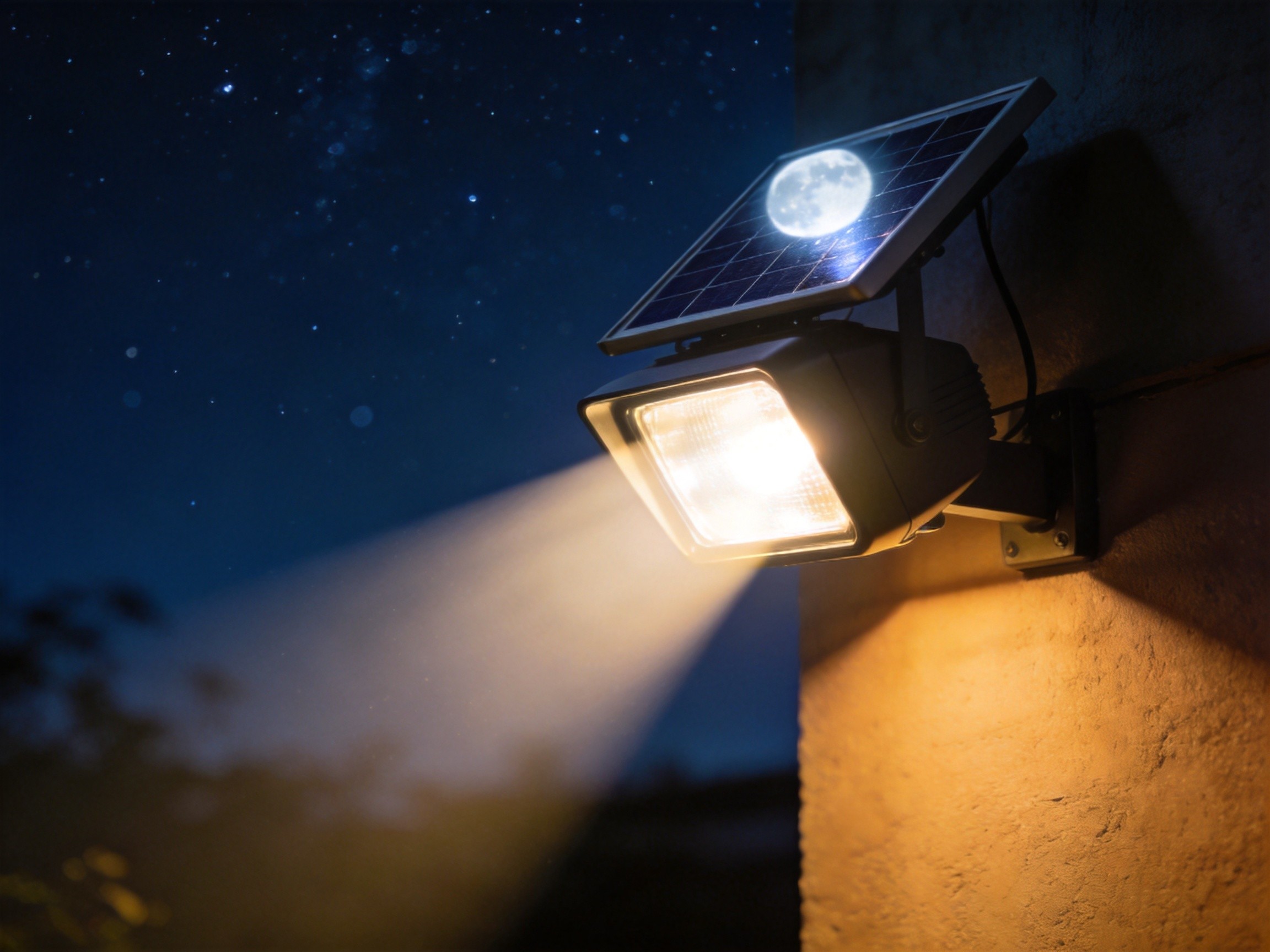
Two Approaches to Solar Street Lighting
Solar street lights are available in two primary configurations: all-in-one (integrated) and split (separated) designs. Each approach has distinct advantages and trade-offs in terms of installation, maintenance, cost, and performance. For B2B buyers — including municipal contractors, EPC firms, and solar distributors — understanding these differences is essential for selecting the right solution for each project.
This comparison examines both configurations across four dimensions, using CMJ Solar product specifications as reference data.
What Is an All-in-One Solar Street Light?
An all-in-one solar street light integrates the solar panel, battery, LED light source, and controller into a single compact housing. CMJ Solar Navigator II and SSO series are examples of all-in-one designs. The solar panel is mounted on top of the fixture, the battery and controller are housed inside, and the LED module faces downward — all contained within one unit that mounts directly onto a pole.
The key advantage of this design is simplicity. There are no external cables to run between components, no separate battery box to install, and no panel mounting brackets to configure. Installation typically involves mounting the fixture on a pole and activating it — a process that can be completed by a two-person crew in under an hour.
What Is a Split Solar Street Light?
A split solar street light separates the components: the solar panel is mounted on top of the pole, the battery is housed in a separate battery box (usually at the base or mid-pole), and the LED light head is mounted on an arm. The components are connected by cables routed through or along the pole.
This design offers more flexibility in component sizing. The solar panel can be larger than what would fit on an all-in-one fixture, and the battery box can accommodate higher-capacity batteries. However, this comes at the cost of more complex installation and additional points of failure.
Installation Comparison
Installation is where the two designs differ most significantly. All-in-one solar street lights require minimal labor: mount the fixture on the pole, secure the bolts, and the system is operational. There is no cable routing, no battery box installation, and no panel angle adjustment. CMJ Solar all-in-one lights come with integrated mounting sleeves (76mm diameter for SSO series) that slide directly onto standard poles.
Split systems require significantly more installation work. The solar panel must be mounted and angled correctly, the battery box must be installed and weatherproofed, cables must be routed through the pole, and all connections must be sealed against moisture. Installation time for a split system is typically 2-3 times longer than an all-in-one equivalent, increasing labor costs — particularly for projects with dozens or hundreds of fixtures.
Maintenance Comparison
Maintenance requirements also favor all-in-one designs. With all components sealed inside a single IP65-rated housing, there are fewer exposed connections and no external cables that can be damaged by weather, animals, or vandalism. CMJ Solar all-in-one lights use LiFePO4 batteries with 2,000-4,000 cycle life, meaning the battery typically does not need replacement for 5-10 years.
Split systems have more maintenance points. The external cables connecting the panel, battery, and light head are vulnerable to UV degradation, moisture ingress, and physical damage. The separate battery box must be periodically inspected for water leaks, and battery replacement — when eventually needed — is more complex due to the wiring and enclosure.
Cost Comparison
The cost comparison involves both product price and total installed cost. All-in-one solar street lights generally have a lower total installed cost due to reduced labor and eliminated cable/conduit expenses. CMJ Solar all-in-one lights range from 100W to 600W models, with lumen outputs from 994 to 12,000 lumens, covering most street lighting applications at competitive price points.
Split systems may have a lower component cost in some cases, but the additional installation labor, cabling, conduit, and battery enclosure costs often make the total project cost higher. For large-scale projects — where installation labor is a significant percentage of total cost — all-in-one designs typically deliver better value.
Performance Comparison
Performance differences are relatively nuanced. Split systems can theoretically offer higher performance because the solar panel can be sized independently and angled optimally, and larger batteries can be housed in the separate battery box. This makes split systems more suitable for extreme high-latitude locations or sites with very high lighting requirements.
However, for the majority of street lighting applications, all-in-one systems provide more than adequate performance. CMJ Solar all-in-one lights deliver up to 12,000 lumens (SSO400C), support mounting heights up to 12 meters, and sustain 4-5 consecutive rainy days of operation. The integrated design also reduces energy losses from cable resistance, as the distance between battery and LED is minimal.
Which Should You Choose?
For most projects, all-in-one solar street lights are the better choice. They offer faster installation, lower maintenance, competitive pricing, and sufficient performance for the majority of applications. The simplicity of the design reduces both initial project risk and long-term operational costs.
Split systems are worth considering for specialized applications: sites requiring very large solar panels (due to extreme latitude or heavy shading), projects needing exceptionally high battery capacity for extended backup, or retrofits where existing pole infrastructure favors a separated design.
Conclusion
CMJ Solar specializes in all-in-one solar street lights, offering the Navigator II series (100W-600W) for standard applications and the SSO series (100W-600W with optional 4G camera) for integrated lighting and security. All products feature LiFePO4 batteries, A-grade monocrystalline panels, and IP65 protection, with 2,000-4,000 cycle battery life.
Explore our complete solar lighting product range to compare all-in-one and split options, or contact our team for project-specific guidance and bulk pricing.
Need Product Recommendations?
Our team can help you select the right energy storage or solar lighting products for your project.