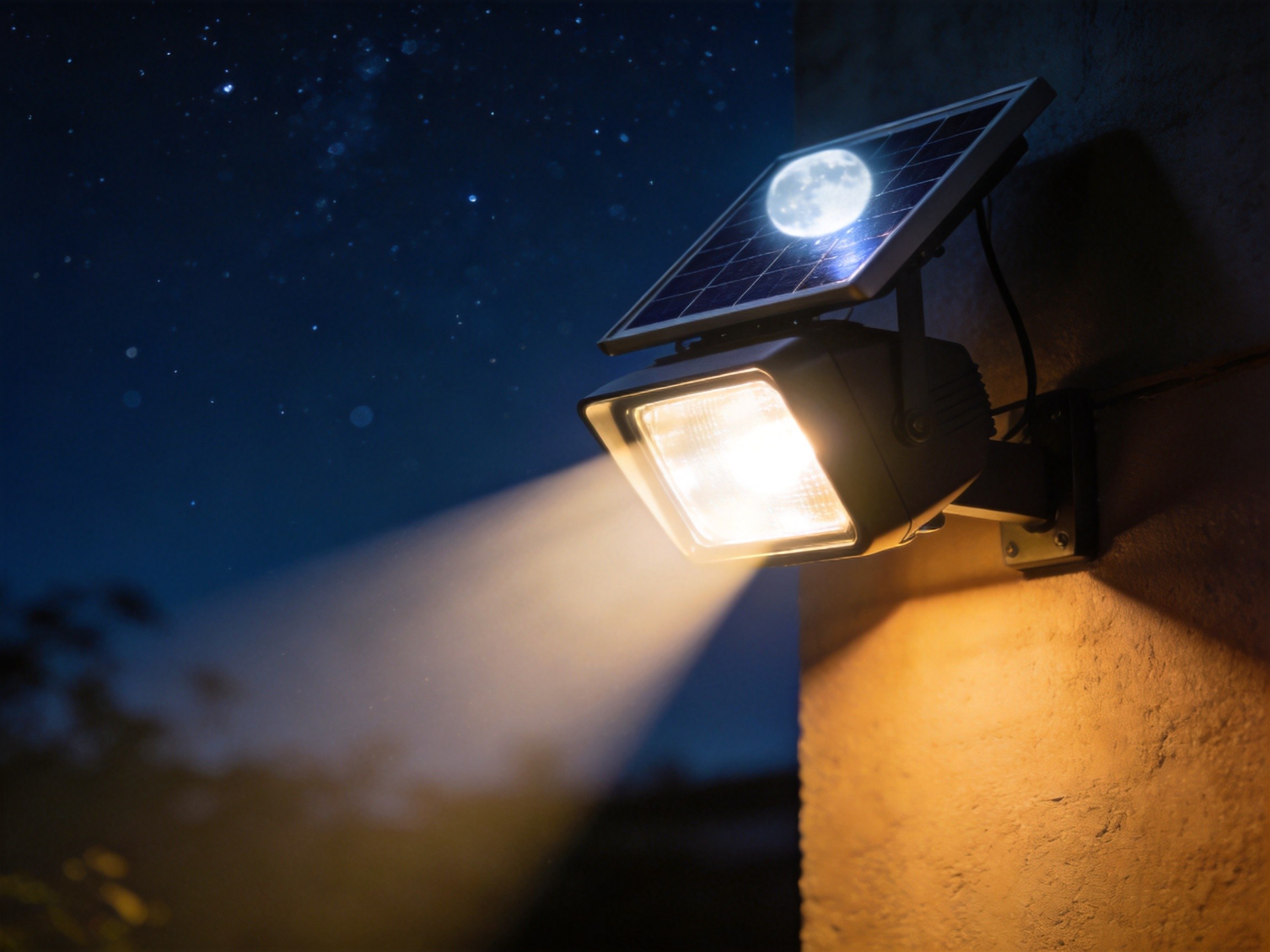
As industrial facilities and logistics parks increasingly transition toward sustainable, off-grid infrastructure, the demand for integrated surveillance and illumination has surged. When evaluating an integrated solar camera light for commercial or industrial security, buyers must prioritize radar or PIR motion sensors, 4G remote alert capabilities, high-resolution video compression, and robust IP65 weatherproof ratings. These features ensure reliable perimeter detection, real-time mobile notifications, and clear evidence capture regardless of weather conditions. CMJ Solar integrates these critical security components into our LiFePO4-powered lighting systems to provide comprehensive off-grid surveillance, ensuring that facilities remain protected without relying on unstable grid power. For a model-by-model comparison of camera hardware and wattage ranges, see our guide to solar flood lights with built-in cameras.
How Do Radar and PIR Sensors Improve Perimeter Security?
When selecting a solar security light with a PIR sensor or radar module, understanding the detection mechanics is critical for minimizing false alarms. Traditional passive infrared sensors rely strictly on heat signatures, which can be triggered by small animals or sudden temperature shifts. In contrast, the radar sensor integrated into models like the MJ-SSTH800CD utilizes microwave frequencies to detect micro-movements. This technology is highly effective because it can identify physical motion through minor environmental obstructions like light foliage or dust, ensuring that genuine security threats are captured while ignoring irrelevant environmental noise. Furthermore, the smart light control combined with radar sensor functions allows the system to dynamically adjust illumination based on the exact distance and speed of the approaching object. First, the radar detects the initial movement at the perimeter. Second, the system triggers the luminous output from the integrated 104 to 180 pcs of high-efficiency 3030 or 5050 LED chips to deter the intruder. Third, the low-power 4G camera begins recording and sends an alert to the user's mobile device. This sequential response is managed through dedicated applications, giving facility managers complete visibility. The horizontal detection angles are equally impressive, with standard models offering up to 263° coverage and dual-lens variants providing up to 355° horizontal rotation at 0.1° to 20° per second. The MJ-SSTH1200CD expands this coverage to a 300 sqm illumination area, ensuring that the radar sensor's detection zone perfectly aligns with the lit perimeter for maximum deterrent effect.
What Should You Look for in 4G Camera and Video Storage Specs?
The core of any modern surveillance system lies in its imaging and transmission capabilities. Buyers should specifically look for a low-power 4G camera mode, which is essential for off-grid setups where energy conservation is paramount. The MJ-SSO100C and the higher-output MJ-SSO400C both feature this low-power 4G architecture, allowing the system to maintain 24/7 monitoring without draining the Grade A LiFePO4 battery prematurely. The imaging hardware relies on a 1/2.8" CMOS sensor paired with a 3.6mm fixed lens, delivering a crisp 2560*1440 camera resolution. This high pixel count is vital for identifying facial features or license plates at an installation height of 6m to 12m. However, high resolution generates massive data files, which is why H.264/H.265 video compression with dual stream support is a mandatory specification. This compression standard significantly reduces the bandwidth required for 4G remote alerts, ensuring that push notifications and live video feeds reach the mobile app instantly without buffering. For continuous recording, the system supports SD card storage up to 256GB, providing ample local backup in areas with poor cellular reception. Additionally, the inclusion of two-way audio utilizing AAC and G711 formats allows security personnel to issue verbal warnings directly through the integrated speakers. This entire camera and LED ecosystem is powered by robust batteries, such as the 170Ah cell in the MJ-SSO400C, which guarantees that the energy-intensive 4G transmission and 12000lm LED output can operate seamlessly. This energy balance is maintained by Grade A Monocrystalline solar panels, ranging from 4V/30W in compact models to 4V/110W in the high-output MJ-SSO400C, which efficiently harvest sunlight to replenish the battery during daylight hours.
Why Does Housing Material and IP Rating Dictate Long-Term Reliability?
Outdoor security equipment faces relentless exposure to UV radiation, heavy rain, and extreme temperature fluctuations. Therefore, evaluating the housing material and IP rating is just as important as checking the camera specs. Across our solar security light range, CMJ Solar mandates an IP65 waterproof rating. This certification guarantees that the internal CMOS sensor and the Grade A LiFePO4 battery are completely protected against dust ingress and low-pressure water jets from any direction. The physical enclosure varies by model to suit different environmental demands. The premium MJ-SSO series utilizes an AL6063 aluminum alloy combined with Teijin PC. This specific material choice is critical because aluminum provides superior heat dissipation for the high-density LED chips, while the Teijin PC lens resists yellowing under intense sunlight. Conversely, the compact MJ-SSTH series uses an ABS and Teijin PC housing, which offers excellent impact resistance for standard commercial applications. The robust housing is designed to mount securely on poles with diameters of φ50mm or φ76mm, ensuring stability even in high-wind environments. The battery chemistry itself also plays a massive role in longevity. Unlike traditional alternatives that degrade rapidly in outdoor heat, our LiFePO4 cells are rated for 2000 to 4000 cycles, depending on the specific model. Manufactured at our Jiangmen factory, these OEM/ODM solutions are rigorously tested to ensure that the housings maintain their structural integrity over the entire lifespan of the internal battery. It is important to note that warranty terms vary by model and project; contact CMJ Solar for specific warranty terms. For a deeper technical understanding of how these enclosures perform in harsh climates, distributors often consult our guide on IP Ratings Explained: Choosing Weatherproof Solar Lights.
How Do Mobile Applications Enhance Remote Security Management?
Modern solar surveillance requires seamless integration with mobile applications to provide real-time situational awareness. The EseeCloud and V380 applications serve as the central command hub for the MJ-SSO and MJ-SSTH series, respectively. First, these apps allow facility managers to receive instant push notifications whenever the radar sensor triggers an event, ensuring that security personnel are alerted the moment a perimeter breach occurs. Second, the two-way audio function enables live verbal communication through the integrated speakers, allowing guards to issue warnings to trespassers without physically approaching the area. Third, the apps provide full remote control over the smart light control and radar sensor settings, meaning users can adjust sensitivity levels or modify the color temperature — 6000-6500K on the SSO series and 6500-7500K on the SSTH series — directly from their smartphones. This remote configurability is particularly valuable for large industrial sites where physical access to the light fixtures is difficult. Furthermore, the dual stream support ensures that the app can display a high-quality live feed for immediate assessment while simultaneously recording a compressed version to the SD card for long-term evidence storage. The horizontal and vertical angle adjustments, reaching up to 263° and 90° respectively, can also be managed via the app, allowing operators to pan and tilt the camera to track suspicious activity across the illuminated areas. This level of remote interactivity transforms a standard solar flood light into an active, intelligent security asset.
Frequently Asked Questions
Can a solar security camera with a radar sensor operate during consecutive rainy days? Yes, models like the MJ-SSO300C and MJ-SSTH1200CD are engineered with a discharge time of 4-5 rainy days. This is achieved by pairing the low-power 4G camera mode with high-capacity Grade A LiFePO4 batteries, such as the 105Ah or 54Ah cells, ensuring continuous 24/7 monitoring even when solar charging is limited. The smart light control further conserves energy by dimming the LEDs when no radar-triggered motion is detected.
How does H.265 video compression benefit off-grid solar security systems? H.265 dual stream support significantly reduces the file size of 2560*1440 video recordings without sacrificing image clarity. This efficiency allows the system to maximize the 256GB SD card storage capacity and minimizes the data payload required for 4G remote alerts. Consequently, this directly conserves battery power and ensures that the monocrystalline solar panels can easily keep up with the system's daily energy demands, even during peak surveillance activity.
Where can I find a broader overview of solar lighting deployments for large facilities? For a comprehensive look at large-scale implementations and broader coverage strategies, we highly recommend reading our detailed Case Study: Solar Flood Lighting for a 50,000m2 Logistics Park. This resource explores how high-lumen flood lights integrate with site-wide security protocols to illuminate massive perimeters effectively.
To discuss specific project requirements, request a quote for our solar security lighting range, or learn more about our OEM/ODM capabilities, please contact our team at CMJ Solar today.
Part of the guide
Solar Security, Garden, RGB and Strip Lights for Homes and Landscapes
Need Product Recommendations?
Our team can help you select the right energy storage or solar lighting products for your project.