
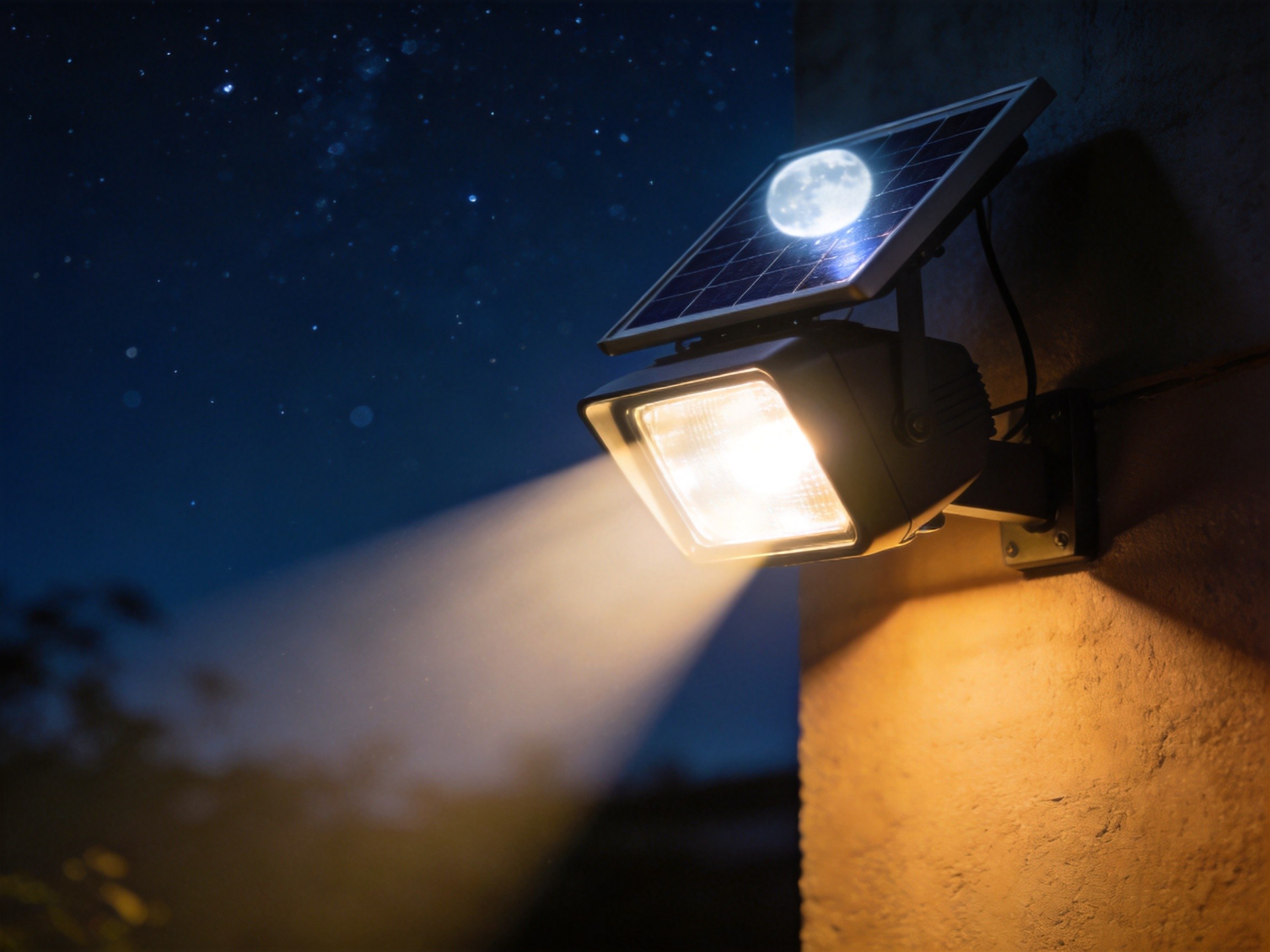
Solar garden lights typically stop working due to battery degradation, solar panel blockage, or motion sensor faults that prevent proper charging and illumination. When the internal battery loses its capacity to hold a charge, or when environmental debris obstructs the photovoltaic cells, the system fails to power the LEDs at night. Understanding these core failure points allows property managers and distributors to quickly diagnose issues and determine whether a simple cleaning or a complete system upgrade is required. For B2B buyers, recognizing these symptoms early prevents costly warranty claims and ensures end-user satisfaction across commercial and residential deployments.
What Are the Most Common Reasons Solar Garden Lights Fail?
When evaluating why outdoor illumination systems fail, it is essential to look at the three primary components: the solar panel, the battery, and the control sensor. If you are already dealing with units that refuse to charge, you might want to review our detailed guide on Solar Garden Lights Not Charging? Common Causes & Quick Fixes to rule out basic environmental issues. The solar panel is the most vulnerable to external factors, as dust, pollen, bird droppings, and overhanging tree branches can drastically reduce energy absorption. How does this happen? Even a thin layer of grime can block the photons needed to generate electricity, meaning the system never reaches the voltage threshold required to trigger the charging circuit. Second, the battery itself may suffer from chemical degradation over time, especially in cheaper models that use inferior cell chemistry instead of stable lithium iron phosphate. Third, the light control sensor or photovoltaic switch can become faulty, failing to detect the transition from day to night. Who experiences this most often? Installers and facility managers in high-pollution or heavily wooded areas frequently report these exact sensor and panel blockage issues. During winter months, the sun sits lower in the sky, reducing the angle of incidence on fixed solar panels. If the panel was installed at an incorrect tilt angle during the summer, it will fail to capture sufficient energy in the winter. To mitigate these risks, selecting an IP65-rated solar garden lighting solution with robust self-cleaning angles and consulting resources like our IP Ratings Explained guide is critical for long-term reliability.
How Does Battery Degradation Affect Outdoor Lighting?
Battery degradation is the leading cause of diminished runtime in outdoor fixtures. Over hundreds of charge and discharge cycles, the internal resistance of a battery increases, reducing its effective capacity. This is why high-quality Star Diamond H275A (MJ-DA275) models utilize 18730 LiFePO4 cells rated at 3.2V/8800mAh to ensure consistent performance. Why is LiFePO4 superior for this application? Because these Grade A cells are engineered to maintain structural stability over 2000 cycles, significantly outlasting traditional lead-acid or cheap lithium-ion alternatives that degrade rapidly after a few hundred cycles. When a battery degrades, the light may turn on but will shut off prematurely, often failing to survive even a single cloudy day. For instance, a properly functioning unit with an 8800mAh capacity should provide a working duration of 2-3 rainy days, as specified in the Star Diamond series parameters. If your fixture only lasts a few hours, the battery has likely reached the end of its usable life. Additionally, LiFePO4 chemistry offers superior thermal stability compared to other lithium variants. When outdoor temperatures fluctuate drastically between summer heat and winter freezes, inferior batteries can suffer from accelerated capacity loss or even physical swelling. The 18730 cells used in CMJ products are specifically selected to withstand these thermal stresses, ensuring that the 8800mAh rating remains reliable regardless of the season. Furthermore, warranty terms vary by model and project; contact CMJ Solar for specific warranty terms regarding battery replacement or system upgrades, as chemistry alone does not dictate the commercial warranty structure.
Why Is My Solar Garden Light Motion Sensor Not Working?
A common complaint among users is a solar garden light motion sensor not working, which usually stems from either physical obstruction or incorrect sensitivity settings. The sensor relies on detecting changes in infrared heat or ambient light levels to trigger the LEDs. How can debris affect this? If the sensor lens is covered in mud, spider webs, or opaque paint overspray, it cannot accurately read environmental changes, leaving the light stuck in the off position. Additionally, advanced models like the Explorer I 1200W (MJ-EXPLORER-1200W) feature sophisticated Bluetooth APP controls and music rhythm functions alongside standard light control. If the software settings are misconfigured via the remote or app, the motion detection threshold might be set too high, ignoring smaller movements. Who needs to check this? Commercial distributors should advise their clients to verify that the remote control is properly paired and that the lighting mode is not accidentally set to a static off state. The Explorer I 1200W delivers a luminous output of 2679lm across a 350 sqm illumination area, but this high output is entirely dependent on the sensor correctly identifying the need for light. The Explorer I 1200W also features warm, white, and RGB switchable lighting modes. If the motion sensor triggers but the light outputs the wrong color or fails to activate the RGB rhythm function, the issue often lies within the Bluetooth APP communication rather than the hardware sensor itself. Re-pairing the remote control or resetting the APP connection usually resolves these software-level glitches instantly, keeping your security and aesthetic lighting fully operational.
How to Fix Solar Garden Lights That Won't Turn On?
When figuring out how to fix solar garden lights that won't turn on, a systematic approach is required to isolate the faulty component. First, inspect the solar panel for physical damage, micro-cracks, or severe shading, and clean the surface with a soft, damp cloth to remove any opaque debris that blocks sunlight. Second, check the battery connections and voltage; if the Nebula Lawn Light (MJ-MG-G625) or similar fixture uses a 26700 LiFePO4 3.2V/4000mAh battery, ensure the terminals are free of corrosion and that the battery has not swollen, which indicates internal cell failure. Third, test the light control sensor by covering the panel completely with an opaque object to simulate nighttime conditions; if the LEDs do not illuminate, the internal circuit board or the photovoltaic switch has likely failed. Fourth, verify the charge time requirements; for example, the Nebula series requires 5-6 hours of direct sunlight to reach full capacity, so moving the unit to a sunnier location might resolve the issue if it was previously installed in a shaded alcove. Fifth, examine the physical housing for water ingress. Even with an IP65 rating, severe physical impacts can crack the ABS+PC or die-cast aluminum enclosures, allowing moisture to corrode the internal circuit board. If you find condensation inside the lens, the unit has suffered a catastrophic seal failure and must be replaced immediately to prevent electrical shorts. Why is this sequence important? Because replacing a battery will not fix a broken sensor, and cleaning a panel will not revive a dead cell. By following this logical progression, maintenance teams can avoid unnecessary part replacements and accurately identify whether the unit needs a simple repair or a full upgrade to a more robust system.
When Should You Upgrade to Premium LiFePO4 Solar Lights?
If troubleshooting reveals internal circuit failure or irreversible battery degradation, it is time to upgrade to premium LiFePO4 solar lights. Why choose an upgrade? Because modern systems from the CMJ Solar Jiangmen factory integrate advanced OEM/ODM manufacturing standards that ensure every component, from the Teijin UV-resistant PC lenses to the Grade A monocrystalline panels, works in perfect harmony. Consider the Solar Ark 1000W (MJ-ARK-1000W), which features a 3.2V/30Ah LiFePO4 battery rated for 2000 cycles and a 4V/40W solar panel that charges in just 4-5 hours. How does this improve reliability? The galvanized steel body and 360° beam angle provide unmatched durability and coverage, eliminating the weak points found in older, cheaper fixtures. The Solar Ark 1000W operates at a crisp 7000-7500K color temperature, making it ideal for security-focused applications where high-visibility cool white light is required to deter intruders. By upgrading to such specialized fixtures, facility managers can eliminate the dark zones that plague older, degraded systems, ensuring that both pedestrian pathways and vehicle perimeters remain brightly illuminated throughout the entire night cycle. Furthermore, CMJ Solar provides comprehensive support for B2B partners, ensuring that warranty terms vary by model and project; contact CMJ Solar for specific warranty terms tailored to your deployment scale. Upgrading also means benefiting from higher luminous outputs, such as the 2560lm generated by the Solar Ark 1000W, which easily covers areas requiring a recommended mounting height of 3-4m. Transitioning to these premium units reduces long-term maintenance costs and ensures consistent illumination for landscape and commercial projects, ultimately protecting your bottom line.
Frequently Asked Questions
Why does my solar light work during the day but not at night? This usually indicates a faulty light control sensor or a battery that is no longer holding a charge. The photovoltaic switch is designed to turn the LEDs on when ambient light drops, but if the battery is degraded, it lacks the stored energy to power the lights. Cleaning the sensor lens and testing the battery voltage will help you identify the exact cause.
Can I replace the battery in my existing solar garden light with a LiFePO4 cell? While it is technically possible to replace a battery, doing so requires matching the exact voltage and physical dimensions of the original cell to avoid damaging the internal charge controller. For long-term reliability, it is often more cost-effective to upgrade to a complete fixture designed specifically for LiFePO4 chemistry, ensuring optimal thermal management and cycle life.
Ready to upgrade your outdoor lighting infrastructure with reliable, long-lasting LiFePO4 technology? Whether you need detailed specifications for the Star Diamond series or bulk pricing for the Solar Ark models, our engineering team is here to help. Contact our team today to request a quote and discuss how CMJ Solar can support your next commercial or landscape project.
Part of the guide
Solar Security, Garden, RGB and Strip Lights for Homes and Landscapes
Need Product Recommendations?
Our team can help you select the right energy storage or solar lighting products for your project.