Monocrystalline solar panels offer significantly higher efficiency and better performance in low-light conditions compared to polycrystalline panels because they are manufactured from a single, continuous crystal structure of pure silicon. This fundamental difference in silicon purity allows electrons more room to flow, resulting in superior energy conversion rates. For outdoor lighting applications like municipal street lights and commercial flood lights, monocrystalline technology ensures faster charging times and more reliable illumination during extended cloudy periods or winter months. This inherent advantage makes monocrystalline the stronger choice for professional B2B projects requiring maximum energy yield from strictly limited physical surface areas on integrated lighting fixtures.
What Is the Core Difference Between Monocrystalline and Polycrystalline Solar Panels?
The primary distinction between these two photovoltaic technologies lies in their manufacturing process and the resulting silicon purity. Monocrystalline panels are crafted from a single continuous crystal structure of silicon, which gives them their uniform black appearance and significantly higher electron mobility. This is why monocrystalline panels achieve greater efficiency ratings; the uniform crystal lattice minimizes electrical resistance and allows electricity to flow much more freely. Polycrystalline panels, on the other hand, are made by melting multiple silicon fragments together, resulting in a blue, speckled appearance with visible grain boundaries. These boundaries create internal resistance, which is exactly how polycrystalline panels end up with noticeably lower efficiency rates. For B2B buyers and project managers, understanding this physical distinction is absolutely crucial because the spatial footprint of a solar panel on an all-in-one lighting fixture is strictly limited by design. When installation space is at a premium, such as on the sleek, integrated housing of a modern street light, the higher efficiency of monocrystalline silicon ensures that the fixture can capture maximum solar energy without requiring an oversized panel. CMJ Solar leverages this high-efficiency monocrystalline technology across its street light and flood light lines, utilizing Grade A monocrystalline panels to ensure optimal energy harvest for our global OEM/ODM partners. By selecting single-crystal silicon, manufacturers can deliver compact, aesthetically pleasing lighting solutions that do not compromise on power generation. This ensures that even smaller, streamlined fixtures can support robust nightly illumination requirements without needing excessively large, visually obtrusive panel surfaces that detract from urban design.
How Does Solar Panel Efficiency Impact Outdoor Lighting Performance?
Solar panel efficiency directly dictates the daily charge time and overall long-term reliability of outdoor lighting systems, especially in geographical regions with highly variable weather patterns. Higher efficiency means the panel can convert a greater percentage of sunlight into usable electricity within a much shorter timeframe, which is critical for ensuring the internal battery reaches full capacity before dusk. For instance, the Navigator II 100W (MJ-NAVIGATOR-2-100W) utilizes a Grade A monocrystalline 4V/13W panel to achieve a full charge in just 6-8 hours, consistently delivering 1248LM of luminous output. This rapid charging capability is how the system maintains consistent, dependable performance even when daylight hours are drastically reduced during winter. Similarly, larger municipal installations require proportionally higher energy yields to illuminate wide roads; the MJ-SSO200 features a powerful Grade A monocrystalline 4V/75W panel that supports an impressive 6500lm luminous output and an installation height of 6-8m. The superior efficiency of these monocrystalline panels ensures that the integrated Grade A LiFePO4 batteries receive adequate, consistent power on a daily basis. Who benefits most from this high-efficiency setup? Municipalities, highway authorities, and commercial property managers who require zero-failure lighting for public safety and security. Furthermore, CMJ Solar's Jiangmen factory ensures that every integrated panel is rigorously tested to maximize this efficiency. By pairing high-efficiency monocrystalline panels with advanced radar sensors and smart light control, CMJ Solar ensures that every single watt generated is utilized effectively, extending the nightly runtime and providing dependable, bright illumination for pathways, parking lots, and main arterial roads.
Which Solar Panel Type Offers Better Durability and Lifespan?
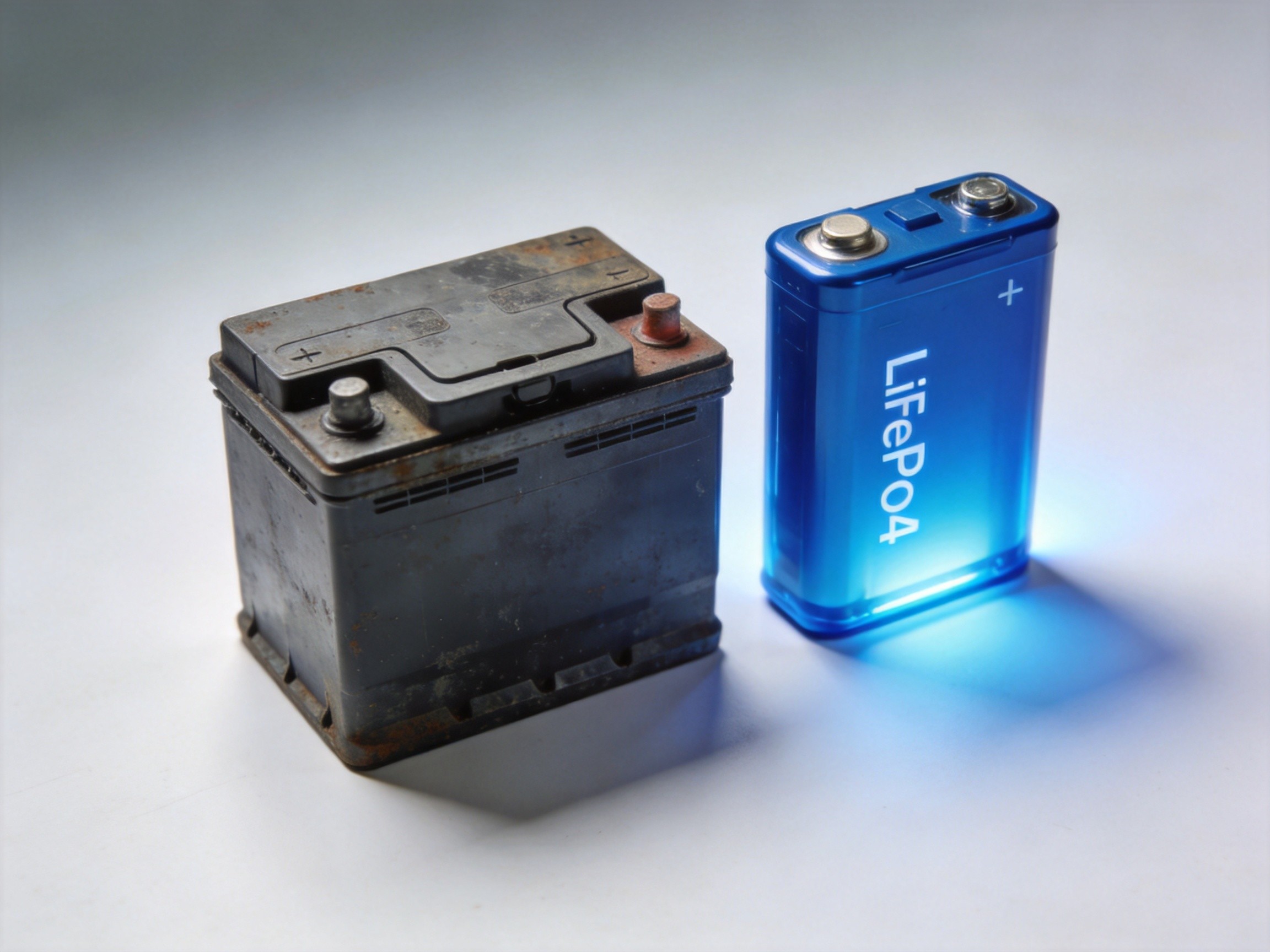
When evaluating long-term durability, the honest answer is that both technologies are robust: modern monocrystalline and polycrystalline panels share similar temperature coefficients and comparable annual degradation rates, typically in the 0.5-0.7 percent range after the first year. The decisive advantage of monocrystalline is not lifespan but area efficiency — it delivers more watts per square metre, which matters because an integrated street light has a fixed, strictly limited panel footprint. Where both types are properly encapsulated and rated for the same IP class, either will serve for a decade or more; monocrystalline simply lets you fit a more powerful array into the same housing. However, the durability of the solar panel must also be carefully considered alongside the energy storage component, as the entire lighting system's operational lifespan relies heavily on the weakest internal link. CMJ Solar addresses this critical vulnerability by pairing Grade A monocrystalline panels with robust LiFePO4 batteries, which are globally renowned for their exceptional thermal stability and incredibly long cycle life. Depending on the specific model and capacity requirements, these LiFePO4 batteries are professionally rated for 2000 to 4000 cycles, ensuring many years of reliable, maintenance-free service. For example, the heavy-duty MJ-SSO400 utilizes a 4000-cycle LiFePO4 battery alongside a massive 4V/110W monocrystalline panel to deliver 12000lm for demanding installations at 10-12m. Warranty terms vary by model and project; contact CMJ Solar for specific warranty terms. Furthermore, the physical housing and IP rating of the lighting fixture play a massive role in protecting these sensitive internal components from environmental stress, moisture ingress, and physical impacts. To fully understand how these rugged fixtures withstand heavy rain, dust storms, and physical debris, you can explore our detailed guide on IP Ratings Explained: Choosing Weatherproof Solar Lights. Proper IP rating selection, combined with high-quality monocrystalline panels and stable LiFePO4 chemistry, is exactly how buyers ensure their outdoor lighting infrastructure remains resilient, safe, and fully operational for the long term.
How to Choose the Best Solar Panels for Street Lights and Flood Lights?
Selecting the optimal solar panel technology for your specific project requires carefully balancing efficiency, spatial constraints, and overall budget, though monocrystalline is overwhelmingly recommended for professional-grade outdoor lighting. First, assess the available mounting space on the physical fixture; all-in-one designs have strict dimensional limits, making the high energy density of monocrystalline silicon absolutely essential for adequate power generation. Second, evaluate the local climate and average peak sun hours; if the installation site experiences frequent cloud cover, heavy smog, or shorter winter days, the superior low-light performance of monocrystalline panels will prevent premature battery depletion. Third, consider the total luminous requirements and the necessary autonomy during consecutive rainy days; higher efficiency panels ensure the battery can store enough energy to sustain lighting for multiple overcast days, as seen in models offering 3 to 5 rainy days of backup. For large-scale projects requiring wide-area illumination, such as sports courts, construction sites, or large commercial perimeters, buyers often look at high-output flood lighting options. You can find comprehensive specifications and selection criteria in our Solar Flood Light Buying Guide: Wattage, Lumens, Battery. Additionally, deciding between a fully integrated design and a separate split panel setup is a critical structural decision; our detailed article on All-in-One vs Split Solar Street Light: Which Is Better breaks down the practical advantages of each configuration. Ultimately, sourcing from a reliable, established manufacturer like CMJ Solar guarantees that the monocrystalline panels meet strict Grade A standards, providing the efficiency and durability necessary for demanding commercial applications. Explore our full range of solar lighting solutions to find the perfect, high-performance match for your specific project requirements.
Frequently Asked Questions
Do monocrystalline solar panels last longer than polycrystalline panels? Not meaningfully. Both types share similar temperature coefficients and comparable annual degradation rates, and a well-encapsulated panel of either technology will hold up for a decade or more outdoors. The real distinction is area efficiency: monocrystalline produces more watts per square metre, so on a fixture with a fixed panel footprint it can support a larger array and longer nightly runtime. Choose monocrystalline for output density, not for a longer service life.
Can monocrystalline panels charge a LiFePO4 battery effectively on cloudy days? Absolutely, monocrystalline panels are highly efficient at capturing diffuse sunlight, which allows them to continue charging LiFePO4 batteries even under heavily overcast conditions. This critical capability is how modern solar lighting systems maintain their charge during extended periods of poor weather, ensuring that critical public areas remain illuminated without interruption when properly paired with high-capacity batteries rated for 2000 to 4000 cycles.
What is the visual difference between monocrystalline and polycrystalline panels? Monocrystalline panels typically feature a uniform, deep black or dark blue appearance due to the pure single-crystal silicon, whereas polycrystalline panels have a distinct speckled blue look caused by the melting together of multiple silicon fragments. This visual difference is often a major deciding factor for architects and urban designers who prioritize the seamless aesthetic integration of solar lighting into modern city landscapes.
Upgrading your outdoor lighting infrastructure with high-efficiency monocrystalline technology ensures maximum energy harvest, reliable nightly performance, and exceptional long-term durability. To discuss your specific project requirements, request custom OEM/ODM configurations, or learn more about our Grade A LiFePO4 integrated solutions, please contact our team today to get a customized quote.
Part of the guide
Solar Lighting Fundamentals: IP Ratings, Weatherproofing and Runtime
Need Product Recommendations?
Our team can help you select the right energy storage or solar lighting products for your project.