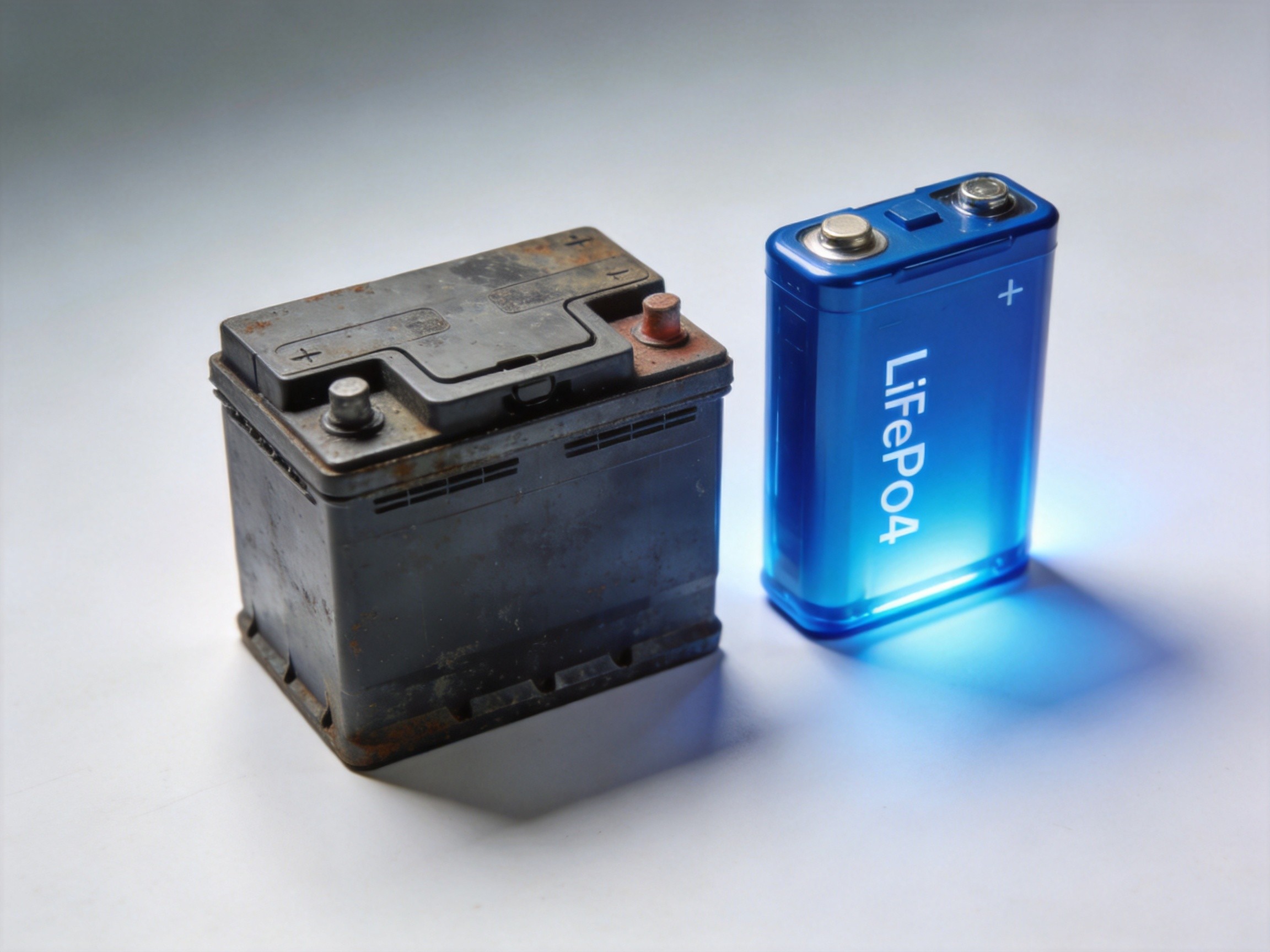
Off-grid and weak-grid solar markets across Africa present some of the harshest operating conditions for battery storage anywhere in the world. Ambient temperatures routinely exceed 35 degrees Celsius, outages are not occasional events but daily occurrences, and maintenance budgets are tight. A battery bank that performs reliably in a German basement can fail in 18 months in a Lagos utility room if it was not specified for the actual duty cycle. This guide explains how to select LiFePO4 storage that survives African conditions, why lead-acid keeps failing despite its lower upfront cost, and how to scale systems from a single home to a small business using modular CMJ Solar products.
Why Heat Destroys Batteries Faster Than Any Other Factor
Battery capacity and cycle life are rated at 25 degrees Celsius. Every 10 degrees above that benchmark roughly halves the cycle life of lead-acid batteries and accelerates degradation in lithium chemistries, though LiFePO4 is significantly more heat-tolerant than lead-acid or NMC lithium. In a metal-roofed building where the battery enclosure reaches 45 degrees, a flooded lead-acid bank may last 12 to 18 months. A LiFePO4 battery with a properly calibrated BMS can still deliver thousands of cycles because its thermal runaway threshold is far higher and it does not require water topping-up. When specifying for African markets, look for products with a stated operating temperature range that extends to at least 50 or 55 degrees Celsius, and ensure the BMS includes high-temperature charge and discharge cut-off protection.
Deep Cycling Is Not Optional, It Is the Daily Norm
In a grid-tied European home, a battery may cycle between 20% and 80% state of charge on most days, a shallow 60% swing that is easy on any chemistry. In an off-grid African installation, the battery discharges from 100% in the evening to 10 or 20% by morning, a deep 80 to 90% cycle every single day. Lead-acid batteries are rated for roughly 500 cycles at 50% DoD, but at 80% DoD that number drops to 300 cycles or fewer, meaning replacement is required within a year. LiFePO4 batteries are rated for 3000 to 6000 cycles at 80% DoD, making the 10-year total cost of ownership dramatically lower even though the upfront price is higher. Always size a LiFePO4 bank for at least 90% DoD and present the customer with a per-cycle cost comparison rather than an upfront price comparison.
230V AC Compatibility and Appliance Reality
Virtually all African markets use 230V / 50Hz AC, matching the output of CMJ Solar's Apollo and Ares all-in-one ESS units. But voltage compatibility alone is not enough. Many households and small businesses use appliances imported from different regions, and startup surges from air-conditioners, welding machines, and borehole pumps can exceed the inverter's rating. Specify an inverter with a surge rating at least twice the largest motor load's running wattage. The 6kW Apollo A units provide a 230V pure sine wave output suitable for sensitive electronics, while the 12kW variants handle the heavier motor loads common in small businesses. The Apollo A Series 15kWh All-in-One ESS (SCAP-A-51.2-300) delivers 15450Wh at 51.2V/300Ah with a 6kW inverter and 9000W PV input, making it well suited to larger homes and small shops that need extended autonomy.
Why Cheap Lead-Acid Fails in 18 Months
The argument for lead-acid is always upfront cost: a 10kWh flooded lead-acid bank costs less than half the price of a comparable LiFePO4 system. But the math changes when replacement cycles are included. A lead-acid bank that costs 40% of a LiFePO4 system but lasts one-fifth as long actually costs twice as much over a 10-year period, before accounting for maintenance labor, water replacement, ventilation requirements, and the cost of downtime when the bank fails unexpectedly. Lead-acid also requires a dedicated ventilated room due to hydrogen off-gassing, regular electrolyte level checks, and equalization charges that waste PV energy. LiFePO4 is maintenance-free, can be installed in living spaces, and charges more efficiently, meaning a smaller PV array can deliver the same usable energy. For distributors, the sales conversation should focus on total cost of ownership and reliability, not sticker price.
Sizing for Homes: 7.5kWh to 15kWh
For a typical African home with lighting, a fridge, a TV, phone charging, and a few fans, a 7.5 to 10kWh LiFePO4 bank covers overnight loads with one day of autonomy. The Ares 7.5kWh All-in-One ESS with 5KW Inverter (SCAS-5KW-7.5KWh) is a compact, cost-effective option at 25.6V/300Ah with 7680Wh capacity, 5kW continuous power, and a 160A MPPT charge current. It accepts a wide 60V to 450V PV input range. For homes with larger appliance loads or a desire for two days of autonomy, the Ares 10kWh with 6KW Inverter provides 10240Wh at 51.2V/200Ah, 6kW output, and 5500W PV input. Both units output 230V at 50Hz and integrate the inverter and battery in a single cabinet, simplifying installation for local technicians.
Sizing for Small Businesses: 15kWh to 20kWh
Small shops, clinics, guesthouses, and farming operations have higher and more continuous loads than homes. A 15kWh to 20kWh bank can run refrigeration, point-of-sale systems, lighting, security cameras, and a small air-conditioner through the night. The Apollo A Series 20kWh All-in-One ESS provides 20480Wh at 51.2V/400Ah with a 400A discharge current, 6kW inverter, and 9000W PV input. Its modular tower design (four 5.12kWh modules stacked under the inverter head) allows a business to start with 10 or 15kWh and add modules as revenue grows. For 12V-based systems such as solar kiosks, telecom base stations, or low-voltage lighting circuits, the Lead-to-Lithium 12.8V 200Ah battery provides 2560Wh in a standard lead-acid footprint, supporting 100A continuous and 150A peak discharge. It is a direct drop-in replacement for flooded or sealed lead-acid banks in existing 12V systems.
PV Sizing for High-Temperature, High-Irradiance Regions
Africa has some of the highest solar irradiance in the world, but high temperatures also reduce panel output. Standard test conditions rate panels at 25 degrees Celsius, and panel voltage drops as temperature rises. When sizing strings, ensure the open-circuit voltage on the coldest morning does not exceed the inverter's maximum PV input voltage (500V on the Apollo A series), and that the Vmp at peak operating temperature stays above the MPPT lower bound (80V on Apollo A, 60V on the Ares 7.5kWh). A common mistake is using European string-sizing calculators that assume 20-degree ambient temperatures; recalculate for 40 to 45 degree afternoon temperatures. Oversizing the PV array by 20 to 30% compensates for heat derating and ensures the battery reaches full charge even during cloudy or hazy harmattan periods.
Installation and Maintenance Realities
Off-grid systems in remote areas may be serviced by a local technician who visits once every few months, not by a factory-trained engineer. Specify products with clear wiring labels, plug-and-play connectors, and built-in protection against reverse polarity, overvoltage, and short circuits. All-in-one units reduce the number of field connections and the risk of installation errors. Train local partners to inspect terminal tightness, clean PV panels, verify firmware version, and check battery state of health through the display or monitoring app every quarter. Stock spare fuses and BMS communication cables at the local distributor level. The Ares units ship with fuses included (one fuse for the 5kW model, two for the 12kW model), reducing the parts inventory a local partner must carry.
Common Pitfalls in African Off-Grid Projects
The first pitfall is undersizing the battery to meet a tight budget, resulting in daily over-discharge that destroys even LiFePO4 cells within two years. Always design to at least one full day of autonomy for homes and two days for critical loads like clinics. The second is using a 25.6V battery system for loads that require high continuous power, which forces excessive current through undersized cables and causes voltage drop. For anything above 3kW continuous, specify 51.2V. The third is ignoring lightning and surge protection in regions with frequent thunderstorms; a DC-side surge protector is a low-cost insurance policy. The fourth is selecting products without local after-sales support, leaving the customer stranded when a BMS trips or a display fails. Distributors should partner with factories that provide responsive English-language technical support and spare parts. Browse the full CMJ Solar energy storage catalog to build a product lineup matched to African operating conditions.
Final Specification Principles
Specify LiFePO4, not lead-acid, for every daily-cycling application. Design for 90% DoD and at least one day of autonomy. Choose 51.2V systems for loads above 3kW and 25.6V for smaller, budget-sensitive installations. Verify the inverter's 230V/50Hz output and surge rating against the largest motor load. Oversize the PV array by 20 to 30% for heat derating. Choose modular products that let the customer expand capacity without replacing the entire system. And partner with a manufacturer that stands behind its products with real warranty terms, spare parts availability, and technical support. The off-grid solar market in Africa rewards reliability, and the distributors who build long-term trust are the ones who specify for the conditions that actually exist, not the conditions on a datasheet tested at 25 degrees.
Need Product Recommendations?
Our team can help you select the right energy storage or solar lighting products for your project.