In 2026, Africa's off-grid solar market is growing faster than most forecasters expected two years ago, driven by diesel generation that solar-plus-storage now undercuts decisively and by governments finally allowing larger privately operated mini-grids. For distributors, EPC contractors and tender specialists serving Nigeria, Kenya and the wider East and West African corridor, the practical message is simple: demand is real, battery-based systems are becoming the default, and supplier qualification now matters more than headline price. CMJ Solar, a LiFePO4 battery and solar lighting manufacturer based at our Jiangmen, Guangdong factory, has supplied storage and lighting into African markets for years, and this article summarizes what our project teams see in the second half of 2026.
How Large Is the Off-Grid Solar Opportunity in 2026?
The headline numbers remain striking. According to IEA-tracked access figures, more than 600 million people in sub-Saharan Africa still live without grid electricity, and a much larger group deals with supply that is unreliable or effectively unavailable for productive use. Against that backdrop, industry trackers estimate the broader off-grid solar market, spanning solar home systems, commercial backup and mini-grids, is expanding at a mid-to-high-teens annual rate and heading toward a multi-billion-dollar scale by the end of the decade. The structural reason is economics rather than charity: across West and East Africa, electricity from a solar-plus-battery system now costs roughly one fifth to one third of electricity from a diesel generator on a levelized basis. When a litre of diesel must be trucked overland to a landlocked market, that gap widens further.
Nigeria illustrates the speed of the shift. Industry reporting on 2025 installations suggests the country added around 800 MW of solar capacity in the year, the overwhelming majority of it off-grid, taking cumulative installed solar past the gigawatt mark. Petrol stations, clinics, hotels, factories and residential compounds have all moved, because self-generation is not a luxury in Nigeria but a daily operating cost. Similar patterns recur in Kenya, Ghana, Senegal, Tanzania and Uganda, even where the project mixes differ.
What Is Driving the Market in 2026?
Three forces explain why 2026 feels different from earlier waves of off-grid enthusiasm. First, diesel and petrol prices have stayed elevated while solar and battery costs fell and then stabilized, so the payback maths now closes without subsidies for most commercial buyers. Second, mobile-money infrastructure, most mature in Kenya but spreading fast, has turned pay-as-you-go solar from an experiment into a standard financing channel for households and small businesses. Third, productive use is anchoring project economics: a mini-grid that powers a grain mill, cold room, irrigation pump or telecom tower by day can sell household lighting in the evening at tariffs people can actually afford.
For hardware suppliers, this changes the product mix. Entry-level lantern kits still sell, but the action has moved toward larger solar home systems in the 3 to 10 kWh battery range and toward commercial and mini-grid storage in stacked rack configurations. Buyers increasingly ask for systems that can expand as household income grows, which is exactly why modular LiFePO4 architecture wins tenders that lead-acid used to dominate. Our technical comparison in LiFePO4 vs lead-acid batteries explains the cycle-life and high-temperature reasons behind that switch.
West Africa: Nigeria's 2026 Rule Change Resizes the Project Pipeline
The most important policy event of the year came in Nigeria, where the Nigerian Electricity Regulatory Commission issued updated mini-grid regulations in April 2026. Isolated mini-grids can now be developed at up to 5 MW and interconnected mini-grids at up to 10 MW per site, replacing a previous framework that effectively capped projects at 1 MW, while permit decisions for systems above 100 kW are scheduled within 30 business days. The Rural Electrification Agency has already publicized a pipeline of dozens of interconnected mini-grids totaling hundreds of megawatts, all designed with battery storage, with World Bank-supported DARES financing behind the programme. For EPC firms and equipment importers, this is a shovel-ready signal: projects that were legally impossible to structure in 2024 are now bankable.
The regional picture reinforces it. A September 2026 IRENA assessment of battery-supported mini-grids in Nigeria, Burkina Faso, Mali and Senegal identified a near-term solar PV mini-grid market of about 568 MW across roughly 42,700 settlements, potentially reaching around 21 million people, with Nigeria accounting for close to 400 MW of that potential. Reaching universal Tier 2 access across the four countries by 2030 would require roughly 2.25 GWh of battery storage, with Nigeria alone needing about 1.59 GWh. The same analysis values the discounted lifetime benefit of adding batteries to a typical community mini-grid at roughly 20,000 US dollars, because fuel savings offset the extra capital cost. Storage is no longer the optional component in a West African mini-grid tender; it is the component the financial model is built around.
East Africa: PAYG Maturity and Productive-Use Demand
East Africa tells a slightly different story. Kenya remains the continent's most developed pay-as-you-go market, with deep mobile-money penetration, the KOSAP programme supporting off-grid counties, and a certification regime run through KEBS that importers must prepare for before containers reach Mombasa. Tanzanian demand is led by mining, telecom and commercial sites, while Ugandan programmes supported by development finance continue to fund systems for refugees, schools and health centres. Across the region, distributors report that households upgrading from basic lighting kits want capacity for televisions, fans and small refrigerators, which pushes battery specifications upward and rewards suppliers who can offer a ladder from 2.5 kWh to 30 kWh within one compatible platform.
Why LiFePO4 Storage Is Becoming the Default Specification
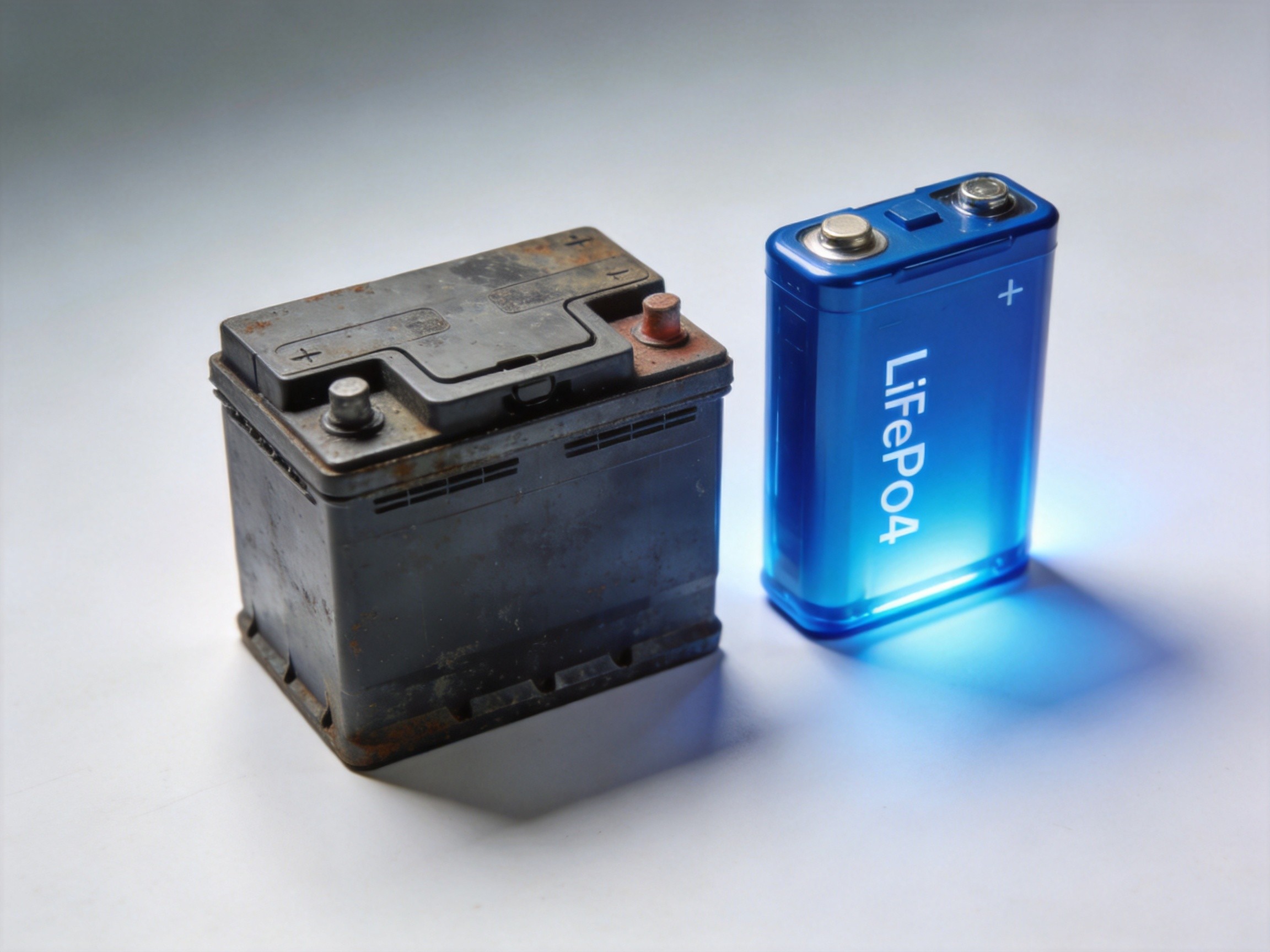
Tender sheets written in 2026 read differently from those written in 2022. Flooded lead-acid and gel batteries are being specified out in favour of LiFePO4 for three engineering reasons that matter under African operating conditions: high-temperature tolerance, usable depth of discharge above 90 percent rather than the 50 percent lead-acid tolerates in practice, and a service life measured in thousands of cycles instead of months of runtime before capacity fades. A five-year battery warranty has become a reasonable expectation in formal tenders, which in turn forces out the cheapest unbranded cells.
CMJ Solar's storage line is built around this specification ladder. For mini-grid and commercial backup installs, the Rack-Mounted Battery 10kWh (51.2V/200Ah) stacks in standard cabinets and scales site by site, while the Apollo A Series 10kWh All-in-One ESS combines a 6KW inverter, 120A MPPT charging and a 10,240Wh LiFePO4 pack for smaller commercial premises and estate backup. At the smaller end, the Lead-to-Lithium Battery 12.8V 300Ah drops into legacy 12V enclosures for solar home and caravan-style upgrades. Buyers can compare the full range in our energy storage catalog, and the market-specific logic is detailed in our guide to off-grid solar battery systems for African markets.
What This Means for B2B Procurement in 2026 and 2027
The companies winning this wave are buying differently. First, they pre-qualify manufacturers rather than spot-buying containers: they ask for Grade A cell evidence, cycle-life test data, and support for destination certification such as SONCAP in Nigeria and KEBS in Kenya. Second, they consolidate lighting and batteries from one factory to shrink logistics and after-sales complexity, because a village street light programme and a clinic backup system often share the same distributor relationship. Third, they stock ahead of the rainy season and the year-end project commissioning rush rather than ordering into it. Fourth, they treat OEM branding as a retention tool: local installers who build a name on reliable hardware rarely switch suppliers after the first 200 units.
CMJ Solar supports this model with factory-direct pricing, OEM and ODM cooperation, a five-year battery warranty on our storage line, and container-level configuration flexibility across batteries and solar lighting. If you are building a 2026-2027 order plan for Nigeria, Kenya or neighbouring markets, the fastest way to start is to contact our team with your load profile, target certification and delivery port; our engineers will come back with a sized product list rather than a generic quotation. More context on where the sector is heading sits in our review of solar energy storage market trends for 2026.
Frequently Asked Questions
What is the best battery for off-grid solar in Africa? For most formal residential, commercial and mini-grid projects, a 51.2V LiFePO4 battery is the preferred specification because of its heat tolerance, deep discharge capability and multi-thousand-cycle life. Smaller 12.8V LiFePO4 batteries suit legacy solar home upgrades, while rack-mounted 10kWh modules scale into mini-grids. Models such as the Rack-Mounted Battery 10kWh and the Apollo A all-in-one range cover those two ends.
How big is Nigeria's solar mini-grid opportunity? IRENA's 2026 assessment puts Nigeria's near-term solar mini-grid potential at close to 400 MW across thousands of settlements, and the country needs roughly 1.59 GWh of battery storage for Tier 2 access targets by 2030. The 2026 mini-grid regulations, permitting up to 10 MW interconnected sites, have unlocked much larger projects than the previous 1 MW framework allowed.
Are solar home systems still selling while mini-grids grow? Yes, and they serve different settlements. Mini-grids fit denser communities with productive-use anchors, while solar home systems remain the fastest solution for dispersed households. The trend is upsizing: customers increasingly choose 3 to 10 kWh LiFePO4 systems over basic lighting kits as appliances and small businesses come online.
Need Product Recommendations?
Our team can help you select the right energy storage or solar lighting products for your project.