
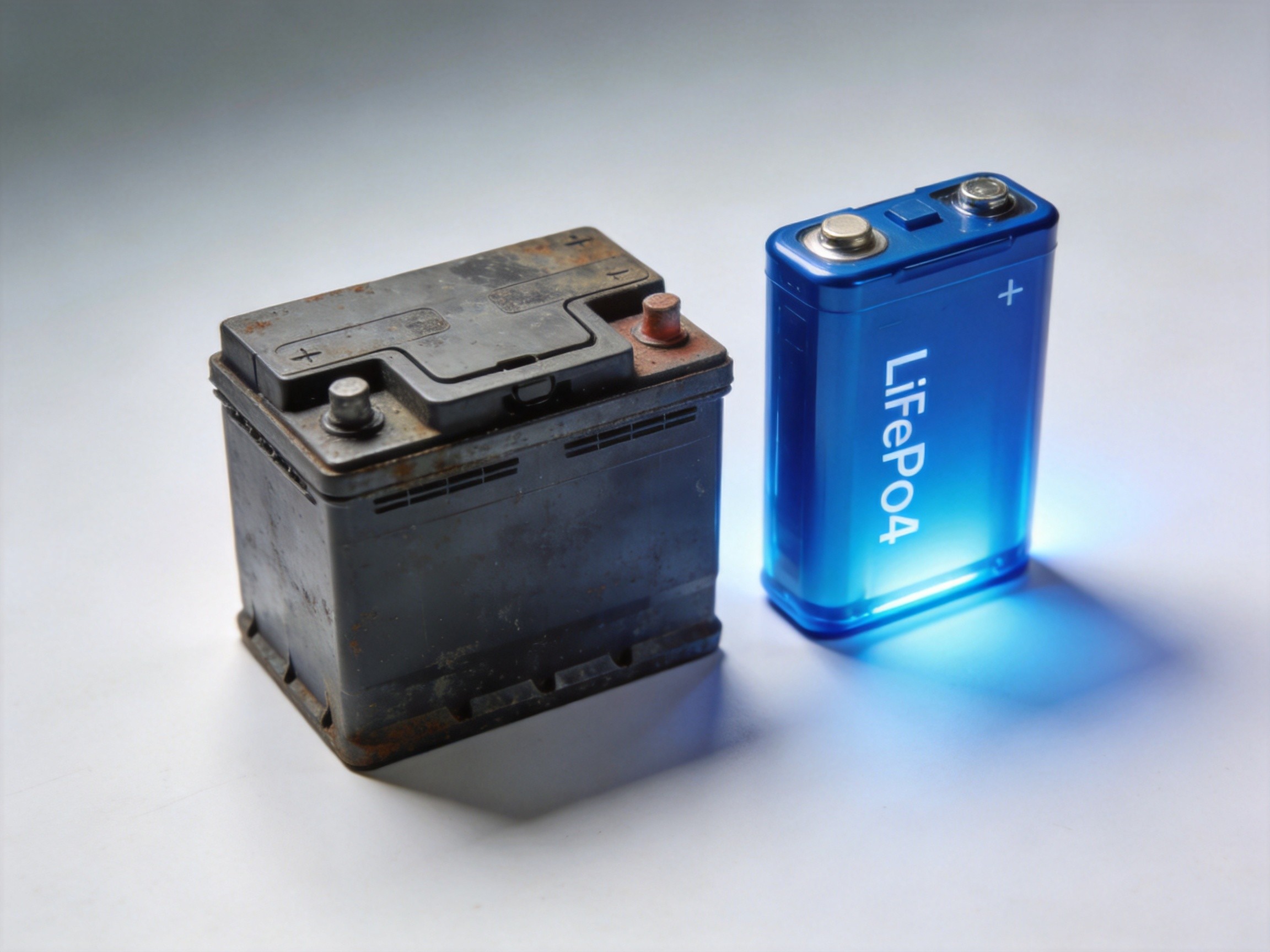
A 48v lifepo4 battery wins for commercial solar storage because it perfectly balances high power output, enhanced safety, and exceptional cycle life, utilizing a 51.2V nominal architecture that minimizes current draw and drastically reduces cable losses. This 48 volt lithium iron phosphate chemistry ensures over 6000 cycles at an 80% depth of discharge, making it the most cost-effective, reliable, and scalable choice for demanding off-grid, hybrid, and peak-shaving commercial systems. By operating at a higher voltage than traditional 12V or 24V setups, a 48v lifepo4 battery sizing strategy allows facility managers to deploy smaller gauge wiring, reduce thermal losses, and achieve higher overall system efficiency.
Why Choose a 48V Lithium Iron Phosphate System?
The 48V architecture is the undisputed industry standard for medium-to-large commercial solar storage specs because it drastically reduces the electrical current compared to lower voltage systems. How does this help your bottom line? By lowering the current, you minimize heat generation and voltage drop across your conductors, which means you can use thinner, less expensive copper wiring while maintaining high energy transfer efficiency. Furthermore, the 48 volt lithium iron phosphate chemistry provides inherent thermal and chemical stability, preventing thermal runaway and ensuring a significantly longer operational lifespan for your energy assets. Who benefits the most from this stability? Commercial facility managers and EPC contractors who need to guarantee system reliability and minimize maintenance callbacks over a multi-decade project lifecycle.
What Are the Core 48V LiFePO4 Battery Specs?
When evaluating commercial solar storage specs, you must look closely at nominal voltage, total capacity, continuous discharge rates, and physical dimensions. For instance, the Rack-Mounted Battery 5kWh (51.2V/100Ah) model SCRA-R-51.2-100 delivers a precise nominal voltage of 51.2V and a total energy capacity of 5120Wh. Who benefits from this specific form factor? Commercial facility managers who need modular scalability in standard 19-inch server racks. This specific CMJ Solar rack battery features a continuous discharge current of 100A and compact dimensions of 49.2*45*18CM, allowing for dense, safe energy deployment without requiring specialized floor space. Why is the 51.2V nominal voltage important? Because it perfectly matches the input requirements of most modern 48V hybrid inverters, ensuring seamless communication and optimal charging profiles.
How Do I Calculate 48V LiFePO4 Battery Sizing?
Proper 48v lifepo4 battery sizing requires a meticulous calculation of your daily energy consumption and matching it to the battery's usable capacity and inverter limits. First, determine your total daily load in kilowatt-hours by auditing all essential commercial equipment, lighting, and HVAC systems. Second, divide that total daily consumption number by the battery's usable depth of discharge, which is typically 80% to 90% for high-quality LiFePO4 cells. Third, select a battery bank that meets or exceeds this adjusted figure while ensuring the total capacity aligns with your inverter's maximum charging current. For larger commercial loads, you might step up to the Rack-Mounted Battery 10kWh (51.2V/200Ah) model SCRA-R-51.2-200, which offers a massive 10240Wh of capacity and supports discharge currents of 100A or 200A. How does this help? It ensures you have enough instantaneous power for heavy commercial equipment startup surges without experiencing severe voltage sag or triggering low-voltage disconnects.
How Does an All-in-One ESS Simplify 48V Integration?
While standalone rack batteries offer immense flexibility, an All-in-One Energy Storage System integrates the battery cells, inverter, and MPPT charge controller into a single, unified chassis. Why is this advantageous for commercial projects? It eliminates complex, error-prone wiring between separate components, reduces physical footprint, and drastically cuts down on installation labor time. The Apollo A Series 10kWh All-in-One ESS model SCAP-A-51.2-200 is a prime example of this technology, featuring a 6KW inverter output, a 51.2V battery input, and a robust 10240Wh capacity. How does it handle massive solar input? It supports a Max PV Input Power of 27A/9000W with a wide PV Input Voltage Range of 80V-500V, making it incredibly versatile for various commercial solar array configurations, whether they are string-inverter style or high-voltage ground mounts.
What About Higher Power and Capacity Requirements?
For facilities requiring more than 6KW of continuous output or needing specialized form factors, you need a system with a more robust inverter or distinct physical design. The Ares 10kWh All-in-One ESS with 6KW Inverter model SCAS-5.5KW-10KWh provides 10240Wh of premium LiFePO4 capacity with a 120V-500V PV Input Voltage Range and dimensions of 84*48*30cm. Who should choose this specific model? Businesses looking for a streamlined, floor-standing solution that handles heavy daytime loads while storing excess solar energy for nighttime use, all while maintaining a clean aesthetic. All CMJ Solar systems, from the Apollo to the Ares series, are backed by a comprehensive 5-year warranty, giving you absolute peace of mind regarding your long-term energy investments and total cost of ownership.
Understanding the Battery Management System in 48V Systems
A critical component of any 48v lifepo4 battery is the internal Battery Management System, which protects the cells and ensures longevity. Why is the BMS so crucial? Because it monitors individual cell voltages, temperatures, and current flow, actively balancing the cells to prevent overcharging or deep discharging. How does this impact commercial solar storage specs? A high-quality BMS ensures that the 48 volt lithium iron phosphate cells age evenly, meaning the battery will deliver its rated 6000+ cycles without premature capacity degradation. Furthermore, advanced BMS units feature communication protocols like RS485 or CAN bus, allowing the battery to talk directly to the inverter. Who benefits from this communication? System integrators who need to set precise charging parameters, monitor state-of-charge in real-time, and diagnose potential issues remotely without sending a technician to the site. This level of intelligent monitoring is what separates a basic battery from a true commercial-grade energy asset.
Where Can I Learn More About System Selection?
Selecting the right battery is just one part of the puzzle in designing a resilient commercial microgrid. To understand the broader landscape of system design, you should read our comprehensive guide on How to Choose a Home Energy Storage System, which covers essential load analysis and inverter matching principles. Additionally, if you are transitioning an existing facility from older, less efficient technology, our detailed article on How to Replace Lead Acid Battery with Lithium provides crucial wiring, charging, and compatibility tips. For distributors and installers looking for specific physical installation insights, the Wall-Mounted LiFePO4 Batteries: A Distributor's Guide is an essential resource for specifying the right model. You can also explore our full range of energy storage solutions to find the perfect fit for your specific commercial projects.
Frequently Asked Questions
What is the maximum discharge current for a standard 48v lifepo4 battery? The maximum discharge current depends on the specific model and internal BMS limits, but high-quality commercial units like the Rack-Mounted Battery 10kWh (51.2V/200Ah) support up to 200A continuous discharge. This high current capability ensures that commercial facilities can run heavy machinery, industrial pumps, and HVAC systems simultaneously without tripping the battery management system or experiencing severe voltage drops that could damage sensitive equipment.
How long does a 48 volt lithium iron phosphate battery last in real-world conditions? A premium 48 volt lithium iron phosphate battery manufactured by CMJ Solar is engineered to last over 6000 cycles at an 80% depth of discharge under optimal operating temperatures. Why does this matter for your financial modeling? Because at one full cycle per day, this translates to over 16 years of reliable daily use, significantly outperforming traditional lead-acid alternatives and drastically lowering the overall levelized cost of energy for your commercial site over the project's lifespan.
Can I parallel multiple 48V rack batteries to increase total system capacity? Yes, you can safely parallel multiple 48V rack batteries to scale your total energy capacity linearly to meet growing commercial demands. First, ensure all batteries are from the same manufacturer and have matching firmware versions to prevent communication conflicts. Second, use equal-length, heavy-gauge copper cables to connect the positive and negative busbars, ensuring the electrical resistance is identical across all parallel strings. Third, verify that your inverter's maximum charge and discharge current limits can handle the expanded bank, ensuring safe and balanced operation across all parallel modules without overloading the central communication master.
Ready to Upgrade Your Commercial Solar Storage?
Upgrading to a 48v lifepo4 battery system is a smart, future-proof investment for any commercial property looking to maximize energy independence, reduce operational costs, and achieve sustainability goals. Whether you need highly modular rack batteries for server rooms or integrated all-in-one systems for retail spaces, CMJ Solar's Jiangmen factory is fully equipped to support your OEM/ODM requirements with top-tier LiFePO4 technology and rigorous quality control. Our engineering team works directly with you to customize battery management parameters, ensuring the system perfectly matches your unique load profiles and solar array characteristics. For project quotes, custom system designs, and bulk pricing, contact our team today to discuss your specific commercial solar storage specs and secure your energy future.
Part of the guide
LiFePO4 Battery Technology: Chemistry, BMS, Charging and Cold Weather
Need Product Recommendations?
Our team can help you select the right energy storage or solar lighting products for your project.