
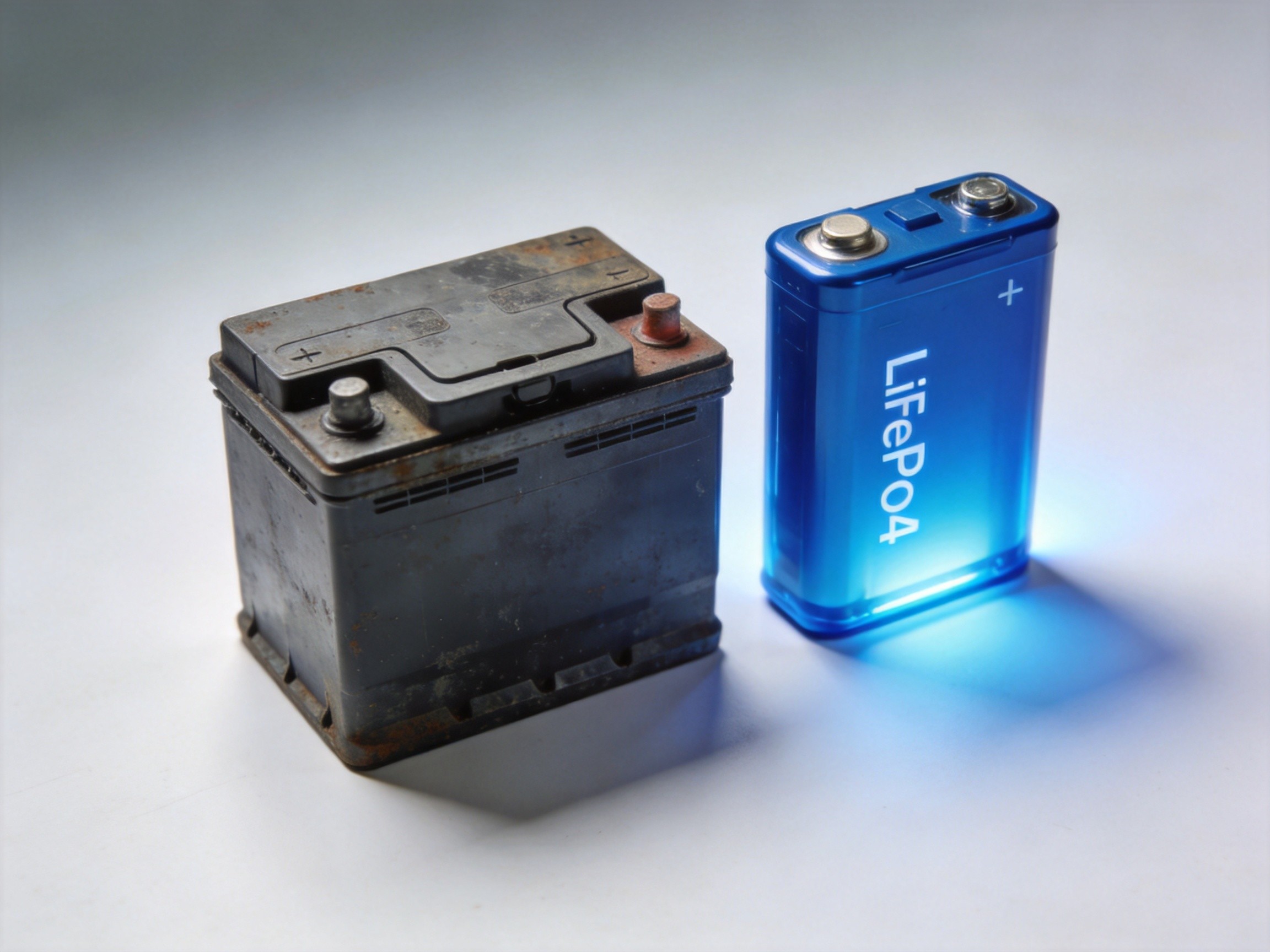
The choice between a 24V and 48V solar battery depends primarily on your system's total power output and daily energy consumption, where 24V systems are ideal for smaller off-grid setups under 3000 watts, while 48V systems are necessary for larger residential and commercial loads to reduce current, minimize wire sizing, and maximize inverter efficiency. This distinction is critical because selecting the wrong voltage architecture can lead to excessive power loss, oversized cabling, and incompatible inverter matching. Understanding how voltage dictates current flow allows system designers to optimize both safety and performance for any given deployment.
How Does Voltage Impact Current and Wire Sizing?
When evaluating a solar battery voltage comparison, the most significant physical difference lies in the relationship between voltage, current, and wire sizing. According to Ohm's law, power equals voltage multiplied by current. This means that for a given power requirement, increasing the system voltage drastically reduces the current flowing through the cables. Why does this matter for installers and system designers? Lower current allows for the use of thinner, less expensive copper wiring while minimizing dangerous voltage drops and heat generation. For example, delivering 5000 watts of power at a nominal 25.6V requires nearly 195 amps of current, which demands very thick and costly cables. In contrast, delivering that same 5000 watts at 51.2V requires only about 97 amps, effectively halving the current and allowing for much more manageable wire sizes. How does this apply to real-world hardware? The Rack-Mounted Battery 5kWh (51.2V/100Ah) SCRA-R-51.2-100 is engineered with a 100A discharge current, perfectly aligning with standard wiring requirements for high-power residential systems when using a solar system wire sizing calculator. Who benefits most from this efficiency? Commercial facility managers and residential installers who need to keep material costs low while maintaining strict electrical safety codes.
What Are the Inverter Efficiency Differences Between 24V and 48V?
The 24v vs 48v inverter efficiency debate centers on how hybrid inverters convert direct current from the battery into alternating current for your loads. Inverters inherently experience conversion losses, primarily generated as heat when handling high direct current through internal semiconductor switches. Why do higher voltage systems yield better efficiency? Because the inverter draws less current from a 48V or 51.2V battery bank compared to a 24V bank for the exact same wattage output, resulting in less internal heat and lower conversion losses. How does this impact your daily energy harvest? Higher efficiency means more of the solar energy generated by your panels is actually available to power your home or business, rather than being wasted as thermal loss. As a dedicated OEM/ODM manufacturer operating from our Jiangmen factory, CMJ Solar designs its LiFePO4 solutions to operate seamlessly with high-efficiency 48V and 51.2V hybrid inverters, ensuring maximum energy transfer during rigorous testing. Who sees the greatest return on investment from this efficiency? Users with heavy daily loads, such as those running air conditioning, electric heating, or large workshop machinery, where every percentage point of inverter efficiency translates to significant long-term energy savings. For those looking to integrate this high-efficiency architecture into a seamless backup solution, exploring options like a How to Choose a 51.2V All-in-One ESS for Home Backup Power can provide a complete, optimized system.
When Should You Choose a 24V Battery System?
While higher voltages dominate large-scale deployments, there are specific scenarios where a 24V architecture remains the superior choice. First, 24V systems are ideal for small off-grid cabins, recreational vehicles, and light backup applications where the continuous load stays below 3000 watts. Second, the components for 24V systems, including smaller inverters and charge controllers, are generally more affordable and widely available for DIY enthusiasts. Third, safety handling is slightly more forgiving for beginners working with lower voltage direct current in remote locations. Why is this important for specific market segments? It lowers the barrier to entry for residential users who do not need the massive capacity of a whole-home backup system. For these lighter applications, the Rack-Mounted Battery 2.5kWh (Hardware) (25.6V/100Ah) SCRA-R-25.6-100H provides a robust 2560Wh capacity at 25.6V with a reliable 100A discharge current. Note that this hardware version is not configured for inverter communication, which suits standalone off-grid and backup setups where no inverter handshake is required; projects that need CAN or RS485 communication with a hybrid inverter should specify the software version SCRA-R-25.6-100S instead. How can you scale this if your needs grow slightly? You can utilize the Rack-Mounted Battery 5kWh (25.6V/200Ah) SCRA-R-25.6-200 to double your capacity within the same 24V voltage architecture without changing the inverter. Who should specify these models? Distributors and installers catering to the off-grid cabin market, marine applications, and small-scale agricultural monitoring stations where extreme power loads are not a daily requirement.
Why is 48V (51.2V) the Standard for Modern Home Storage?
The transition toward 48V, specifically 51.2V for lithium iron phosphate chemistry, has become the undisputed standard for modern residential and commercial energy storage. Why has the industry consolidated around this voltage? Because it offers the perfect balance of safety, scalability, and component compatibility. A 51.2V system can easily support 5kW, 8kW, or even 12kW inverters without exceeding safe current limits, allowing a single battery architecture to serve everything from modest urban homes to large rural estates. How does this scalability manifest in hardware? The Rack-Mounted Battery 10kWh (51.2V/200Ah) SCRA-R-51.2-200 delivers a massive 10240Wh capacity and supports up to a 200A discharge current, providing the necessary muscle for whole-home backup during extended grid outages. Who benefits from this standardized approach? System integrators who can deploy a single, versatile battery model across multiple project types, streamlining their inventory and installation training. For a deeper understanding of how to specify these units for various client needs, reviewing the Wall-Mounted LiFePO4 Batteries: A Distributor's Guide to Specifying the Right Model offers excellent insights into project planning. Furthermore, CMJ Solar backs its energy storage products with an official 5-year warranty, ensuring that this standardized 51.2V infrastructure remains a reliable asset for your clients over the long term. For a component-level breakdown of 48V packs, including BMS configuration and terminal options, see our 48V LiFePO4 battery guide; and for the rack format itself, see what a server rack battery is.
How Do You Match Battery Voltage to Your Solar Charge Controller?
Selecting the correct battery voltage is only half the equation; you must also ensure your solar charge controller matches that architecture. MPPT charge controllers are designed with specific input and output voltage windows. Why is this matching critical? Connecting a 51.2V battery to a 24V charge controller will prevent the battery from charging, while mismatching the solar array's open-circuit voltage to the controller's input limits can permanently destroy the electronics. How do you calculate the correct match? First, identify the battery bank voltage, such as 25.6V or 51.2V. Second, select an MPPT controller rated for that specific battery voltage. Third, calculate the total open-circuit voltage of your solar panels in the coldest expected weather to ensure it stays below the controller's maximum input voltage rating. Who is responsible for verifying this? The system designer and the lead installer must double-check these parameters before commissioning to prevent catastrophic equipment failure. If you are transitioning an older system, understanding the nuances of replacing legacy tech can help you determine if your existing charge controllers are compatible with the new LiFePO4 voltage requirements, or if a complete controller upgrade is necessary to safely harness the benefits of modern lithium technology.
Frequently Asked Questions
Can I connect 24V and 48V batteries in the same system? No, you cannot directly connect 24V and 48V batteries in parallel or series because the voltage mismatch will cause severe circulating currents, potentially damaging the batteries and creating a fire hazard; you must keep voltage architectures strictly separate within a single bank.
Does a 48V system charge faster than a 24V system? A 48V system can accept the same wattage with lower current, which often allows the battery management system to sustain higher charge rates for longer periods without hitting current limits, resulting in faster overall charging times for large capacity banks.
What is the lifespan of CMJ Solar LiFePO4 batteries? CMJ Solar LiFePO4 cells are rated for 2000 to 4000 cycles depending on the depth of discharge and operating conditions, and our energy storage products carry an official 5-year warranty to ensure long-term reliability for your projects.
Navigating the complexities of system voltage, current limits, and inverter matching requires precise component selection to ensure safety and maximum efficiency. Whether you are designing a compact 24V off-grid setup or a scalable 51.2V whole-home backup system, choosing the right energy storage architecture is the foundation of a successful project. Ready to specify the right voltage for your next deployment? Please contact our team to request a quote and let our engineers help you optimize your system design.
Part of the guide
LiFePO4 Battery Types and Voltages: 12V, Wall-Mounted, Rack and Lead-Acid Replacement
Need Product Recommendations?
Our team can help you select the right energy storage or solar lighting products for your project.