
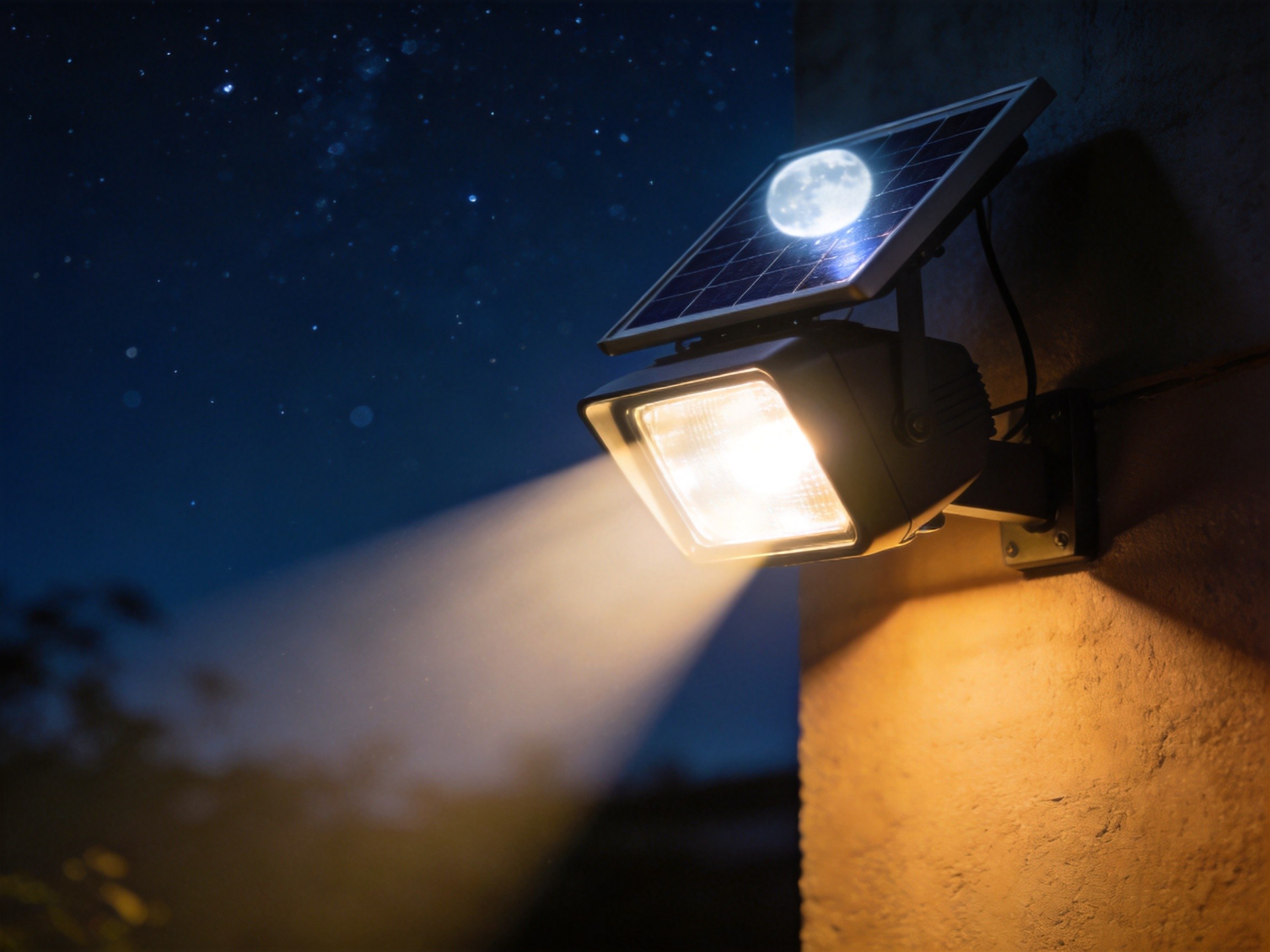
The optimal solar street light pole height ranges from 6 meters to 12 meters, while the ideal spacing distance is typically 3 to 4 times the mounting height, ensuring uniform illumination without dark spots. This ratio balances luminous output with coverage area, allowing fixtures to effectively light roadways, pathways, and commercial zones based on their specific wattage and lumen ratings. Properly sizing these parameters prevents light pollution, reduces hardware costs, and guarantees that pedestrians and drivers experience consistent visibility throughout the night.
How Do You Calculate the Ideal Solar Street Light Mounting Height?
Calculating the ideal solar street light mounting height requires analyzing the street light pole height to wattage ratio, which directly correlates the fixture's luminous output with its physical clearance. When a fixture is mounted too low, the intense concentration of lumens creates severe glare for drivers and pedestrians, reducing overall visibility and safety. Conversely, mounting the fixture too high disperses the light excessively, resulting in inadequate ground-level illuminance and wasted energy. This is why matching the physical pole height to the specific lumen output of the fixture is a critical engineering step for any municipal or commercial project.
At CMJ Solar, our engineering data provides clear installation height guidelines based on the specific series and wattage of the fixture. For example, the MJ-SSO100 is explicitly designed for an installation height of 6 meters, making it perfect for narrow residential pathways. As the luminous output increases, the recommended clearance scales accordingly. The MJ-SSO200, which produces 6500 lumens, requires an installation height of 6 to 8 meters to properly distribute its light cone. For major arterial roads, the MJ-SSO300 delivers 8500 lumens and requires an installation height of 8 to 10 meters, while the high-power MJ-SSO400 generates a massive 12000 lumens and demands a clearance of 10 to 12 meters. Understanding these precise height-to-wattage ratios ensures that the light is distributed evenly across the target area without creating hazardous glare or dark patches.
What Is the Recommended Solar Street Light Spacing Distance?
The recommended solar street light spacing distance is generally calculated as a multiplier of the pole height, typically ranging from 3 to 4 times the mounting clearance. This mathematical rule of thumb ensures that the light cones from adjacent fixtures overlap sufficiently to eliminate dark spots between poles. If the spacing is too wide, the area between the poles will fall into dangerous shadows, compromising security and navigation. If the spacing is too narrow, the project incurs unnecessary hardware and installation costs while contributing to excessive light pollution. This is why precise spacing calculations are essential for optimizing the budget and performance of large-scale deployments.
For a more detailed breakdown of how these variables interact, you can refer to our guide on Solar Street Light Wattage vs Road Width: An Installer's Sizing Chart. When determining the exact spacing for your specific project, installers must evaluate several critical variables. First, the physical width of the road or pathway dictates the baseline coverage area required from each fixture. Second, the specific lumen output and beam angle of the chosen model determine how far the light can effectively throw across the pavement. Third, the pole height multiplier ensures the overlapping light cones create a uniform illuminance level across the entire stretch. By applying these principles, project managers can accurately map out the exact number of poles needed, ensuring that the solar street light spacing distance perfectly aligns with the site's unique topographical and safety requirements.
How Does Pole Height Affect the Lighting Area and Sensor Range?
Pole height fundamentally alters both the effective lighting area and the operational range of integrated motion sensors, dictating how the fixture interacts with its environment. When a fixture is mounted higher, the light spreads over a wider surface area, but the intensity of the light hitting the ground decreases due to the inverse square law. This is why higher poles require fixtures with significantly higher lumen outputs to maintain adequate ground-level lux levels. Simultaneously, the height affects the radar sensor, which relies on microwave Doppler shifts to detect movement. If the pole is too high, the sensor may fail to detect smaller movements like a cyclist or a pedestrian, reducing the efficiency of the dimming modes.
In the CMJ Solar Navigator II series, the radar sensors are calibrated with a specific sensor distance of 6 to 8 meters. This means that regardless of whether you are using the Navigator II 100W, which covers a 60 sqm lighting area, or the Navigator II 600W, which covers a massive 200 sqm lighting area, the motion detection zone remains consistent for triggering the brightening sequence. The Navigator II 500W, for instance, produces 1970 lumens and covers 150 sqm, but its sensor will still trigger at the 6 to 8 meter threshold. Understanding this relationship helps installers position the fixtures so that the sensor accurately captures approaching traffic, allowing the fixture to transition from energy-saving dim mode to full brightness precisely when needed, thereby maximizing the battery discharge time.
Which CMJ Solar Models Are Best for Specific Mounting Clearances?
Selecting the right model for your specific mounting clearance is crucial for maximizing both illumination and battery efficiency. For medium-height poles ranging from 6 to 8 meters, the MJ-SSO200 is an exceptional choice. It features a Grade A LiFePO4 85Ah battery, delivers 6500 lumens via 90 pcs 5050 LED chips, and is housed in a durable AL6063 and Teijin PC enclosure with an IP65 rating. Its φ76mm pole diameter compatibility makes it highly versatile for standard municipal installations.
For taller poles requiring 8 to 10 meters of clearance, the MJ-SSO300 provides the necessary power. It outputs 8500 lumens, utilizes a 105Ah LiFePO4 battery, and features a larger 4V/90W monocrystalline solar panel to ensure rapid charging even at elevated heights where wind loads are higher. For projects requiring maximum coverage from a slightly lower profile but with immense area coverage, the Navigator II 600W (MJ-NAVIGATOR-2-600W) is ideal. It produces 2488 lumens, covers 200 sqm, and includes smart light control with optional radar sensor modes. Exploring the full range of these options in our solar lighting category allows distributors and contractors to match the exact technical specifications to the unique demands of their deployment sites. Proper execution of these placements is further detailed in our Solar Street Light Installation: Step-by-Step Project Guide.
Why Does the Jiangmen Factory Prioritize LiFePO4 Batteries for Elevated Installations?
The Jiangmen factory prioritizes LiFePO4 chemistry for all elevated solar lighting installations because of its superior thermal stability, safety profile, and long-term cycle reliability. When fixtures are mounted at heights of 8 to 12 meters, the battery compartments are exposed to wider temperature fluctuations and higher ambient heat from direct, unobstructed sunlight. Traditional lead-acid or inferior lithium chemistries degrade rapidly under these thermal stresses, leading to premature failure and swollen housings. LiFePO4 cells, however, maintain structural integrity and consistent voltage output even in extreme heat, which is why they are the mandatory standard for our premium outdoor fixtures.
Furthermore, the Jiangmen factory backs this chemistry with a comprehensive 5-year warranty, ensuring that distributors and end-users have long-term peace of mind. Our Grade A LiFePO4 cells are rigorously tested to deliver between 2000 to 4000 cycles, depending on the specific model, which translates to over a decade of reliable nightly operation when paired with our smart radar dimming functions. This commitment to quality is supported by our extensive OEM/ODM capabilities, allowing B2B partners to customize battery capacities and solar panel wattages to meet specific regional insolation data. By combining high-cycle LiFePO4 batteries with advanced MPPT charging logic, CMJ Solar ensures that every fixture, from the compact MJ-SSTH800 to the monumental MJ-SSO400, delivers consistent, maintenance-free performance year after year.
Frequently Asked Questions
What happens if the solar street light mounting height is too low? If the mounting height is too low for the fixture's wattage, the intense concentration of lumens creates severe glare that blinds drivers and pedestrians, while simultaneously creating harsh, unnatural shadows that reduce overall visibility and safety.
Can I adjust the spacing distance for narrower pathways? Yes, you can reduce the spacing distance to as little as 2.5 times the pole height for narrower pathways, which increases the overlap of the light cones and ensures a higher, more uniform lux level across a smaller surface area without wasting energy on illuminating adjacent non-traffic zones.
How do I determine the exact pole diameter required for the fixture? You must match the fixture's specified pole diameter requirement, such as the φ76mm needed for the MJ-SSO series or the φ50mm required for the MJ-SSTH series, to the physical mounting bracket and arm of the pole to ensure structural stability against high wind loads.
For personalized assistance with sizing your next municipal or commercial project, calculating exact spacing requirements, or requesting technical datasheets, please contact our team to discuss your specific deployment needs and obtain a customized quote.
Part of the guide
Solar Street Lights: Selection, Installation, Municipal Specs and Tenders
Need Product Recommendations?
Our team can help you select the right energy storage or solar lighting products for your project.