
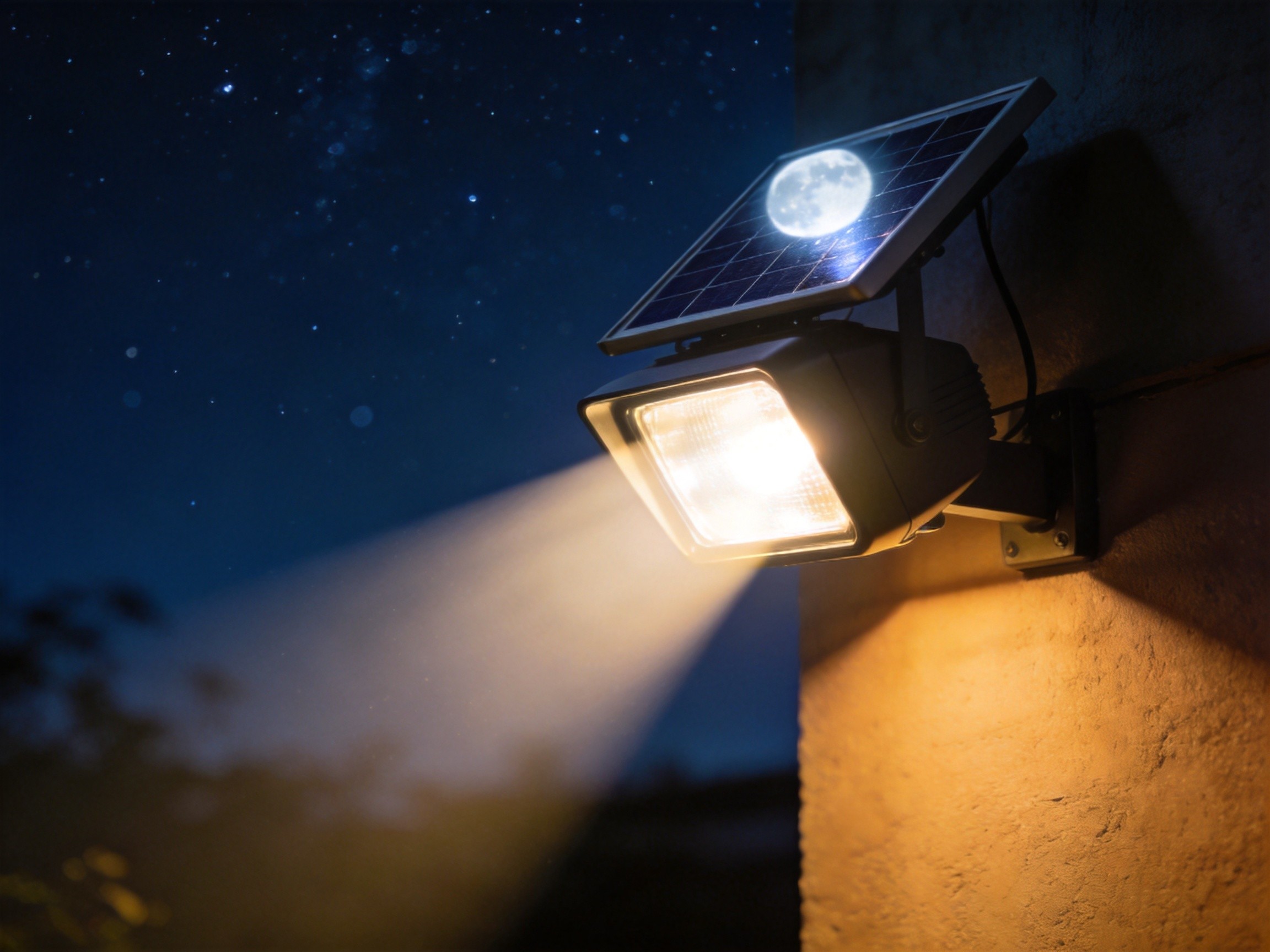
One of the first questions an installer hears on a solar street lighting project is also one of the hardest to answer with a single number: what wattage do I need for this road? The honest answer depends on road width, required lux level, mounting height, pole spacing, arrangement pattern, and the autonomy expectations of the client. Treating <strong>solar street light wattage road width</strong> as a simple one-to-one lookup leads to either glaring over-illumination that wastes budget or, worse, under-lit stretches that create safety liabilities. This guide provides a practical sizing framework using two CMJ Solar product families: the Interstellar II XJ series with arm bracket, covering 200W to 600W with die-cast aluminum housings, and the premium SSO series, delivering 4500 to 12000 lumens with AL6063 construction and 4 to 5 rainy days of autonomy. Together they span the range from residential lanes to municipal arterial roads.
Why Lumens Matter More Than Wattage for Solar
Wattage measures electrical power consumed, not light delivered. In solar lighting, where every watt must be earned from a photovoltaic panel and stored in a finite battery, the efficiency of the LED source is as important as the raw power number. Two 300W fixtures can produce dramatically different lumen outputs depending on whether they use older 2835 SMD packages or higher-density 5050 chips with better thermal management. For sizing purposes, always ask for the luminous flux in lumens and the stated lighting area, then calculate average lux by dividing lumens by area in square meters. For example, a fixture producing 2650 lumens over an effective coverage area of roughly 100 square meters yields about 26 lux at center, though actual ground-level lux decreases toward the beam edge. A photometric simulation provides the most accurate uniformity data, but the lumen-to-area ratio gives a fast sanity check during initial quoting. Buyers should also pay attention to color temperature: the Interstellar II and SSO series both use cool white in the 6000K to 7500K range, which maximizes perceived brightness on dark road surfaces and improves driver reaction times compared with warmer light sources.
The Interstellar II XJ Series: Workhorse Lights for Standard Roads
The Interstellar II line uses die-cast aluminum housings, 5050 LED chips, and an included arm bracket that mounts to a vertical pole. Every model ships with a waterproof cable using an XT60 connector, a remote control, and mounting hardware. The color temperature is 6500 to 7500K, a cool daylight white that maximizes perceived brightness and contrast on road surfaces. Radar sensing is available as an option on all XJ models, allowing installers to offer motion-activated dimming as an energy-saving upgrade. The series is divided into performance tiers by road width and traffic volume.
200W to 300W: Lanes and Small Streets
The MJ-XJ902 200W uses a prismatic 20Ah battery, a 5V/30W monocrystalline panel measuring 430 by 350 millimeters, and 64 pieces of 5050 LED chips to deliver 1800 lumens with up to 18 hours of discharge. It is appropriate for single-lane residential roads, garden pathways, and compound perimeter roads up to about 5 meters wide with poles at 6 meters. The MJ-XJ903 300W upgrades to a 30Ah Grade A LiFePO4 battery rated for 2000 cycles, a 40W panel at 480 by 400 millimeters, and the same 64 LED chips, producing 2650 lumens. This model suits 5 to 7 meter residential and light-commercial streets where a single-side arrangement at 6 to 7 meter mounting height is planned.
400W to 600W: Collector and Main Roads
The MJ-XJ904 400W carries a 36Ah battery, a 45W panel at 530 by 400 millimeters, and 90 LED chips for 3358 lumens with 2 rainy days of autonomy, serving as the entry point for two-lane collector roads 7 to 9 meters wide at 7 to 8 meter mounting heights. The MJ-XJ905 500W uses a 48Ah battery, a 50W panel at 590 by 400 millimeters, and 90 LED chips to produce 3512 lumens for township main roads, industrial thoroughfares, and commercial streets up to 9 meters wide where higher uniformity is demanded. The MJ-XJ906 600W features a 60Ah battery, a 60W panel at 670 by 445 millimeters, and 90 LED chips generating 3840 lumens with 2 rainy days of autonomy, handling 9 to 11 meter roads at 8 to 9 meter heights in single-side or staggered configurations.
S5500 Pro: Maximum Output for Arterial Roads
For projects needing maximum output from the Interstellar platform, the MJ-XJ907 S5500 Pro deploys a 75Ah Grade A LiFePO4 battery, an 80W monocrystalline panel at 670 by 580 millimeters, and a smart AI-simulated MPPT controller to deliver 5500 lumens with 3 rainy days of autonomy. It is the choice for 10 to 12 meter arterial roads and high-traffic corridors where standard 600W units fall short on coverage. The integrated die-cast aluminum housing, thickened XT60 cable, and carton with pearl-cotton packaging reflect its position as the flagship of the XJ range.
The SSO Premium Series: Maximum Lumens and Autonomy
When the project demands longer battery backup and higher construction quality, the SSO series steps in with AL6063 aluminum and Teijin PC housings, larger LiFePO4 batteries, and 4 to 5 rainy days of discharge. The MJ-SSO100 combines a 60Ah LiFePO4 battery with a 60W monocrystalline panel at 860 by 350 millimeters and 45 pieces of 5050 LED chips for 4500 lumens at a 6-meter installation height. Its 2000-cycle battery and IP65 rating make it suitable for municipal roads where extended cloudy periods are common. The MJ-SSO200 upgrades to an 85Ah battery rated for 4000 cycles, a 75W panel at 1050 by 350 millimeters, and 90 LED chips delivering 6500 lumens at 6 to 8 meters. Both models are frequently selected for main roads, port areas, and large public parking zones where premium durability and multi-day autonomy are written into the specification. For higher-output needs, the SSO300 delivers 8500 lumens at 8 to 10 meters and the SSO400 reaches 12000 lumens at 10 to 12 meters, extending the premium range to the widest arterial standards. The SSO series also specifies a 76-millimeter pole diameter as standard, making it compatible with existing municipal pole inventory without adapters, and the AL6063 aluminum housing provides superior heat dissipation that extends LED driver life in high-temperature climates compared with plastic-housed alternatives.
Pole Arrangement Patterns and Road Width
How poles are arranged across the road is just as important as the fixture chosen. In a <strong>single-side arrangement</strong>, all poles are placed on one side of the road. This is the most economical layout and works well for narrow roads up to about 8 meters wide, but the fixture's beam must reach across the full width, requiring a higher-wattage unit than other patterns for the same road. The XJ904 through XJ906 are typical single-side choices for 7 to 10 meter roads. In a <strong>staggered arrangement</strong>, poles alternate on opposite sides, improving uniformity on medium-width roads from 8 to 12 meters. Each fixture covers roughly half the road width, allowing a lower wattage per pole while reducing dark spots between poles, and this is the most common choice for municipal collector roads. In an <strong>opposite arrangement</strong>, poles face each other in pairs across the road, delivering the highest uniformity for wide arterial roads from 12 meters upward, major boulevards, and high-speed corridors. It requires the most poles but allows each fixture to be sized for half the carriageway, making the S5500 Pro or SSO premium series common choices for arterial standards.
Spacing Guidelines, Radar Sensing, and Final Sizing
As a starting point for field layout, pole spacing of 2.5 to 3 times the mounting height is a safe range for most solar street lights. At a 7-meter height, this means 18 to 21 meters between poles. Closer spacing improves uniformity but increases cost; wider spacing saves poles but creates visible brightness gradients. The 5050 LED chips used in both XJ and SSO series provide a broad beam that helps maintain acceptable uniformity at the wider end of the range. Radar sensor options on the XJ series and standard radar on the SSO line can dim the light when no traffic is present, extending battery autonomy. For roads with late-night low traffic, specifying a radar mode can mean the difference between a 2-day and a 4-day effective autonomy rating without changing the physical battery.
Before selecting a model, confirm road width in meters, number of lanes, target lux standard, available mounting height, desired pole spacing and arrangement, local peak sun hours, required rainy-day autonomy, and whether radar sensing is required. Cross-reference these parameters against the lumen output and lighting area of the candidate fixture, and verify that the solar panel wattage and battery capacity can sustain the selected operating mode through the worst-season sun conditions. When in doubt, choose the next wattage up rather than risking under-lighting; the incremental cost of a larger fixture is small compared with the liability of a poorly lit road. CMJ Solar's product specialists can provide lumen distribution files and configuration recommendations for specific road geometries. Browse the full solar street light catalog for the complete Interstellar II and SSO range.
Need Product Recommendations?
Our team can help you select the right energy storage or solar lighting products for your project.