
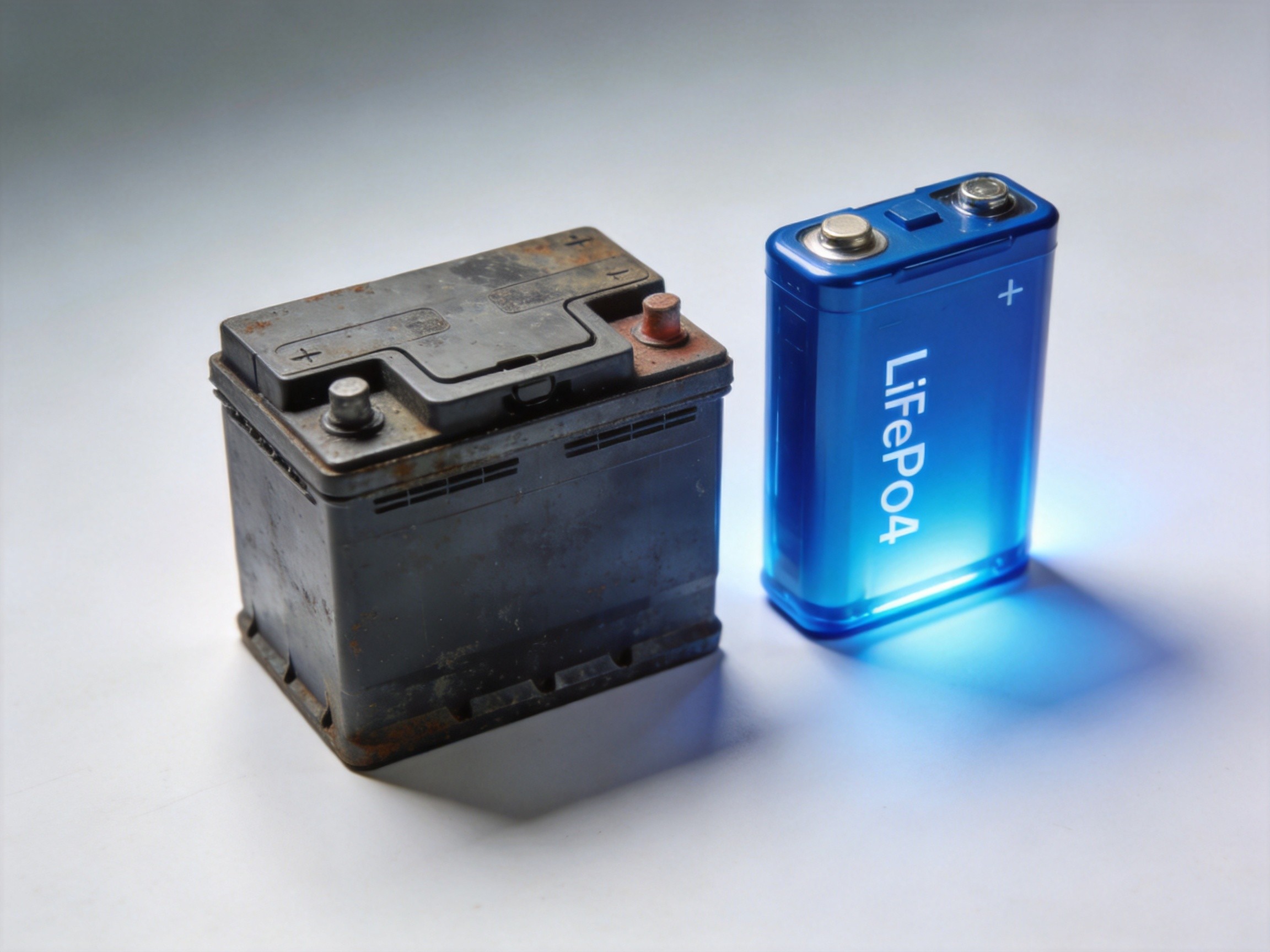
Telecom base stations, small data centers, UPS rooms, and commercial solar installations share a common infrastructure requirement: standardized, serviceable, and scalable battery backup that fits existing 19-inch equipment racks. Rack-mounted LiFePO4 batteries have become the preferred replacement for VRLA and flooded lead-acid strings in these environments because they reduce weight per rack unit, extend replacement intervals from 3–5 years to 10+, and eliminate the thermal runaway risks associated with older lithium chemistries.
The 19-Inch Rack Standard: Why It Matters
The 19-inch equipment rack is the universal mounting standard for telecom, data center, and server room hardware. A battery that conforms to this standard drops into existing rack space alongside routers, switches, rectifiers, and UPS units without custom shelving or floor-standing cabinets. CMJ Solar's rack-mounted modules use standard 19-inch widths with heights measured in rack units (U), allowing engineers to allocate battery space with the same precision they use for servers and network gear.
This standardization matters for B2B buyers because it reduces installation cost, simplifies cable management, and ensures compatibility with the rack infrastructure already deployed at cell towers, central offices, and commercial facilities. A site that already houses a 42U telecom rack can accept battery modules without structural modification, floor loading assessments for standalone cabinets, or additional floor space. It also means that when a legacy VRLA string reaches end of life, the LiFePO4 replacement occupies the same rack positions and uses the same busbar and cable routing, minimizing retrofit labor and downtime.
Hardware (H) vs Software (S) Variants
CMJ Solar offers two variants of the 25.6V/100Ah rack-mounted module, and the distinction is critical for system integrators. The Rack-Mounted Battery 2.5kWh Hardware (H) variant is designed for systems where battery management and monitoring are handled by an external controller, rectifier, or UPS. It does not communicate with the inverter or charging system—it is a pure hardware battery pack with built-in BMS protection at the cell level but no protocol-based communication. The H variant is explicitly noted as not compatible with inverter communication, making it suitable for simple backup systems, DIY solar installations, and projects using a separate external BMS or charge controller that manages voltage and current independently.
The Rack-Mounted Battery 2.5kWh Software (S) variant adds communication capability, allowing the BMS to exchange data—state of charge, state of health, voltage, current, temperature, and fault codes—with compatible inverters, UPS systems, and energy management platforms. For telecom sites that require remote monitoring and management, for commercial solar installations tied to a hybrid inverter with BMS communication, and for any project where the integrator needs real-time battery telemetry, the S variant is the correct choice. Both variants use Grade A BAK 100Ah prismatic cells and share the same 49.2×36×15cm dimensions and 100A discharge rating.
Choosing H when S is needed creates a monitoring blind spot: the system can still charge and discharge, but the operator cannot see state of health, receive early fault warnings, or verify that individual cells remain balanced. For unmanned sites where a technician visit costs hundreds of dollars, that visibility is worth the incremental cost of the S variant. Conversely, specifying S for a simple backup application where the external controller already manages all battery logic adds unnecessary cost.
25.6V vs 51.2V: Voltage Selection for Rack Systems
The 25.6V (8S) rack modules are typically used in 24V telecom backup systems, small UPS applications, and low-voltage off-grid installations where the existing rectifier or charge controller operates at 24V nominal. The 25.6V/100Ah module provides 2560Wh, and the 25.6V/200Ah module delivers 5120Wh in a 56×48×22.5cm enclosure with a 100A discharge current. The 200Ah module is effectively two 100Ah equivalent packs in a single rack-mount housing, reducing the number of units an integrator must install and wire.
The 51.2V (16S) modules target 48V telecom plants, modern hybrid inverter systems, and commercial solar storage. The 51.2V/100Ah rack-mounted battery provides 5120Wh in a 49.2×45×18cm enclosure with a 100A discharge current. The 51.2V/200Ah module delivers 10240Wh in a 56×48×22.5cm housing with a 100A/200A discharge current. For most new telecom and commercial solar builds, 51.2V is the preferred platform because it delivers the same power at half the current of 25.6V, reducing cable gauge, busbar size, and I²R heat losses in the rack.
Scaling Capacity by Paralleling Modules
Rack-mounted systems scale by adding modules in parallel. Four 51.2V/100Ah modules in parallel create a 20.48kWh battery bank; eight modules deliver 40.96kWh. Because each module includes its own BMS, the system distributes charge and discharge current across modules automatically. For high-capacity installations, the 51.2V/200Ah module doubles the capacity per rack unit, reducing the total module count by half and lowering wiring complexity.
When paralleling modules, follow the same rules that apply to any lithium battery bank: use identical models from the same product series, ensure all modules are at the same state of charge before connecting, and use appropriately rated busbars and cables. CMJ Solar rack modules are designed for parallel operation, but mixing H and S variants in the same bank—or mixing 25.6V and 51.2V modules—is not recommended. The BMS in each module handles cell-level balancing and protection, while system-level coordination (state-of-charge aggregation, inverter communication) is managed by the external controller or by the S-variant BMS when using communicating inverters.
Telecom Backup: Reliability Over Features
Telecom base stations are the largest market for rack-mounted LiFePO4 batteries because the consequences of backup failure are severe: dropped calls, lost revenue, and regulatory penalties for network uptime. These sites typically run on -48V DC plants with rectifiers that float-charge the battery bank and seamlessly transition to battery power during grid outages. In this application, the battery sits on float charge for most of its life and must deliver reliable short-to-medium duration backup during mains failures.
For legacy 24V telecom sites, the 25.6V H variant may be appropriate when the rectifier manages charging independently and no BMS communication is required. For modern 48V sites with remote monitoring, the 51.2V S variant is the standard specification. The S variant's BMS communication allows the network operations center to monitor state of health, receive low-temperature or fault alarms, and schedule proactive replacement before a module fails. This remote visibility is essential for telecom operators managing hundreds or thousands of cell sites across wide geographic areas.
UPS and Small Data Center Applications
Small data closets, edge computing sites, and UPS systems in commercial buildings use rack-mounted batteries to bridge the gap between a mains failure and generator startup—typically 5–30 minutes of runtime. In these applications, discharge rate matters more than deep-cycle life, because the battery delivers high current for a short duration rather than deep cycling daily. The 51.2V/200Ah module with its 200A discharge capability can deliver approximately 10.24kW at full discharge, sufficient to carry a 10kW UPS load through a transfer window. For N+1 redundancy, install two parallel strings so that a single module failure does not take down the bus.
UPS applications should use the S variant when the UPS supports BMS communication, as this allows the UPS to adjust charge voltage based on battery temperature and state of charge, optimizing battery life. The H variant is acceptable for simple UPS systems that manage charging through their own internal firmware and do not require battery-level telemetry.
Commercial Solar Energy Storage
Commercial solar-plus-storage installations on factories, warehouses, farms, and small businesses increasingly use rack-mounted LiFePO4 batteries behind the meter for demand charge management, time-of-use arbitrage, and backup power. These systems typically require 20–100kWh of storage and pair with three-phase hybrid inverters. The 51.2V rack modules are the standard choice, with system capacity built by paralleling multiple 100Ah or 200Ah modules.
Unlike telecom batteries that float for most of their lives, commercial solar batteries cycle daily—charging from solar during the day and discharging in the evening or during peak tariff periods. This application demands deep-cycle capability, which LiFePO4 provides with 3,000+ cycles at 80% DoD. The S variant is strongly recommended for commercial solar because the hybrid inverter relies on BMS communication to control charge/discharge rates, enforce DoD limits, and report performance data to the facility energy management system.
BAK Cell Sourcing and Build Quality
The CMJ Solar rack-mounted line uses Grade A BAK prismatic LiFePO4 cells. BAK is one of China's established lithium battery manufacturers, producing prismatic cells with consistent capacity matching, low internal resistance, and documented cycle life data. For B2B buyers evaluating rack-mounted batteries, cell provenance is a primary quality indicator: a battery pack is only as reliable as the cells inside it. Grade A cells from a recognized manufacturer like BAK provide the consistency needed for parallel operation, where any weak cell in a module limits the performance of the entire bank.
When sourcing rack-mounted batteries wholesale, ask suppliers for cell brand, cell grade (A, B, or recycled), and cycle life test data. Distributors should also verify that the BMS is matched to the cell specifications—overcurrent protection thresholds, thermal cutoff, and cell balancing current should all be calibrated to the specific BAK cell model used in the pack.
Common Specification Pitfalls
The first pitfall is ordering the H variant when the application requires BMS communication. If the inverter, UPS, or site controller expects to read battery data via CAN or RS485, the H variant will not communicate and the system may generate faults or fail to charge correctly. Always confirm communication requirements before selecting H or S. The second is mismatching voltage: a 25.6V battery will not work with a 48V rectifier or inverter. The third is under-specifying discharge current for UPS applications—calculate the maximum DC bus current at full load and confirm the module's BMS can sustain it with margin. The fourth is ignoring rack weight capacity: a fully populated rack of 200Ah modules can weigh several hundred kilograms; verify the rack's static load rating and the floor load capacity below it. The fifth is failing to specify thermal management in high-temperature environments—LiFePO4 cells degrade faster above 35°C, and telecom shelters in tropical climates require ventilation or cooling to maintain battery life.
Final Recommendations
For 24V telecom and basic backup applications, the 25.6V/100Ah H variant provides a cost-effective hardware-only solution, while the S variant adds communication for monitored sites. The 25.6V/200Ah module doubles capacity per unit. For 48V telecom, commercial solar, and UPS systems, the 51.2V/100Ah and 51.2V/200Ah modules are the standard building blocks. Explore the full rack-mounted battery lineup and contact CMJ Solar for parallel configuration guidance, communication protocol documentation, and container pricing for telecom and commercial projects.
Need Product Recommendations?
Our team can help you select the right energy storage or solar lighting products for your project.