
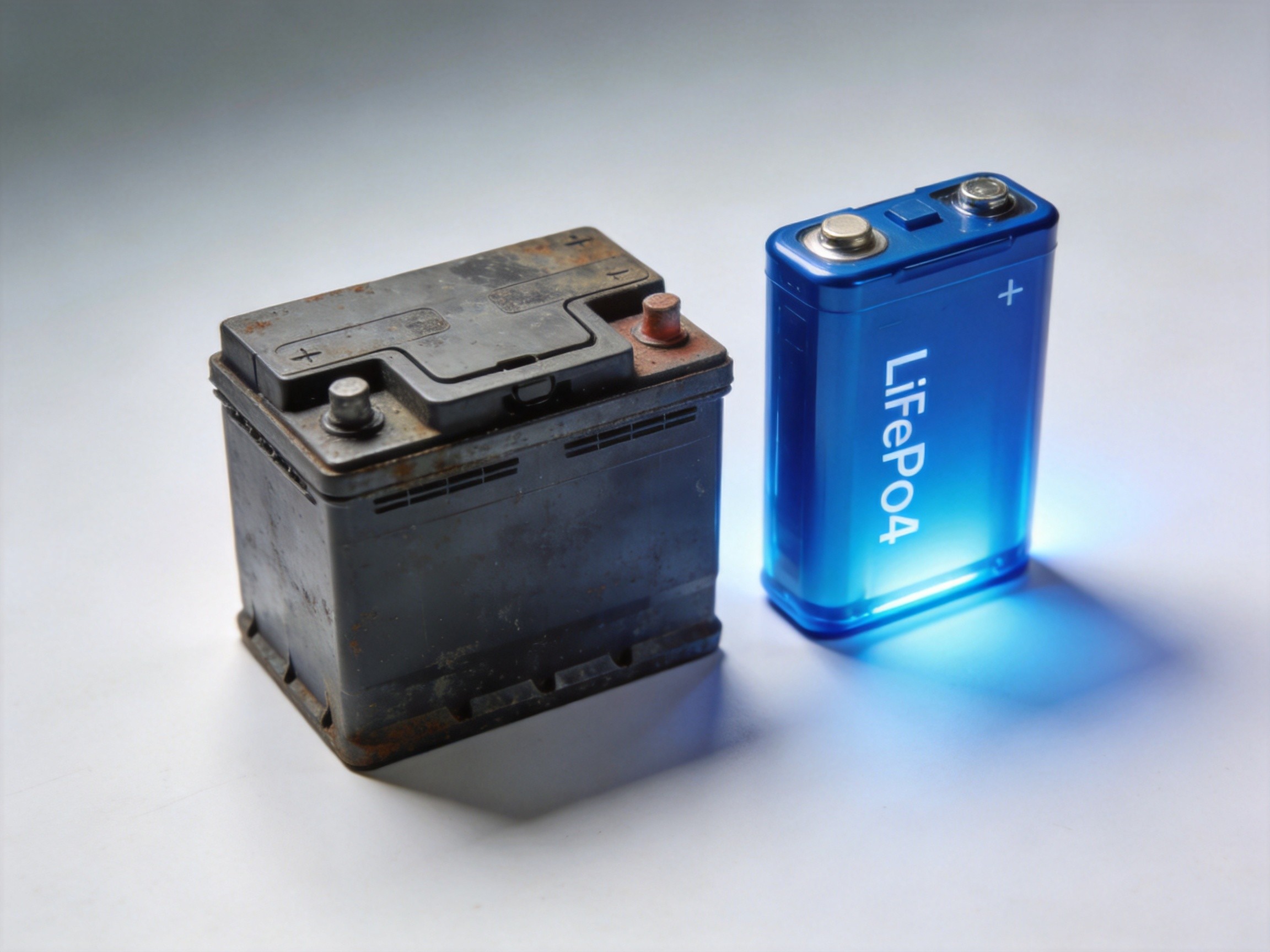
LiFePO4 batteries offer a significantly lower total cost of ownership and a lifespan of 4,000 to 6,000 cycles compared to lead acid batteries which typically last 300 to 500 cycles, resulting in a real payback period of 1 to 3 years for solar energy storage systems. Why this dramatic difference exists is due to the inherent chemical stability of lithium iron phosphate, how it translates to daily use is by allowing deep discharges without capacity loss, and who benefits the most are commercial solar installers and residential homeowners looking to minimize long-term replacement costs.
How Does Lithium Battery Lifespan Compare to Lead Acid?
When evaluating the LiFePO4 vs Lead-Acid: Which Battery Is Better? debate, cycle life is the most critical differentiator. Traditional lead acid batteries, including AGM and gel variants, typically provide between 300 and 500 cycles when discharged to 50 percent Depth of Discharge. In stark contrast, modern lithium iron phosphate cells deliver 4,000 to 6,000 cycles at 80 to 100 percent Depth of Discharge. Why this matters is that you will need to replace lead acid batteries eight to ten times more frequently over a ten-year period. How this impacts system design is that a single lithium setup can handle a decade of daily cycling without degradation. Who sees the most value from this extended lifespan are off-grid telecom operators and rural microgrid projects where maintenance visits are incredibly expensive.
To achieve this longevity, proper cell matching and a robust Battery Management System are essential. For example, the Lead-to-Lithium Battery 12.8V 100Ah (Model SCLFP-12.8V-100) features a 12.8V nominal voltage, a 100Ah capacity delivering 1280Wh of energy, and a continuous 100A discharge current, all managed by an internal BMS to ensure every cell remains balanced. Why this specific model performs so well is because the BMS actively prevents overcharging and deep discharging. How it protects the cells is by monitoring temperature and voltage in real time. Who this model is designed for are residential solar users who need a reliable drop-in replacement for their existing 12V lead acid banks.
The Total Cost of Ownership for Solar Batteries
What is the total cost of ownership for solar batteries? Calculating the energy storage total cost of ownership requires looking far beyond the initial purchase price by evaluating several key factors. First, you must account for the initial capital expenditure of the battery bank and installation labor. Second, you need to factor in the ongoing maintenance costs, which include terminal cleaning and specific charging profiles for lead acid. Third, you must calculate the replacement costs over the system life, which heavily penalizes lead acid due to its short cycle life. Fourth, you should consider the final disposal or recycling fees at the end of the product lifespan. Lead acid batteries have a lower upfront cost, but their total cost of ownership skyrockets due to these frequent replacements and maintenance needs. Why lithium is cheaper in the long run is that the cost per cycle is drastically lower when amortized over 6,000 cycles. How you calculate this accurately is by dividing the total lifetime system cost by the total usable kilowatt-hours delivered over its lifespan. Who benefits most from this favorable economics are B2B distributors and EPC contractors who need to offer competitive long-term warranties to their clients.
Furthermore, lead acid batteries suffer from the Peukert effect, where their available capacity drops significantly under high discharge loads. Lithium iron phosphate maintains its rated capacity regardless of the discharge rate. Why this efficiency is crucial is that you get the exact energy you paid for, even during peak demand. How this saves money is by eliminating the need to oversize your battery bank to compensate for voltage sag. Who appreciates this true capacity are commercial facilities running heavy HVAC loads during evening peak hours.
How Fast is the Lead Acid to Lithium Conversion Payback?
The lead acid to lithium conversion payback period is typically between 12 and 36 months, depending on local electricity rates and solar irradiance. Upgrading an existing system is highly straightforward because modern lithium batteries are engineered as direct drop-in replacements. As detailed in our guide on How to Replace Lead Acid Battery with Lithium, the physical dimensions and voltage profiles are designed to match legacy setups perfectly. Why the payback is so rapid is that you immediately eliminate the labor costs and system downtime associated with replacing dead lead acid batteries every two to three years. How the conversion process works is by simply removing the old heavy batteries and installing the new lightweight units while keeping your existing inverters and charge controllers. Who drives this conversion trend are residential solar owners who are tired of the recurring expense and maintenance of their aging backup systems.
Manufacturing plays a huge role in keeping these conversion costs low. At the CMJ Solar Jiangmen factory, advanced automated production lines ensure consistent cell quality while keeping manufacturing costs competitive. Why this manufacturing advantage matters is that it allows us to offer premium cells at accessible price points. How it impacts the end user is through faster ROI without sacrificing safety or performance. Who benefits from this streamlined supply chain are global distributors looking for reliable OEM/ODM partnerships with CMJ Solar.
For larger conversion projects, higher capacity models are often required. The Lead-to-Lithium Battery 12.8V 200Ah (Model SCLFP-12.8V-200) provides a massive 2560Wh capacity with a flexible 100A or 150A discharge current, housed in dimensions of 52.2*24*21.8CM. Why this high capacity is necessary is to support whole-home backup during extended grid outages. How it integrates into existing setups is by paralleling multiple units to scale the total energy storage seamlessly. Who utilizes these 200Ah models are off-grid cabins and small commercial operations requiring substantial daily energy throughput.
For budget-conscious conversions, the Lead-to-Lithium Battery 12.8V 100Ah Economy (Model SCLFP-12.8V-100E) offers the same 1280Wh capacity but with an optimized 80A discharge current. Why this economy version is popular is that it provides the core benefits of LiFePO4 chemistry at a lower entry price. How it achieves this cost reduction is by optimizing the BMS and cell configuration for standard residential loads rather than heavy industrial surges. Who this model targets are entry-level solar adopters and small off-grid lighting projects.
Efficiency, Weight, and Space Savings
Why do efficiency and weight matter in battery selection? Round trip efficiency is another area where lithium technology completely outperforms legacy chemistry. LiFePO4 batteries boast a round trip efficiency of 95 to 98 percent, meaning almost all the solar energy collected during the day is available for use at night. Lead acid batteries, conversely, operate at only 70 to 85 percent efficiency, losing a significant portion of energy as heat during the charging and discharging phases. Why this efficiency gap is so important is that it directly dictates how many solar panels you need to fully charge your bank. How it reduces overall system costs is by allowing you to use a smaller, less expensive solar array to achieve the same daily energy yield. Who benefits from this high efficiency are system designers working in regions with limited roof space or lower winter solar irradiance.
Physical weight and volume also present a massive advantage for lithium. A LiFePO4 battery is typically one-third the weight and half the volume of an equivalent lead acid bank. Why this weight reduction is a game changer is that it drastically lowers shipping and freight costs. How it improves installation safety is by allowing a single technician to easily carry and mount a 100Ah battery without risking back injuries. Who appreciates these physical advantages the most are mobile solar unit builders, RV manufacturers, and marine installers where every kilogram and cubic centimeter counts.
To ensure long-term reliability, CMJ Solar backs its LiFePO4 products with a comprehensive 5-year warranty. Why this warranty is offered is because we have absolute confidence in the cycle life and degradation rates of our cells. How it protects your investment is by covering any manufacturing defects or premature capacity loss. Who finds this warranty essential are institutional buyers and government contractors who require guaranteed performance metrics for their public infrastructure projects.
Frequently Asked Questions
Can I use my existing lead acid charge controller with a LiFePO4 battery? Yes, you can use an existing lead acid charge controller by setting the voltage parameters to match lithium charging profiles, though upgrading to an MPPT controller is recommended for optimal performance. Why this works is that both battery types operate within similar nominal voltage ranges. How you configure it is by adjusting the absorption and float voltages to the specific limits recommended for lithium chemistry. Who needs to know this are DIY solar enthusiasts upgrading their systems on a strict budget.
What happens if I completely drain a LiFePO4 battery? If you completely drain a LiFePO4 battery, the built-in Battery Management System will disconnect the load to prevent cell damage, allowing you to safely recharge it without permanent degradation. Why this protection is vital is because lithium cells can be damaged if voltage drops below critical thresholds. How the BMS intervenes is by opening the discharge MOSFETs the moment the minimum voltage limit is reached. Who relies on this safety feature are off-grid users who might accidentally leave heavy loads running overnight.
Is LiFePO4 safe for indoor residential use? Yes, LiFePO4 is highly safe for indoor residential use because its stable phosphate chemistry prevents thermal runaway and off-gassing, unlike lead acid which requires dedicated ventilation. Why this chemical stability is crucial is that it eliminates the risk of explosive hydrogen gas accumulation. How it ensures safety is by maintaining structural integrity even under physical damage or high-temperature conditions. Who benefits from this indoor safety are homeowners installing backup power in basements, garages, or interior utility closets.
Transitioning from legacy chemistry to modern lithium iron phosphate is no longer just a premium upgrade; it is the most economically sound decision for any solar energy storage project. By understanding the true total cost of ownership, the massive lifespan advantages, and the rapid payback period, installers and end-users can make informed decisions that yield decades of reliable, maintenance-free power. If you are ready to upgrade your solar storage infrastructure or source high-quality batteries for your next project, contact our team today to discuss your specific requirements and request a customized quote. Contact us to learn more about our comprehensive product lines and partnership opportunities.
Part of the guide
LiFePO4 Battery Technology: Chemistry, BMS, Charging and Cold Weather
Need Product Recommendations?
Our team can help you select the right energy storage or solar lighting products for your project.