The short answer is that LiFePO4 battery prices stopped falling in late 2025 and rebounded through 2026, because battery-grade lithium carbonate more than doubled from its mid-2025 trough while energy storage demand absorbed available cell supply. For distributors, installers and off-grid project buyers, the implication is not panic buying but a changed sourcing rhythm: Q3 and early Q4 2026 quotations are firmer than many 2025 budgets assumed, yet the long-term cost-decline trend remains intact. CMJ Solar tracks these movements closely when quoting our LiFePO4 storage line, and this briefing explains the numbers, the drivers and the practical buying strategy.
From a 2025 Trough to a 2026 Rebound: What Actually Happened
Battery-grade lithium carbonate, the core raw material for LiFePO4 cathodes, fell to a multi-year low of roughly 60,000 yuan per tonne in China around June 2025, after the capacity boom of 2022 to 2024 created heavy oversupply. From that point the market reversed. Spot prices climbed past 140,000 yuan per tonne in early 2026, briefly exceeded 190,000 yuan during May, and then settled into a high-range trade: in late August 2026 the most active Guangzhou futures contract was quoted around 152,500 yuan per tonne, roughly 29 percent higher year-to-date and about 87 percent above its level a year earlier, while still sitting about a quarter below the May peak.
Analysts broadly agree on the causes but differ on the persistence. BMI, a Fitch Solutions unit, raised its 2026 average Chinese carbonate forecast to about 20,100 US dollars per tonne, nearly double the 2025 average, citing persistent supply disruptions and resilient storage demand, while pencilling in quarterly averages easing toward the high teens and then forecasting lower averages in 2027 and 2028 as mothballed supply returns and the market swings back toward surplus. Domestic Chinese industry outlooks similarly describe 2026 as a year of structural deficit with a second-half range of roughly 150,000 to 200,000 yuan per tonne, followed by narrower gaps in 2027. The honest summary: prices are not returning to the June 2025 floor this year, but the cycle has not been abolished.
How Lithium Carbonate Flows into LiFePO4 Cell Prices
The transmission from carbonate to cell price is mechanical rather than psychological. Industry rule-of-thumb estimates from Chinese cell makers suggest each 10,000 yuan per tonne move in lithium carbonate adds roughly 0.6 to 0.7 Chinese fen per watt-hour to cell cost. The evidence showed up in 2026 quotations: mainstream 314Ah prismatic energy storage cells, the workhorse of container and rack storage, recovered to an average around 0.365 yuan per watt-hour by August 2026, up more than 20 percent from the end of 2025, and price trackers in early September quoted square LFP storage cells at about 0.38 yuan per watt-hour and finished LFP packs at about 0.52 yuan per watt-hour. Public tenders for four-hour storage systems moved from below 0.4 yuan per watt-hour in mid-2025 to generally above 0.5 yuan in 2026.
Two qualifiers matter before anyone inflates a budget. Cell prices remain far below the levels of 2022 and 2023, when carbonate traded above half a million yuan per tonne at its peak, and manufacturers absorbed part of the 2026 increase through efficiency rather than passing the full swing downstream. Buyers comparing 2026 quotations against 2025 invoices see a rise, but buyers comparing against the pre-2024 decade still see a cheap battery market.
Why Energy Storage Demand Kept the Market Tight
Demand did as much work as supply disruption. China's output of power and storage batteries was running more than 50 percent above year-earlier levels by mid-2026, and industry research institutes reported first-half storage battery shipments up more than 80 percent year on year. Analysts tracking global installations expect storage battery shipments to grow by well over half in 2026 as China, the United States, Europe and the Middle East all expand grid-scale fleets. LiFePO4 chemistry already powers more than 90 percent of new battery storage worldwide according to IEA-cited figures, and accounted for a record share above 80 percent of Chinese battery installations by mid-year. Storage has become the demand engine that sets lithium's marginal price, alongside electric vehicles.
Two China-specific factors amplified the 2026 squeeze. Supply shocks mattered: the suspended Jianxiawo mine in Jiangxi alone represented a mid-single-digit share of global lithium supply, and its restart remained tied to an environmental approval process during the summer, while export policy changes in Zimbabwe and winter weather disruptions in South American brine operations added noise. Pull-forward ordering also mattered, because 2026 is the final year before China's battery export tax rebate steps down, encouraging overseas buyers to lock shipments earlier. More on the demand side sits in our review of 2026 energy storage market trends.
Will Cell Prices Fall Again Before Year-End?
The consensus view across price forecasters is that the fourth quarter is seasonally firm rather than weak. European distributors restock ahead of winter installations, Chinese project developers rush commissioning before year-end, and the rebate pull-forward concentrates orders. A return toward the high-teens in dollar carbonate pricing is plausible if suspended mines restart on schedule, and most institutional forecasts assume noticeably lower average prices in 2027 as supply responds. The risk cut is asymmetric: a delayed restart or further African supply disruption could wipe out the expected 2027 surplus, while a demand slowdown would let prices ease faster. Nobody should be pretending to forecast the monthly path with precision.
What This Means for Home Storage and Off-Grid Buyers
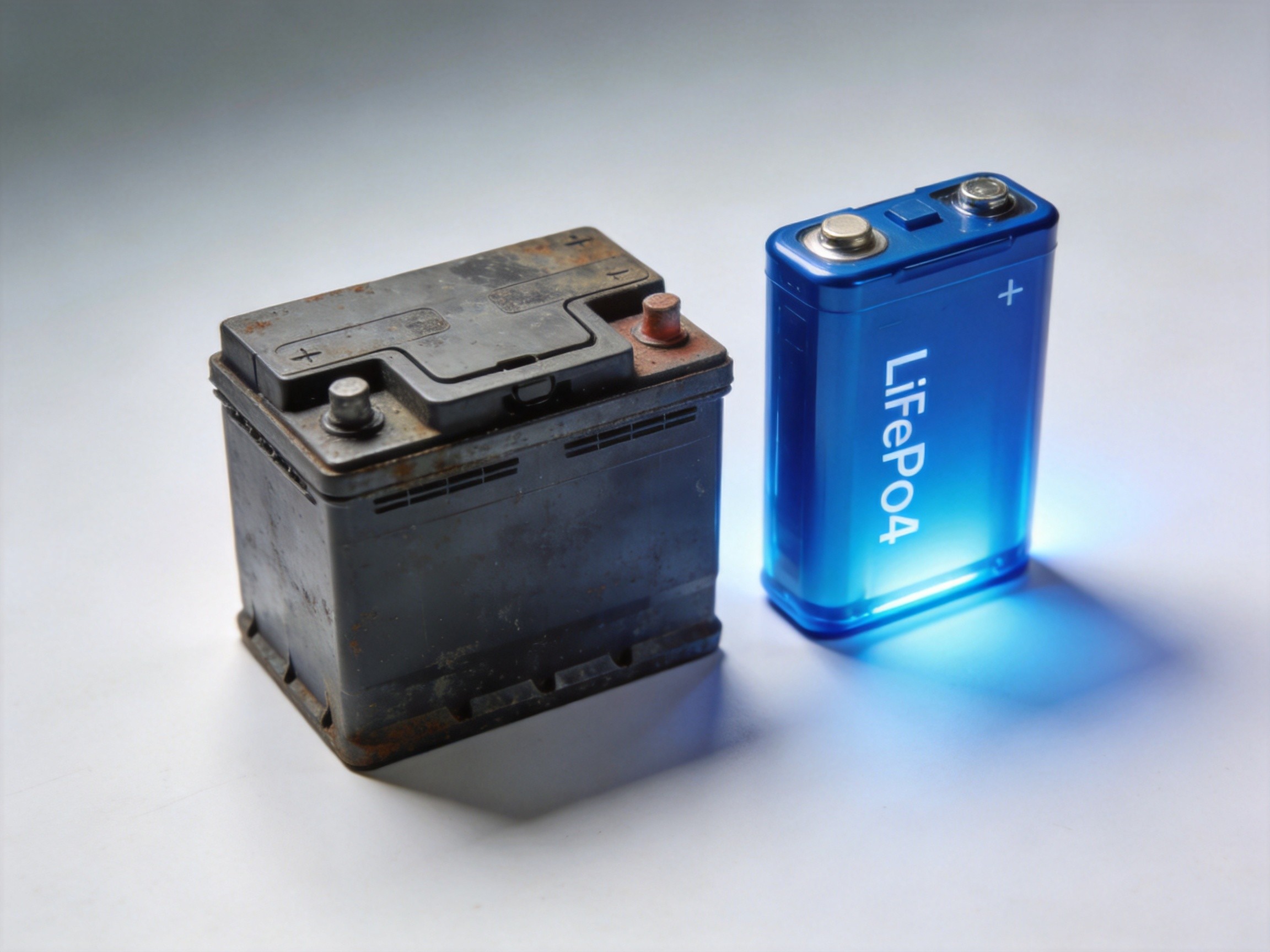
For residential and off-grid buyers, the economics of LiFePO4 against lead-acid have not changed even at 2026 prices. The chemistry still delivers thousands of cycles, deeper discharge and better performance in heat, and our comparison in LiFePO4 versus lead-acid shows why the lifecycle cost gap survives raw-material swings. What has changed is the quote validity window: where 2025 distributors could hold prices for weeks, 2026 factory quotations often carry shorter validity because cell costs move between quotation and deposit. The other risk is quality arbitrage. In a rising market, assemblers under price pressure quietly substitute lower-grade cells or shrink BMS components, which is exactly why tender specifications should insist on Grade A cells and evidence of batch traceability rather than accepting the cheapest pro forma invoice.
Across CMJ Solar's range, the 2026 price movement affects configurations proportionally rather than changing the ranking: the Apollo A Series 10kWh All-in-One ESS remains the fast-moving unit for home backup and light commercial sites with its 6KW inverter and 10,240Wh pack, the Athena Wall-Mounted Battery 10kWh (51.2V/220Ah) anchors the wall-mounted retrofit segment, and the Lead-to-Lithium Battery 12.8V 200Ah continues to serve small off-grid and legacy-environment upgrades. The complete lineup is available in the energy storage catalog.
A Sourcing Rhythm for Distributors and Installers
The practical playbook for the next two quarters is straightforward. Place firm orders for known Q4 and Q1 demand in Q3 where cash flow allows, because seasonal tightening and rebate-driven congestion are both real; negotiate fixed-price windows with manufacturers rather than accepting open-ended quotations; stagger repeat orders instead of gambling on a single month; and lock specifications in writing so cost pressure cannot be solved with cheaper cells. For projects tendered in euros or naira, build a raw-material adjustment clause rather than padding the price blindly. When 2027 supply returns as forecast, buyers with disciplined suppliers and clean specifications will capture the downswing faster than buyers who churned factories chasing the lowest 2026 number. CMJ Solar supports volume buyers with transparent pricing validity dates, Grade A cell traceability and OEM terms; review the commercial checklist in our wholesale battery sourcing guide, or contact our team for a current price list sized to your market.
Frequently Asked Questions
Why did LiFePO4 battery prices go up in 2026? Battery-grade lithium carbonate rebounded from roughly 60,000 yuan per tonne in mid-2025 to a 150,000 to 190,000 yuan range in 2026 after mine disruptions, including the suspended Jiangxi mine, and record energy storage demand tightened the market. Higher carbonate costs fed directly into prismatic cell prices, with 314Ah storage cells recovering by more than 20 percent from end-2025 levels.
Should I wait for battery prices to drop before ordering? For confirmed Q4 2026 and Q1 2027 installations, waiting carries more risk than reward because the fourth quarter is seasonally firm and order pull-forward is crowding production. Analysts expect average prices to ease in 2027 as supply returns, so speculative overstocking is unwise, but firm demand should be quoted and booked now with fixed-price terms.
Are cheap LiFePO4 batteries from unknown assemblers a good hedge? No. Rising raw material prices create strong incentives to substitute lower-grade cells or downgrade BMS components. Buyers should insist on Grade A cells, batch traceability and a five-year warranty from a manufacturer such as CMJ Solar, because a failed batch in an off-grid fleet costs far more than the upfront saving.
Need Product Recommendations?
Our team can help you select the right energy storage or solar lighting products for your project.