
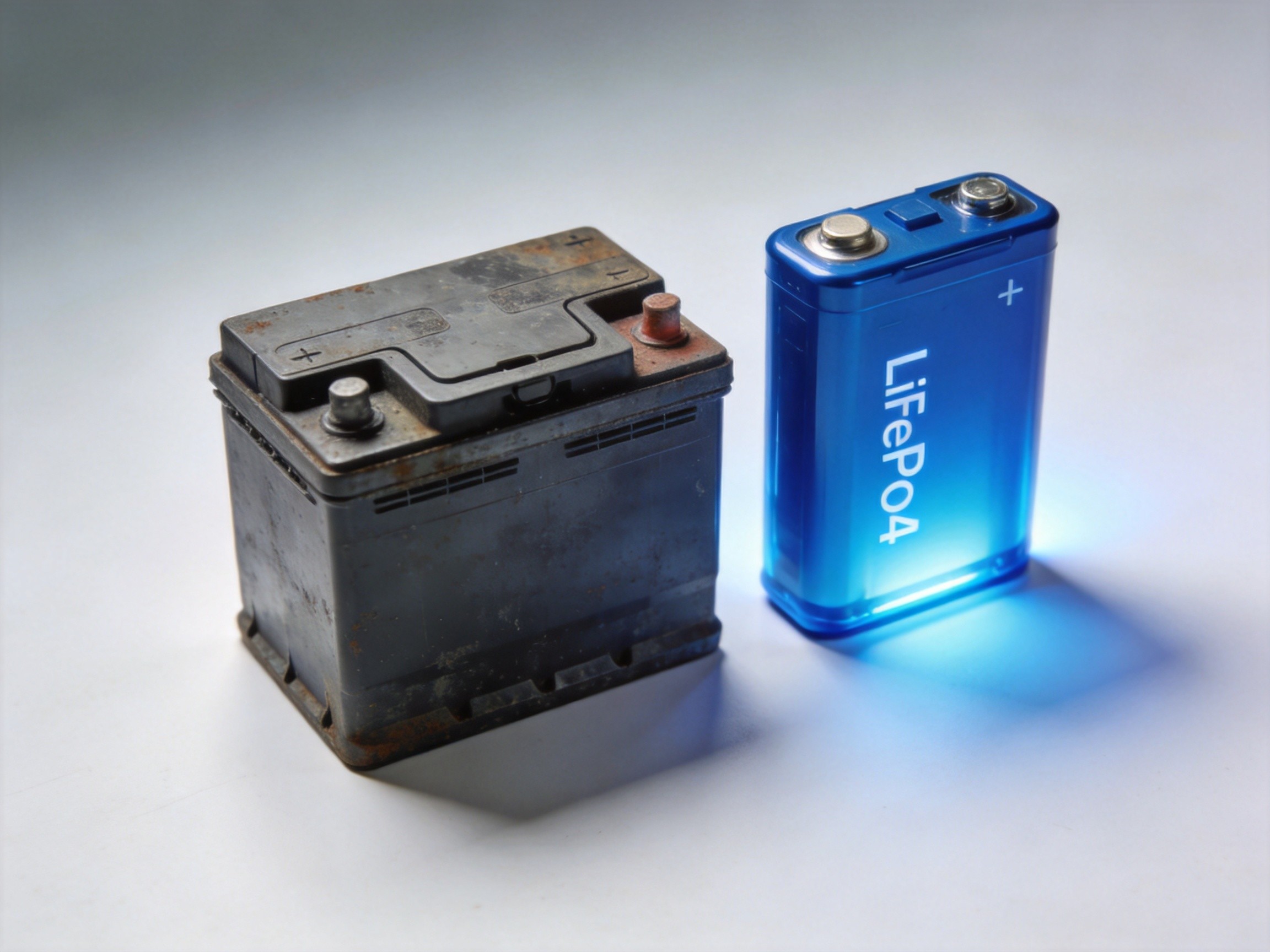
High-voltage battery storage systems typically operate above 51.2V to reduce current and improve efficiency for large commercial loads, while low-voltage systems operate at 48V, 51.2V, or 25.6V, making them ideal for standard residential setups and easier retrofits. Choosing between them depends on your total energy demand, inverter compatibility, and whether you prioritize lower installation costs or higher power output for business operations.
What Defines High-Voltage and Low-Voltage Battery Storage?
Understanding the technical boundaries between these architectures is critical for proper system design and long-term reliability. Low-voltage battery storage generally refers to systems operating at 48V, 51.2V, or 24V/25.6V nominal levels. These systems are widely adopted in residential environments because they align perfectly with standard off-grid and hybrid inverter specifications, ensuring broad compatibility and safer handling for installers. The primary reason for this widespread adoption is that low-voltage systems utilize standardized components that are easily sourced globally, which simplifies the procurement process for distributors and contractors. Furthermore, the lower electrical potential significantly reduces the risk of severe arc flashes, making routine maintenance much safer for property owners.
High-voltage battery storage, on the other hand, operates at voltages significantly above the standard 51.2V threshold, often ranging from 100V to several hundred volts in commercial applications. These systems achieve higher voltages by connecting multiple battery modules in series or by utilizing dedicated high-voltage battery architectures with specialized internal topologies. The main advantage of this approach is that it drastically reduces the current required to deliver the same amount of power, which in turn minimizes energy loss as heat. For commercial facility managers, this means they can run heavier loads over longer distances without needing to upgrade to prohibitively expensive, thick-gauge cabling. If you are exploring the nuances of standard residential voltages, our detailed guide on 24V vs 48V Solar Battery: Which Voltage Does Your System Need? provides further clarity on standard low-voltage configurations and their specific use cases.
How Does Voltage Impact System Efficiency and Sizing?
The relationship between voltage, current, and efficiency dictates the physical footprint, thermal profile, and overall performance of your energy storage system. According to the fundamental power equation, power equals voltage multiplied by current. Therefore, for a given power output, increasing the system voltage proportionally decreases the current flowing through the cables and internal busbars. This reduction in current is highly beneficial because it lowers resistive losses in the wiring, directly improving the overall round-trip efficiency of the installation and keeping more energy available for your loads.
To illustrate this with specific CMJ Solar parameters, consider the Rack-Mounted Battery 5kWh (51.2V/100Ah) SCRA-R-51.2-100. This unit delivers 5120Wh of capacity at a nominal voltage of 51.2V, with a maximum continuous discharge current of 100A. Delivering the same output power from a 25.6V architecture would require around 200A instead, because power equals voltage multiplied by current. The higher current in the 25.6V scenario generates significantly more heat and requires thicker, more expensive copper wiring to maintain safety and efficiency. Consequently, higher voltage systems allow for more compact electrical panels, reduced balance-of-system costs, and lower thermal management requirements. This efficiency gain is particularly crucial for commercial energy storage system sizing, where minimizing parasitic losses and infrastructure costs directly impacts the financial return on investment. By selecting higher voltage modules, engineering teams can optimize the physical layout of the battery room while maintaining strict safety margins and reducing the need for active cooling systems. Lower current also reduces the voltage drop over long cable runs, which is a common issue in large commercial warehouses.
Which Voltage Architecture Suits Residential versus Commercial Needs?
Selecting the correct voltage architecture requires a thorough analysis of the end-user's daily energy consumption, peak power demands, and specific operational goals. Residential applications typically favor low-voltage systems, specifically 48V or 51.2V configurations, because they perfectly match the input requirements of most popular residential hybrid inverters on the market. Homeowners benefit from these systems due to their modular nature, allowing them to start with a smaller capacity and expand later without requiring a complete system overhaul or replacing the central inverter. The safety profile of low-voltage systems also makes them highly suitable for indoor installations in garages or utility closets, as the risk of severe electrical arcing is significantly minimized.
Conversely, commercial and industrial facilities demand robust power delivery that often necessitates high-voltage or high-capacity low-voltage systems. Large businesses with heavy machinery, extensive HVAC systems, or large-scale server rooms require massive power throughput to avoid operational downtime. For these demanding environments, utilizing high-capacity rack-mounted solutions is essential to handle the immense electrical loads. You can explore more about these heavy-duty applications in our article What Is a Server Rack Battery? 48V LiFePO4 for Homes & Business. In commercial settings, the Rack-Mounted Battery 10kWh (51.2V/200Ah) SCRA-R-51.2-200 is an excellent choice, offering 10240Wh of capacity and supporting discharge currents of 100A or 200A. This high discharge capability ensures that commercial facilities can handle massive peak loads, execute effective peak shaving strategies, and manage utility demand charges without experiencing voltage sag. Commercial facilities also use these systems for backup power during grid outages to protect sensitive IT equipment and maintain business continuity. Ultimately, residential users prioritize ease of installation and standard inverter matching, while commercial users prioritize high power throughput and minimized balance-of-system infrastructure.
What Are the Best CMJ Solar Rack Battery Solutions for Each Setup?
CMJ Solar provides a comprehensive range of LiFePO4 battery solutions manufactured at our state-of-the-art Jiangmen factory, supporting extensive OEM/ODM capabilities to meet diverse project requirements and custom branding needs. All our energy storage products are backed by an official 5-year warranty and feature premium cells rated for 2000 to 4000 cycles, ensuring long-term reliability and consistent performance for both residential and commercial deployments over their operational lifespan.
For low-voltage residential setups requiring basic backup without complex smart inverter integration, the Rack-Mounted Battery 2.5kWh (Hardware) (25.6V/100Ah) SCRA-R-25.6-100H is a highly cost-effective and robust option. It provides 2560Wh of capacity with a 100A discharge current in a compact form factor. However, it is critical to note that this specific hardware model is not compatible with inverter communication. If your project requires the battery management system to communicate seamlessly with a smart hybrid inverter for advanced monitoring, remote control, and firmware updates, you must avoid this hardware version. Instead, we strongly recommend the Rack-Mounted Battery 2.5kWh (Software) (25.6V/100Ah) SCRA-R-25.6-100S as the alternative, which includes the necessary communication protocols for modern smart home ecosystems. For projects requiring a compact footprint in a standard server rack, our 51.2V 100Ah modules offer the perfect balance of energy density and high-voltage efficiency. By leveraging our extensive energy storage catalog, system integrators can precisely match the battery voltage and capacity to the specific inverter architecture, ensuring optimal performance and customer satisfaction across all project scales.
Frequently Asked Questions
Can I connect high-voltage and low-voltage batteries together in the same bank? No, you should never mix different voltage architectures in the same parallel or series string under any circumstances. Doing so will cause severe current imbalances, potentially leading to equipment damage, fire hazards, or complete system failure. Each voltage tier requires its own dedicated charge controller or inverter input to operate safely and efficiently. Always consult with a certified electrical engineer before designing a multi-string system to ensure proper overcurrent protection is in place.
How many cycles can I expect from a CMJ LiFePO4 rack battery? Our LiFePO4 cells are rigorously tested and rated for 2000 to 4000 cycles, depending on the depth of discharge, ambient temperature, and specific operating conditions. This extensive cycle life ensures that the battery can handle daily cycling for many years, providing a superior return on investment compared to traditional lead-acid alternatives and reducing the total cost of ownership. Proper thermal management and avoiding extreme depth of discharge can help you achieve the higher end of this cycle life range.
What is the warranty coverage for commercial energy storage systems? CMJ Solar provides an official 5-year warranty for our energy storage and standalone battery system products. This comprehensive warranty covers manufacturing defects and ensures that your commercial installation remains protected, giving project developers and facility managers peace of mind regarding long-term system performance and reliability. For detailed terms and conditions regarding specific commercial deployments, please reach out to our sales department.
Ready to optimize your next solar project with the right voltage architecture? Whether you need low-voltage residential modules or high-capacity commercial racks, our engineering team is here to help. Please contact our team today to request a quote and discuss your specific OEM/ODM requirements.
Part of the guide
LiFePO4 Battery Types and Voltages: 12V, Wall-Mounted, Rack and Lead-Acid Replacement
Need Product Recommendations?
Our team can help you select the right energy storage or solar lighting products for your project.