
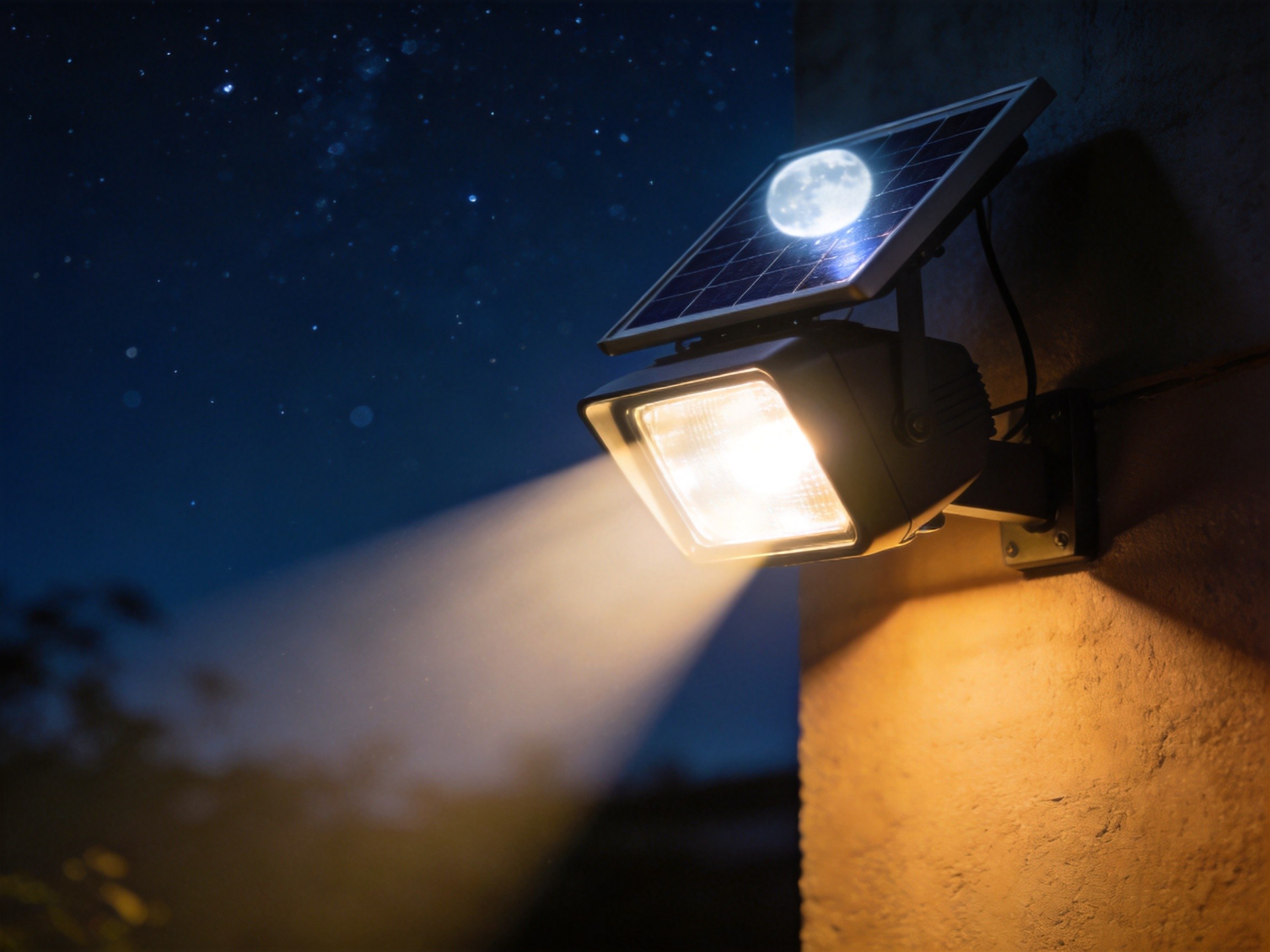
A 100W solar flood light typically delivers between roughly 900 and 1,100 lumens in CMJ Solar's range, with the 100W fixtures covering about 80 square meters, making them a practical choice for commercial yards, parking bays, and perimeter security. This wattage balances high-intensity illumination with energy efficiency, keeping a site lit through the night without any grid connection. By understanding the real brightness outputs, coverage, and best use cases, B2B buyers can choose the right commercial solar flood lighting to improve safety and operational efficiency.
How Bright is a 100W Solar Flood Light?
When evaluating brightness, the key metric is luminous output, measured in lumens. The Breaker 100W MJ-BW100 produces 1097lm from 42 pcs 5054 LED chips, which is ample for standard commercial security and area lighting. These 5054 chips spread light evenly while limiting harsh glare that could distract drivers or pedestrians. For buyers who need more raw intensity, stepping up the wattage makes a clear difference: the Breaker 1200W MJ-BW1200 reaches 3795lm using 165 pcs 5054 LED chips, showing how a larger fixture and higher wattage deliver proportionally more light for big facilities. The color temperature on these Breaker models is 6500-7500K, a crisp daylight-white output that improves visual acuity and helps security cameras capture clearer footage at night. Matching the lumen output and color temperature to the site layout is what ensures usable, even illumination rather than a single bright hotspot.
What is the Coverage Area for 100W Solar Flood Lighting?
Coverage depends mainly on the optical design, housing, and mounting height of the fixture. A 100W unit such as the Alien 100W is rated for an illumination area of 80 sqm, produced by 136 pcs 5730 LED chips in a compact 260.2*202.2*65mm body. The Breaker 100W uses a similar 100W-class platform in a 235*200*50mm housing with its own wide-flood beam. This footprint suits many B2B applications well because it lines up with the size of a single loading dock, a small parking zone, or a section of building perimeter.
The Role of Mounting Height
For wider areas, project managers can install several 100W units in a grid or move up to fixtures built for larger footprints. Within the same flood-light range, the entry-level Breaker 60W MJ-BW60 suits smaller zones, while the high-power Breaker 1200W scales coverage up for large yards. Keeping every option inside the flood-light family matters because these fixtures share the same wide beam and mounting style, so contractors can mix wattages on one site without changing the lighting layout. You can browse the full solar flood light range to match wattage to each zone. Mounting height also affects the spread: a higher position widens ground coverage but slightly lowers the intensity reaching the surface, which is why following the manufacturer's installation guidance is important to hit the advertised coverage without creating shadow zones.
Which Use Cases are Best for Commercial Solar Flood Lighting?
Commercial solar flood lighting is versatile, but several use cases benefit most from the 100W class because of their operational demands. First, construction sites and temporary work zones are a strong fit because the lights need no trenching or grid connection and can be relocated as a project progresses, avoiding costly electrical delays. Second, agricultural facilities and farming operations use them to secure livestock enclosures and equipment storage where running mains power over long distances is expensive and vulnerable to damage. Third, commercial parking lots and logistics yards rely on high-lumen flood lights to protect drivers and pedestrians at night and deter unauthorized access. Fourth, recreational areas and outdoor courts extend their usable hours without adding utility bills. These scenarios suit solar because they are open sites where panels can capture full sunlight. On top of placement, integrated smart controls let the light react to movement, conserving battery in quiet periods and brightening when activity is detected.
How Does Battery Capacity Affect 100W Solar Flood Light Performance?
The battery dictates how long a fixture runs without sunlight and contributes heavily to its service life. The Breaker 100W uses a Grade A LiFePO4 15Ah battery, specified for 2-3 rainy days of autonomy. LiFePO4 chemistry is chosen because the cells offer a cycle life of 2000 cycles, supporting long-term reliability and lowering total cost of ownership on commercial projects. The 15Ah capacity is matched to the 100W draw by the fixture's smart light control, which manages consumption rather than running at full power continuously. As a manufacturer, CMJ Solar builds these LiFePO4 batteries in its Jiangmen factory so each cell meets consistent performance and safety standards before assembly. For buyers comparing chemistries, our LiFePO4 vs Lead-Acid: Which Battery Is Better? article explains the advantages in lifespan, thermal stability, and depth of discharge. CMJ Solar also backs its lighting and energy storage products with a 5-year warranty.
What Smart Features Enhance Outdoor Solar Security Lights?
Modern solar security lights do more than simple dusk-to-dawn operation. The Breaker 100W combines smart light control, remote control, and a radar sensor, with an IP65-rated housing for outdoor durability. These controls let facility staff set the fixture's behavior to the security needs of each area, keeping a loading dock bright when needed and letting the radar trigger full output on approach. For sites that need surveillance as well as light, the Breaker Security 100W MJ-BW100C adds a 400MP (1440P) camera and APP control, with an 18Ah LiFePO4 battery to support the extra electronics. Because smart electronics have to survive dust and rain, housing and ingress protection matter; our IP Ratings Explained: Choosing Weatherproof Solar Lights guide covers how to match an IP rating to an installation environment. A well-sealed, intelligently controlled 100W flood light then delivers consistent performance with minimal maintenance.
Selecting the right 100W solar flood light means evaluating the site's dimensions, security requirements, and weather conditions. Prioritizing a genuine LiFePO4 battery, an even SMD LED beam, and smart radar control helps buyers keep commercial spaces safe, lit, and energy-efficient for years.
Frequently Asked Questions
How many lumens does a standard 100W solar flood light produce? A CMJ Solar 100W flood light such as the Breaker 100W MJ-BW100 produces 1097lm from 42 pcs 5054 LED chips. Other 100W designs in the range, such as the Alien 100W, deliver around 896LM, so real output varies by LED configuration rather than wattage alone.
How long can a 100W solar flood light operate on a single charge? With its Grade A LiFePO4 15Ah battery and smart power management, the Breaker 100W is rated for 2-3 rainy days of autonomy, helping maintain security through extended poor-weather periods.
What is the best way to install a 100W solar flood light for maximum coverage? Mount the fixture at the manufacturer's recommended height, angle the integrated panel toward direct sunlight, and position any radar-sensor model so movement crosses its detection path. Following the supplied installation guidance is the safest way to achieve the rated 80 sqm-class coverage without shadow zones.
Upgrading to high-efficiency commercial solar flood lighting is a practical investment in security, lower operating costs, and sustainability. Whether a project suits the compact 100W Breaker or Alien fixtures or needs the higher output of the Breaker 1200W for large yards, CMJ Solar offers OEM/ODM solutions tailored to project specifications. To discuss bulk pricing, specifications, or custom configurations, please contact our team to request a quote and learn how our Jiangmen factory can support your deployment.
Part of the guide
Solar Flood Lights: Wattage, Lumens and Model Selection for Every Site
Need Product Recommendations?
Our team can help you select the right energy storage or solar lighting products for your project.