
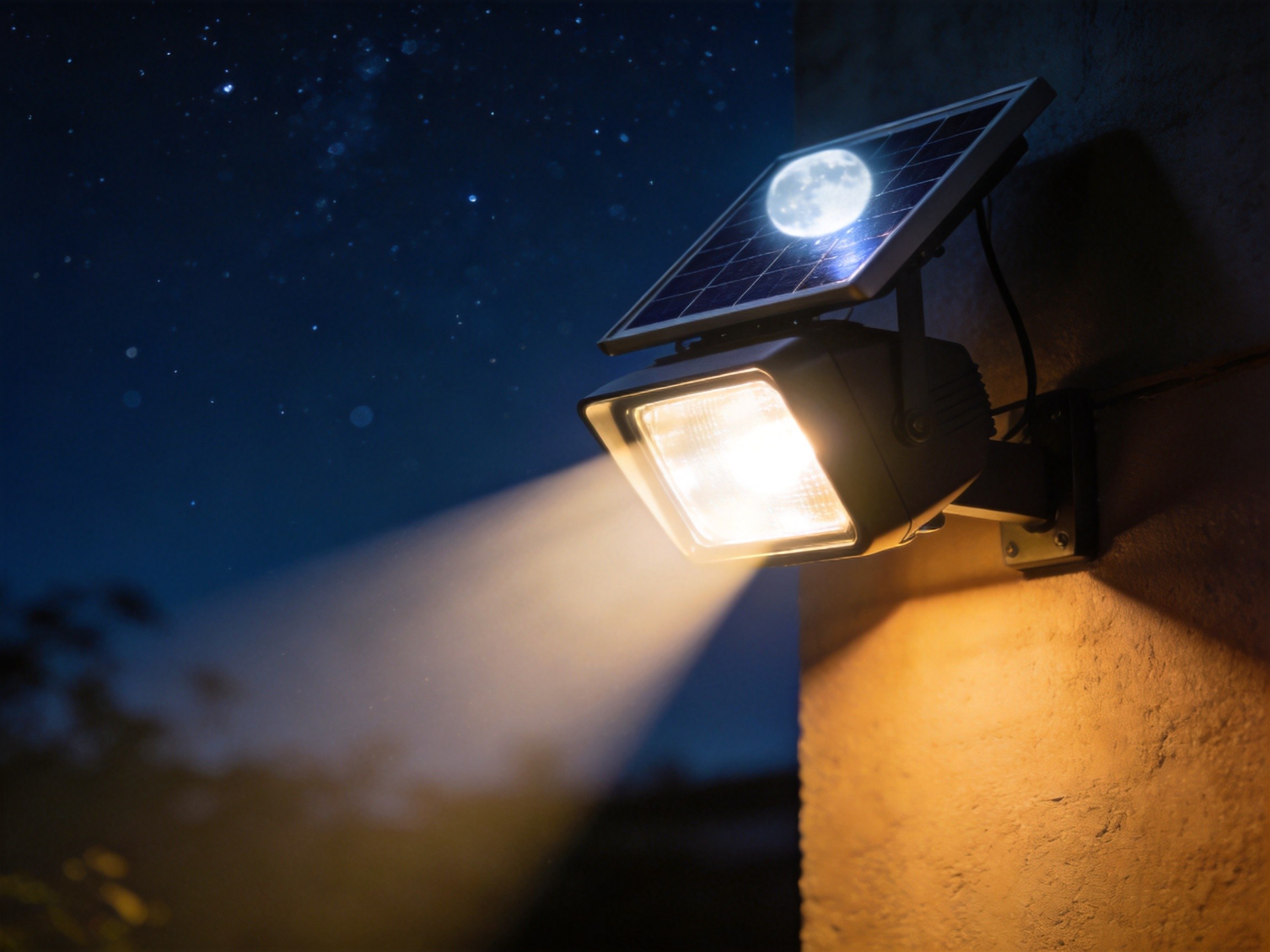
To properly specify solar flood lights outdoor for harsh climates, you must match the Ingress Protection rating to local weather severity, select a robust U-bracket or pole mounting option for wind resistance, and calculate the required lumen output against the target illumination area. CMJ Solar provides engineered solutions that balance these three critical factors for commercial and industrial applications, ensuring reliable performance without grid dependency.
Understanding IP Ratings for Harsh Outdoor Environments
When specifying outdoor lighting, the Ingress Protection rating dictates how well the fixture withstands environmental elements. The IP rating consists of two digits, where the first indicates solid particle protection and the second indicates moisture resistance. For commercial outdoor applications, an IP65 rating means the enclosure is completely protected against dust ingress and can withstand low-pressure water jets from any direction. This is why IP65 is the baseline requirement for most standard outdoor yards and building perimeters, as it prevents internal component corrosion during heavy rainstorms. Higher ratings like IP66 or IP67 offer protection against powerful water jets or temporary immersion, which is how coastal facilities or areas prone to flash flooding justify the additional engineering. The Breaker Series Solar Flood Light models feature an IP65 rating, making them highly suitable for standard industrial environments where dust and rain are constant factors. Understanding these ratings helps project managers avoid premature fixture failure. Who benefits most from strict IP adherence? Facilities in tropical or coastal regions where salt spray and driving rain accelerate the degradation of inferior enclosures, as well as agricultural sites where dust and particulate matter are constantly airborne. The rigorous testing protocols at the Jiangmen factory ensure that every IP65 rated enclosure maintains its seal integrity over thousands of thermal cycles. By selecting fixtures with verified IP ratings, operators ensure that the internal Grade A LiFePO4 batteries and monocrystalline solar panels remain shielded from the elements, thereby maintaining consistent energy conversion and storage efficiency over the lifespan of the installation.
What Are the Best Mounting Options for Solar Flood Lights?
Proper mounting is just as critical as the internal specifications because physical stability dictates the long-term integrity of the waterproof seals. First, the standard U-bracket mounting option allows for versatile installation on both flat walls and cylindrical poles, providing a secure anchor point that distributes the physical weight of the fixture evenly. Second, the included thickened cables with XT60 connectors are designed to handle the mechanical stress of outdoor environments, ensuring that the electrical connection between the solar panel and the light head does not degrade under wind-induced vibration. Third, adjusting the U-bracket to the correct tilt angle is essential not only for optimizing the solar panel's exposure to sunlight but also for preventing water pooling on the fixture's surface. How does improper mounting affect performance? If the fixture is secured too loosely, wind loads can cause micro-movements that eventually compromise the IP-rated gaskets, leading to moisture ingress. Conversely, over-tightening can crack the housing. Furthermore, the inclusion of a waterproof cable with an XT60 connector in the package contents means that installers do not need to source additional weatherproof wiring, streamlining the deployment process on busy construction sites. For projects requiring elevated illumination, pole mounting via the U-bracket ensures the light clears ground-level obstructions, maximizing the effective illumination area. This comprehensive mounting approach is why CMJ Solar, operating from its Jiangmen factory, emphasizes robust physical design alongside advanced OEM/ODM capabilities to meet diverse site requirements, ensuring that the physical installation is as resilient as the internal electronics.
How Do You Size Solar Flood Lights for Commercial Yards?
Sizing a commercial solar lighting project requires balancing luminous output, battery capacity, and the physical dimensions of the target area. The illumination area is the most direct metric for sizing, as it tells you exactly how much ground a single fixture can effectively cover. For instance, the Alien 100W model delivers 896 lumens and covers an illumination area of 80 square meters, making it ideal for medium-sized loading docks or walkways. If your project requires broader coverage, the Alien 200W model increases the output to 1250 lumens and expands the coverage to 150 square meters. For massive industrial yards or construction sites, the Alien 800W model provides a massive 2960 lumens, effectively illuminating up to 400 square meters. Why is accurate sizing crucial? Overlapping the illumination areas slightly ensures there are no dark spots between fixtures, which is a critical security requirement for commercial perimeters. When planning your layout, you must divide the total square footage of your yard by the illumination area of your chosen model to determine the minimum number of units required, always adding a ten percent buffer for overlapping beams. For a more detailed breakdown of how wattage translates to real-world brightness, you can refer to our comprehensive Solar Flood Light Buying Guide: Wattage, Lumens, Battery. Proper sizing prevents under-lighting, which compromises security, and over-lighting, which unnecessarily increases project costs and physical footprint.
How Do Battery Capacity and Discharge Time Impact Sizing?
The battery is the heart of any solar lighting system, and its capacity directly determines how long the fixture can operate during periods of low sunlight. CMJ Solar utilizes Grade A LiFePO4 batteries across its lighting lines, which are rated for 2000 cycles, ensuring long-term reliability without the rapid degradation associated with older chemistries. In the Alien Series, the battery capacities range from 6Ah in the 60W model up to 54Ah in the 800W model, providing a standard discharge time of 18 hours on a full charge. This 18-hour runtime is how the system ensures continuous illumination from dusk until dawn, even during the longest winter nights. This advanced chemistry is how the system maintains stable voltage output throughout the entire discharge cycle, preventing the dimming effect commonly seen in lower-quality lead-acid alternatives as the battery depletes. However, for regions that experience extended periods of overcast weather, the Breaker Series offers a distinct advantage with a discharge time of 2 to 3 rainy days. This extended autonomy is achieved through larger battery banks and highly efficient smart light control systems that manage power consumption dynamically. Who needs this extended discharge capability? Facilities in climates with frequent monsoon seasons or prolonged winter storms where solar charging is severely limited. By matching the battery capacity and discharge time to the local weather patterns, project managers can guarantee uninterrupted security and visibility. It is important to note that warranty terms vary by model and project; contact CMJ Solar for specific warranty terms regarding these battery systems.
Which CMJ Solar Flood Light Series Fits Your Project?
Selecting the right series depends on the specific functional requirements of your site, ranging from basic illumination to advanced security integration. The Alien Series is designed for high-output, broad-area lighting, featuring models with up to 381 pcs 5730 LED chips and optional RGB variants for architectural or event lighting. For projects requiring aesthetic flexibility, the Alien Series also offers RGB variants equipped with Bluetooth APP connectivity and music rhythm functions, allowing facility managers to customize the ambiance for special events or architectural highlighting. On the other hand, the Breaker Series focuses on smart functionality and extended autonomy. The Breaker 100W MJ-BW100 integrates a radar sensor alongside smart light control, allowing the fixture to dim when no motion is detected and brighten instantly when activity is sensed, thereby conserving battery power. For high-security applications, the Breaker Security 100W MJ-BW100C adds a 1440P camera and APP connectivity, merging illumination with active surveillance. For large-scale industrial sites requiring maximum power, the Breaker 1200W MJ-BW1200 delivers an impressive 3795 lumens with 165 pcs 5054 LED chips, ensuring that vast perimeters remain brightly lit. To explore the differences between these lines in more detail, we recommend reading our comparison article on the CMJ Solar Flood Light Lines Compared: Alien, Breaker, Transformer, and Aurora Series. By understanding the unique features of each series, B2B buyers can specify the exact solution that aligns with their operational goals, whether that is simple area lighting, motion-activated security, or integrated camera surveillance.
Frequently Asked Questions
What is the difference between IP65 and IP67 for outdoor flood lights? An IP65 rating protects the fixture against dust ingress and low-pressure water jets from any direction, which is sufficient for most standard outdoor commercial environments. An IP67 rating goes further by ensuring the enclosure can withstand temporary immersion in water, making it necessary only for areas prone to severe flash flooding or where fixtures might be submerged.
How many solar flood lights do I need for a 400 square meter yard? To cover a 400 square meter area effectively, you could use a single Alien 800W model, which is specifically rated for an illumination area of 400 square meters and delivers 2960 lumens. Alternatively, you could use multiple smaller fixtures, though three Alien 200W models would be needed here, since two cover only 300 square meters between them and would leave a 100 square meter gap. Where units are combined, overlap their 150 square meter coverage areas slightly to eliminate dark spots.
Do CMJ Solar flood lights work during consecutive rainy days? Yes, depending on the series you select. While the Alien Series provides an 18-hour discharge time suitable for standard nightly operation, the Breaker Series is engineered with larger LiFePO4 batteries and smart power management to support a discharge time of 2 to 3 rainy days, ensuring continuous operation during extended periods without direct sunlight.
Ready to specify the perfect solar lighting solution for your next commercial project? Whether you need high-lumen area lighting or integrated security cameras, our engineering team can help you calculate the exact sizing and IP requirements for your site. Please contact our team to request a quote and discuss your specific project parameters today.
Part of the guide
Solar Flood Lights: Wattage, Lumens and Model Selection for Every Site
Need Product Recommendations?
Our team can help you select the right energy storage or solar lighting products for your project.