
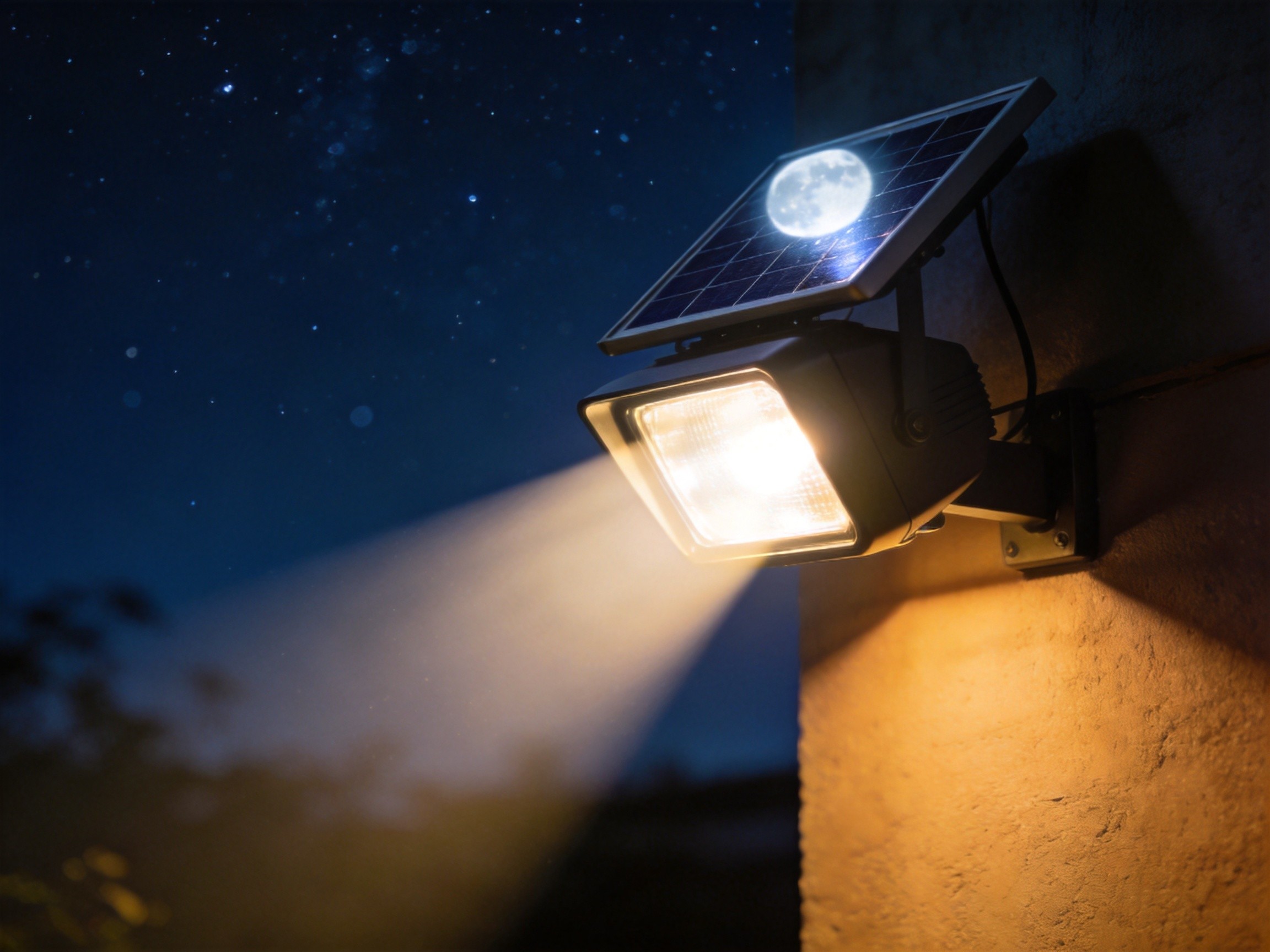
Municipal road lighting projects live or die on the quality of the specification. When a government tender calls for solar street lights, the lowest bid often wins, but contractors who specify vague wattage numbers instead of measurable performance criteria end up replacing fixtures within two years. For procurement officers, EPC firms, and lighting distributors, writing an airtight specification for an <strong>all in one solar street light municipal project</strong> means understanding how panel grade, battery chemistry, luminous flux, and radar sensing interact in real-world conditions. The all-in-one form factor integrates the solar panel, LED module, battery, and controller into a single housing that mounts directly on a pole. Compared with split-type systems, it reduces installation labor, eliminates exposed DC cabling between components, and simplifies maintenance. The trade-off is that every subsystem must be correctly sized from the factory; field upgrades are limited, which makes pre-purchase specification even more critical.
Defining Performance Requirements Before Selecting Wattage
The most common mistake in municipal tenders is leading with a wattage number. A 300W fixture from one manufacturer may deliver fewer usable lumens than a well-engineered 200W unit from another. Instead, start with the road classification and work backward to luminous requirements. Residential streets, collector roads, and arterial roads each demand different average maintained lux levels. A narrow residential lane may be adequately served by 8 to 10 lux, while a municipal collector road often requires 15 to 20 lux with acceptable uniformity. The lighting area figure published by the manufacturer, combined with installation height and beam distribution, determines whether the target lux is achievable. Buyers should also consider the color temperature of the light source. Cool white in the 6000K to 6500K range, as used in the Navigator II series, produces higher perceived brightness and better contrast on asphalt and concrete surfaces than warmer alternatives, which is why it remains the dominant choice for roadway applications worldwide.
Installation Height, Pole Spacing, and Rainy-Day Autonomy
For the Navigator II series, installation heights generally range from 6 meters for lower-wattage units up to 12 meters for the highest-output models. At a given height, pole spacing must be chosen so that beam patterns overlap enough to avoid dark zones. As a rule of thumb, spacing should not exceed 3 to 3.5 times the mounting height for uniform coverage, though the exact figure depends on optical distribution and target lux. Battery autonomy, the number of consecutive cloudy days the light can operate without meaningful recharge, is equally important. For municipal projects in tropical or monsoon-prone regions, specifying a minimum of three rainy days is standard. The Navigator II series is rated for <strong>3 rainy days</strong> across all models, using Grade A LiFePO4 batteries with a 2000-cycle service life, assuming the radar sensor is configured in an energy-saving mode rather than constant full brightness. Projects in regions with prolonged overcast seasons should consider whether a higher-capacity battery or a premium series with four to five days of autonomy is warranted.
Navigator II Series: Model-by-Model Breakdown
CMJ Solar's Navigator II line covers six power steps from 100W to 600W, all sharing the same control platform, sensor options, and form-factor language. This consistency simplifies spare-parts stocking and crew training across a multi-phase project. Every model uses Grade A monocrystalline silicon panels, 2835 SMD LEDs, charges in 6 to 8 hours under effective sunlight, and carries a radar sensor with a 6 to 8 meter detection range. The body dimensions scale with wattage, from 530 by 270 by 70 millimeters at 100W to 780 by 290 by 65 millimeters at 600W, allowing wind-loading calculations to be model-specific rather than based on a generic assumption.
100W and 200W: Residential Streets and Pathways
The Navigator II 100W carries a 4V/13W monocrystalline panel measuring 413 by 209.5 millimeters, a 15Ah LiFePO4 battery, and 360 pieces of 2835 SMD LEDs producing 1248 lumens across a 60-square-meter lighting area. It suits residential lanes, pedestrian pathways, and perimeter roads at around 6 meters mounting height with conservative pole spacing. The Navigator II 200W steps up to an 18W panel at 532.5 by 209.5 millimeters, an 18Ah battery, 480 LEDs, and 1747 lumens covering 100 square meters. This is the volume model for subdivision streets, hospital access roads, and school campuses where moderate traffic speeds demand broader coverage and where 6 to 7 meter poles are already installed or planned.
300W and 400W: Collector Roads and Commercial Areas
The Navigator II 300W uses a 12W panel at 389 by 199 millimeters and a 10Ah battery with 300 LEDs at 994 lumens over 80 square meters, occupying a value position for parking lots, industrial estate roads, and secondary municipal streets. The Navigator II 400W pairs a 15W panel at 459 by 199 millimeters with a 15Ah battery and 400 LEDs to deliver 1476 lumens over 100 square meters, making it a common choice for commercial frontage roads, bus depot lanes, and township collector roads where 6 to 8 meter poles are in place. Both models share the same remote control and sensor platform as the rest of the series, ensuring operational consistency across mixed-wattage installations.
500W and 600W: Arterial Roads and High-Traffic Zones
The Navigator II 500W deploys a 20W panel at 559 by 209 millimeters, an 18Ah battery, and 500 LEDs for 1970 lumens across 150 square meters, specified for main arterial roads, port access routes, and large parking areas with higher mounting heights and wider pole spacing. At the top of the range, the Navigator II 600W uses a 25W monocrystalline panel at 659 by 209 millimeters, a 30Ah LiFePO4 battery, and 600 LEDs to produce 2488 lumens over 200 square meters. This is the model for high-speed roads, ring roads, freight corridors, and any application where a 10 to 12 meter mounting height and maximum coverage are non-negotiable. The 30Ah battery in the 600W model provides the deepest reserve in the series, helping maintain the three-day autonomy rating even when the radar mode is set to higher default brightness.
Radar Sensor Modes and Energy Management
All Navigator II fixtures include a microwave radar sensor with three selectable operating modes that balance nighttime visibility with battery conservation. The first mode is <strong>steady-on</strong>, where the light runs at constant brightness from dusk to dawn, providing the most consistent illumination but drawing the most battery and potentially shortening effective autonomy in prolonged bad weather. The second mode runs at full brightness for a programmed 2 or 3 hours after dusk, then switches to radar-activated dim-to-bright operation for the remainder of the night. This hybrid approach is ideal for roads with evening peak traffic that tapers off after midnight. The third mode is <strong>full radar mode</strong>, in which the fixture stays at a low standby level and jumps to full output only when motion is detected within the 6 to 8 meter sensor range. This is the most energy-efficient setting and is recommended for low-traffic roads, industrial access lanes, and perimeter routes where vehicles or pedestrians are infrequent after hours. For municipal tenders, the specification should state which mode is required by default and whether the included remote control must allow field adjustment without climbing the pole. CMJ Solar supplies a remote control with every Navigator II unit, giving maintenance crews the ability to change modes, adjust brightness, and check battery status from ground level.
Panel, Battery, and Mechanical Specifications for Tenders
A defensible tender document names the panel technology rather than accepting generic descriptions. Navigator II panels are Grade A monocrystalline silicon with 4V nominal output and wattage scaled to the fixture. Monocrystalline cells offer higher efficiency per unit area than polycrystalline alternatives, which matters when the panel surface is constrained by the integrated housing design. The battery specification should explicitly require LiFePO4 chemistry with a stated cycle life of 2000 cycles. Lithium iron phosphate tolerates high ambient temperatures better than lead-acid or ternary lithium, has a lower fire risk, and maintains stable voltage through most of its discharge curve, directly translating to lower replacement rates over a five-to-ten-year service window in hot climates. Charge time for all models is 6 to 8 hours under effective sunlight, compatible with equatorial and subtropical day lengths; projects at higher latitudes in winter should verify that the shortest day provides enough peak sun hours to fully recharge.
The standard pole diameter for Navigator II installations is 76 millimeters, matching the majority of municipal pole inventory in Asia, Africa, and the Middle East. Buyers should confirm the pole tenon matches this dimension or source an adapter. Because the entire fixture is a single assembly, installation is a one-person lift for smaller models and a two-person lift for the 500W and 600W units, with no separate panel mounting structure needed, which reduces both material cost and installation time compared with split systems.
Writing the Tender: A Checklist for Contractors
When drafting the bill of quantities and technical schedule, include the following line items for each fixture: rated wattage and luminous flux in lumens, LED type and quantity, solar panel wattage and cell technology, battery chemistry and capacity in ampere-hours, rated cycle life, guaranteed rainy-day autonomy, radar sensor detection range and available modes, IP rating, color temperature, body dimensions, and compatible pole diameter. Avoid accepting a submission that lists only wattage, as two fixtures labeled 300W can differ by a factor of two or more in real light output. By requiring lumens, lighting area, and component grades, you create a level comparison field and reduce the risk of underperforming equipment winning on price alone. For projects requiring premium construction and longer autonomy beyond three days, CMJ Solar also offers the SSO premium series with AL6063 aluminum housings and 4 to 5 rainy days of backup. Explore the full all-in-one solar street light catalog for a tailored specification sheet matched to your road class, climate zone, and pole infrastructure.
Need Product Recommendations?
Our team can help you select the right energy storage or solar lighting products for your project.