
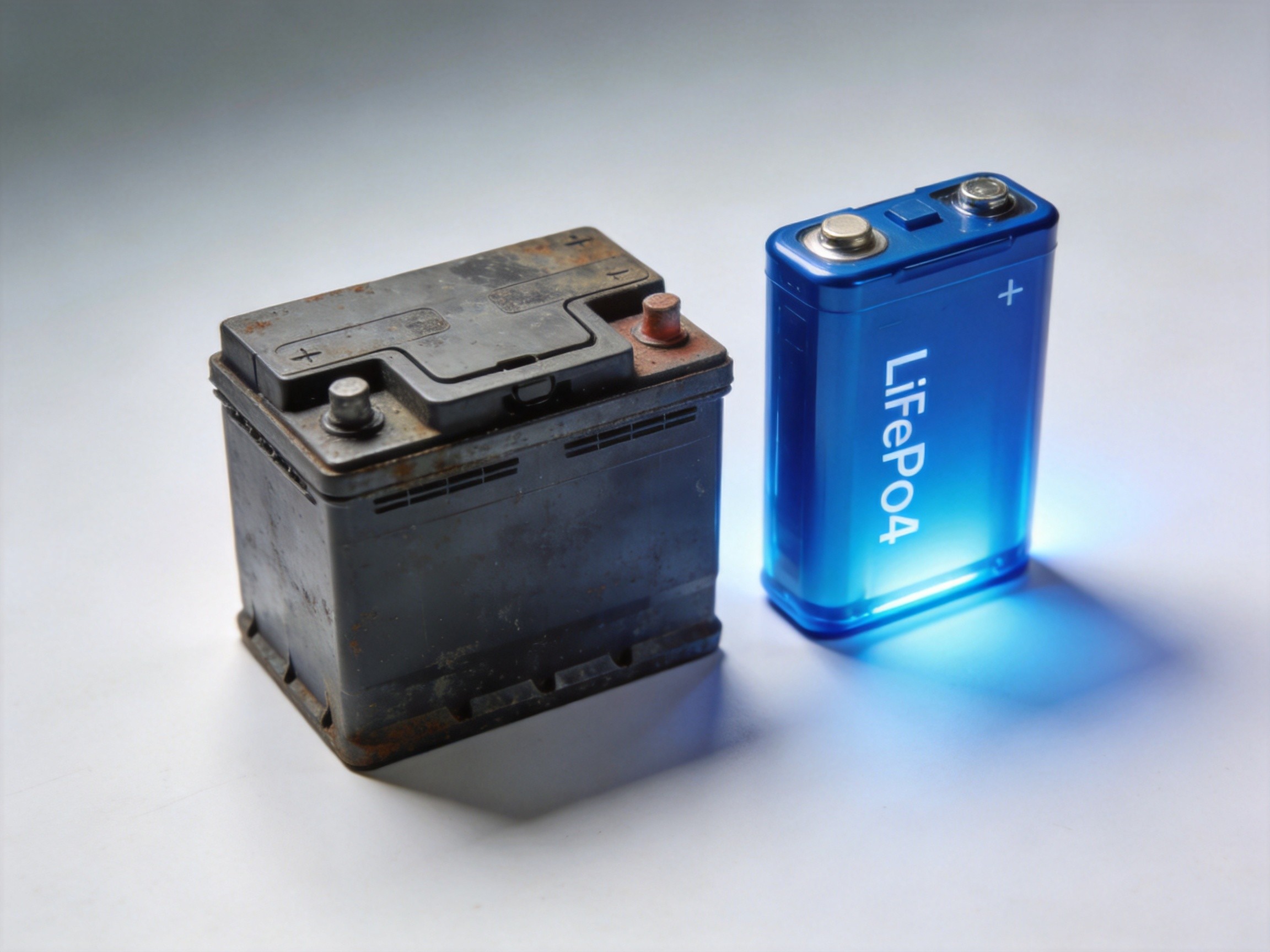
Choosing between a 6kW and a 12kW hybrid inverter is one of the most consequential decisions in residential energy storage. Pair a 10kWh or 20kWh battery with an undersized inverter, and the system shuts down the moment an air-conditioner compressor kicks in. Oversize the inverter unnecessarily, and the customer pays a premium for power electronics they will never fully utilize. This guide breaks down the technical differences between the two ratings, explains how to audit a household's real inverter requirement, and compares four CMJ Solar Apollo A configurations that share identical battery capacities but differ in inverter output.
Continuous Power vs Surge Power: What the Numbers Actually Mean
Every hybrid inverter carries two power ratings. Continuous power is the wattage the unit can deliver indefinitely without overheating or derating. Surge power (sometimes called peak power) is the temporary overload capacity for short durations, typically lasting 5 to 10 seconds, designed to handle motor inrush currents. A 6kW inverter may support a 12kW surge for 5 seconds, while a 12kW unit may handle 24kW or more. The critical insight for installers is that many household appliances, particularly those with induction motors, draw 3 to 7 times their running wattage during the first fraction of a second of startup. A refrigerator that runs at 150W can surge to 900W. A 1HP water pump running at 750W may spike to 4000W. A central air-conditioner compressor can demand 15kW or more on locked-rotor start. The inverter you choose must survive these transients without tripping.
When a 6KW Inverter Is Sufficient
A 6kW hybrid inverter is the right choice for small to medium apartments, essential-load-only backup systems, and homes without central air-conditioning or electric water heating. It comfortably handles a refrigerator, LED lighting, consumer electronics, a washing machine, and occasional use of a microwave or toaster oven. The 6kW unit is also the more cost-effective option for customers whose primary goal is self-consumption of rooftop solar rather than whole-home backup. In grid-tied systems with net metering, the inverter spends most of its day converting PV to AC at partial load, where a 6kW unit is often a closer match to a 5 to 6kW rooftop array. The Apollo A 10kWh with 6KW inverter accepts up to 9000W of PV input through a single MPPT tracker with 120A maximum charge current, making it a strong fit for a standard 6 to 8kW array.
When a 12KW Inverter Becomes Necessary
Step up to 12kW when the household runs central or ducted air-conditioning, an EV charger, an electric oven, a heat pump, or a large well pump. Whole-home backup systems where the homeowner refuses to shed any load during an outage almost always require 12kW. The 12kW inverter also makes sense for larger PV arrays. The Apollo A 12KW 10kWh All-in-One ESS supports dual MPPT trackers with 2 x 7500W PV input and a 160A maximum charge current, allowing installers to connect two separate roof orientations, east and west for example, on independent trackers. This is a meaningful advantage on complex roofs where a single-string configuration suffers from partial shading or mismatched panel angles.
The Dual MPPT Advantage
A single MPPT tracker forces all connected panels into one electrical string. If one panel is shaded, soiled, or at a different tilt angle, the entire string's output drops to the level of the weakest panel. Dual MPPT trackers split the array into two independently optimized strings. On the 12kW Apollo A units, each tracker accepts up to 7500W, giving installers the flexibility to mount panels on two roof faces without sacrificing harvest. For distributors selling into markets with complex roof geometries, multi-orientation installations, or partial shading from chimneys and trees, dual MPPT is a spec that justifies the inverter upgrade even when continuous power needs are modest.
Same Battery, Different Inverter: Side-by-Side Product Comparison
CMJ Solar's Apollo A series is unusual in offering identical battery capacities with either 6kW or 12kW inverter heads. This lets distributors stock a common battery platform and select the inverter at the point of sale.
10kWh Battery: 6KW vs 12KW
The SCAP-A-51.2-200 pairs a 10240Wh (51.2V/200Ah) LiFePO4 battery with a 6kW inverter, single MPPT, 9000W max PV input, and 120A charge current. The SCAP-A-51.2-200P uses the same 10240Wh battery but upgrades to 12kW continuous output, dual MPPT (2 x 7500W), and 160A charge current. Both share the same physical footprint of two stacked modules at 60 x 40.5 x 19.5 cm each, and both output 230V AC. The choice comes down to load profile and PV array design, not battery size.
20kWh Battery: 6KW vs 12KW
For larger homes or customers seeking extended autonomy, the Apollo A 20kWh with 6KW inverter (SCAP-A-51.2-400) provides 20480Wh at 51.2V/400Ah with a 400A discharge current, 9000W PV input, and 120A MPPT current. The Apollo A 12KW 20kWh All-in-One ESS (SCAP-A-51.2-400P) doubles the inverter to 12kW, adds dual MPPT at 2 x 7500W, and increases charge current to 160A. The 20kWh / 12kW combination is the go-to specification for whole-home backup in properties with central AC and electric cooking. Browse the full Apollo A lineup on the Apollo all-in-one ESS category page.
How to Audit a Household's Inverter Requirement
Start by listing every appliance that will run on backup power. Note the running wattage from the nameplate and, for motor loads, estimate the startup surge at 3 to 5 times running current. Add all running loads to get the continuous requirement. If the total is under 5kW and no single motor exceeds 3kW running, a 6kW inverter is adequate. If the total exceeds 5kW, or if any motor-driven load (central AC, heat pump, well pump, EV charger) is in the backup panel, specify 12kW. It is also worth checking the customer's future plans. A household that runs on gas today may install a heat pump when the gas boiler reaches end of life, and an inverter that looked adequate at installation can become a bottleneck within three to five years. The marginal cost of stepping up from 6kW to 12kW at the point of initial installation is far lower than retrofitting a new inverter later. Next, examine the PV array. If it exceeds 8kW, spans multiple roof orientations, or suffers from partial shading, the 12kW unit's dual MPPT and higher charge current will recover more energy over the system's lifetime.
Common Inverter Sizing Mistakes
The first mistake is sizing the inverter to the battery rather than to the loads. A 20kWh battery with a 6kW inverter still cannot start a central air-conditioner, no matter how much energy is stored. The battery is a fuel tank; the inverter is the engine. A large tank with a small engine still cannot accelerate hard. The second mistake is ignoring power factor. Some inverters are rated in VA rather than W, and a 6kVA unit with a 0.8 power factor only delivers 4.8kW of real power. CMJ Solar's Apollo A ratings are stated in watts, not VA, which avoids this confusion. The third mistake is assuming that a larger inverter always wastes more self-consumption power. In practice, a 12kW inverter running at 3kW load may be slightly less efficient at partial load than a 6kW unit, but the difference is typically 1 to 2 percentage points and is often offset by the dual MPPT energy gain on shaded or multi-orientation roofs. The fourth mistake is neglecting charge current. A 6kW inverter with 120A charge current at 51.2V accepts roughly 6.1kW of charge power, while a 12kW unit with 160A accepts roughly 8.2kW. If the PV array is oversized relative to charge current, the excess generation is clipped and wasted on sunny days. The fifth mistake is overlooking future-proofing. Inverter replacement is a costly and disruptive process that requires rewiring and re-commissioning. If there is any chance the homeowner will add a heat pump, EV charger, or additional backup circuits within five years, the 12kW inverter is the lower total-cost choice even if today's loads fit within 6kW. Distributors should frame the 12kW upgrade as sensible insurance against future electrical needs rather than unnecessary over-engineering for the present situation.
Final Recommendation for Distributors and Installers
Stock both inverter options in the 10kWh configuration, as this is the volume mover. The 6kW variant covers apartments and essential-load backups; the 12kW variant covers whole-home systems and dual-orientation PV arrays. For 20kWh systems, default to the 12kW variant unless the customer explicitly wants a smaller inverter, because the types of customers who buy 20kWh of storage almost always have the loads to justify 12kW. Train sales teams to ask three qualifying questions: do you have central air-conditioning, do you plan to charge an EV, and does your roof face more than one direction? Two or more yes answers point straight to the 12kW Apollo A. The CMJ Solar energy storage range gives you the product depth to match every answer with a real, specifiable unit that carries documented performance data rather than optimistic marketing claims.
Need Product Recommendations?
Our team can help you select the right energy storage or solar lighting products for your project.