
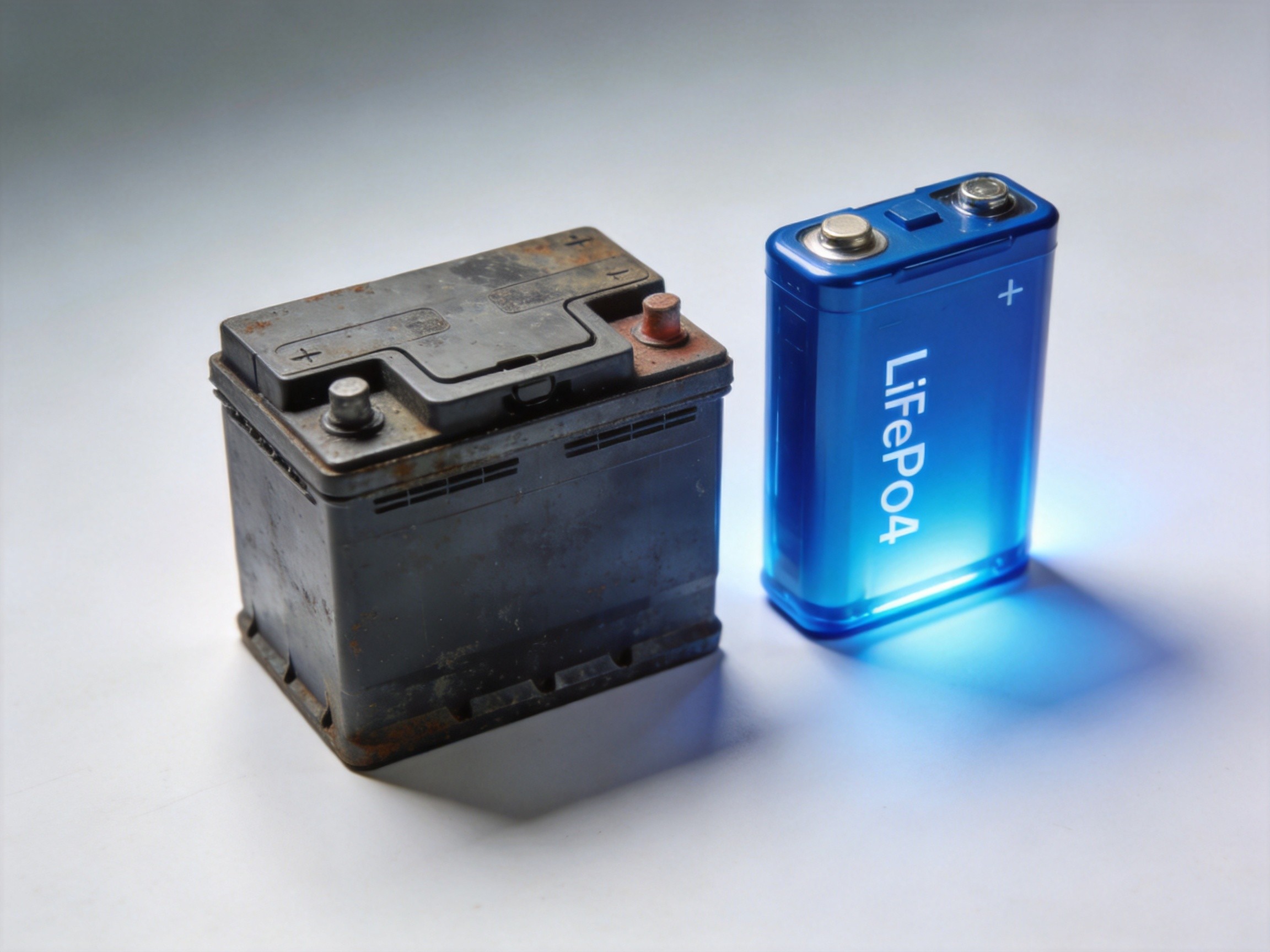
Every installer has faced this question from a homeowner: how big a battery do I actually need? Oversell, and the customer pays for capacity they never use. Undersell, and the first extended blackout destroys trust. For a large share of residential projects across Europe and Africa, 10kWh of usable LiFePO4 storage turns out to be the practical middle ground, but only when loads, recharge conditions, and duty cycle are properly calculated. This guide gives you a repeatable sizing worksheet and walks through three real 10kWh form factors from CMJ Solar so you can match the right product to each installation.
Why 10kWh Hits the Sweet Spot for Residential Backup
A 10kWh LiFePO4 battery bank delivers roughly 9 to 9.2 kWh of usable energy after depth-of-discharge derating. That is enough to run a refrigerator, LED lighting, a Wi-Fi router, device chargers, and a television through a standard 8 to 12 hour outage without draining the bank below its recommended floor. In European households where grid failures are typically short but increasingly frequent, 10kWh covers overnight essential loads until solar recharges the bank the next morning. In many African markets where outages can stretch 12 to 18 hours, the same capacity paired with adequate PV bridges the gap between sundown and the following day's generation window. It is also the capacity at which per-kWh logistics and installation costs start to flatten, making it attractive from a distributor margin perspective.
The 10kWh Sizing Worksheet
Step 1: List Every Essential Load
Walk through the property with the homeowner and classify each circuit as essential or non-essential. Essential loads are those that must run during an outage: refrigeration, lighting, communications, medical equipment, and in some climates a fan or small pump. Non-essential loads include electric ovens, tumble dryers, space heaters, and pool pumps; these should be shed or left on grid. Typical essential loads in a modest home include a refrigerator at 150W running 8 hours per day (1.2 kWh), ten LED bulbs at 10W each for 5 hours (0.5 kWh), a Wi-Fi router at 20W for 24 hours (0.48 kWh), phone and device charging at 50W for 3 hours (0.15 kWh), and a television at 80W for 4 hours (0.32 kWh). The total daily essential demand in this example is roughly 2.65 kWh, which a 10kWh bank can cover for more than three days without recharge.
Step 2: Calculate Daily Energy Demand
Use the formula: Daily Energy (kWh) equals the sum of each load's watts multiplied by its daily hours of use, divided by 1000. Be realistic about duty cycles. A 150W refrigerator does not run continuously; it cycles on for roughly 20 to 30 minutes per hour. A 2kW well pump may only run 2 hours per day but draws a heavy surge on startup. Record both the running wattage and the estimated daily runtime for each load. If the homeowner wants backup for a split air-conditioner, add it separately. A 9000 BTU unit draws 700 to 1000W running and can double that on compressor startup, which changes both the energy budget and the inverter size requirement.
Step 3: Apply Depth-of-Discharge Derating
LiFePO4 batteries can safely cycle to 90% DoD, but for long cycle life you should design to 80%. The sizing formula is: Required Battery Capacity (kWh) equals Daily Essential Energy divided by the DoD limit. At 90% DoD, a 2.65 kWh daily load requires 2.94 kWh of nameplate capacity, well within 10kWh. But if the customer demands two days of autonomy, multiply by two: 5.9 kWh required, still comfortably inside 10kWh. If they add air-conditioning or a water pump, the number climbs quickly. This is where a 10kWh system reveals its versatility: it covers one day of heavy essential use or two to three days of light essential use without modification.
Step 4: Factor in the Solar Recharge Window
A battery that never recharges is just a paperweight. The PV array must deliver enough energy during daylight hours to replace what was consumed overnight plus cover daytime loads. A 10kWh bank with a 6kW hybrid inverter and a maximum PV input of 9000W can accept up to 120A of MPPT charge current at 51.2V. In a location with 5 peak sun hours, a 6kW array produces roughly 30 kWh per day, far more than needed to refill a 9kWh draw. But in cloudy seasons or on shaded roof planes, actual generation may drop to 40% of nameplate. Size the PV array so that the worst-month generation still covers the overnight load, and confirm the inverter's MPPT voltage window (80V to 500V on the Apollo A series) matches the panel string configuration.
Three 10kWh Form Factors from CMJ Solar
Once the capacity target is confirmed, the next decision is physical form. CMJ Solar offers three distinct 10kWh platforms, each suited to different installation constraints and customer budgets. You can browse the full range on the Apollo all-in-one ESS category page.
Floor-Standing Modular Tower: Apollo A 10kWh
The Apollo A Series 10kWh All-in-One ESS stacks two 5.12kWh battery modules under a 6kW inverter head in a vertical tower, each module measuring 60 x 40.5 x 19.5 cm. It delivers 10240Wh at 51.2V with a 200A discharge current, 230V AC output, and a 9000W maximum PV input through a single MPPT tracker with 120A charge current. The modular design means installers can start with one 5kWh module and add a second later, a compelling upsell path for cost-sensitive buyers. For households that need more surge capacity, the Apollo A Series 12KW 10kWh All-in-One ESS uses the same 10kWh battery but upgrades to a 12kW inverter with dual MPPT trackers (2 x 7500W PV input) and 160A charge current, handling central air-conditioner startup surges that a 6kW unit cannot.
Compact Cabinet: Ares 10kWh
The Ares 10kWh All-in-One ESS with 6KW Inverter integrates the inverter and battery into a single floor-standing cabinet measuring 84 x 48 x 30 cm. It shares the same 51.2V / 200Ah LiFePO4 battery (10240Wh) but uses a 5500W maximum PV input with a 100A MPPT charge current. The Ares is targeted at installers who want a simpler, one-piece delivery with fewer field wiring connections. It is well suited to new-build homes where the cabinet can be placed in a utility room before the homeowner moves in.
Wall-Mounted Battery: Athena 10kWh
The Athena Wall-Mounted Battery 10kWh (51.2V/220Ah) is a battery-only unit measuring 43.5 x 28 x 63 cm that pairs with a third-party hybrid inverter of the installer's choice. It supports a 100A continuous / 200A peak discharge current. This form factor is ideal for retrofits where an inverter is already installed, or for installers who have a preferred inverter brand they trust. The wall-mount design saves floor space and places the battery at a comfortable service height. Explore more options on the energy storage category page.
Common Sizing Pitfalls to Avoid
The most frequent mistake is ignoring surge loads. A 6kW continuous inverter may trip when a 2HP well pump or a central AC compressor starts, even if the running wattage is within budget. If the customer's essential load list includes any motor-driven appliance, verify the locked-rotor amperage and size the inverter accordingly, often meaning a step up to the 12kW Apollo A variant. A second pitfall is confusing nameplate capacity with usable capacity. A 10kWh LiFePO4 battery at 90% DoD delivers 9kWh, not 10. Build that margin into every proposal and explain it to the homeowner upfront, because a customer who expects 10kWh of runtime and gets 9kWh will feel misled even though the system is performing exactly as designed. A third pitfall is under-sizing PV for the recharge window. A 10kWh battery with a 3kW array in a 3-sun-hour climate may never fully recharge during short winter days, leaving the customer in deficit by mid-week. A fourth pitfall is neglecting temperature effects. LiFePO4 capacity drops below 0 degrees Celsius, and BMS charge current may be restricted at high temperatures, so installations in unventilated roof spaces or extremely cold climates need derating. Finally, do not assume one form factor fits every job. A wall-mounted battery may be the only option in an apartment with no floor space, while a modular tower may be the only practical choice in a remote location where future expansion is expected.
Action Checklist Before You Specify
Before quoting any 10kWh system, complete this checklist: audit every essential circuit and record both running and surge wattage; calculate daily kWh demand with realistic duty cycles; multiply by the desired autonomy days (one for grid-tied backup, two to three for off-grid); divide by 0.9 to confirm the nameplate capacity; confirm the PV array's worst-month energy yield exceeds the overnight load; check that the inverter's continuous and surge ratings cover the largest motor load; and choose the form factor based on available space, existing equipment, and expansion plans. When 10kWh is the right answer, CMJ Solar's Apollo A, Ares, and Athena platforms give you three credible ways to deliver it, each with documented specifications rather than optimistic marketing claims.
Need Product Recommendations?
Our team can help you select the right energy storage or solar lighting products for your project.